Episode Transcript
[00:00:00] Speaker A: One thing about tpa, though, is that I think there are a lot of different interpretations of it. Like there are people who say they're doing tpa, but they're actually doing like a way lighter version of it. And so it's almost like you can always find a version of TPA that you're signing up for. And also, obviously the idea of it sounds pretty ideal. And so I think in that case it's like, harder to find critics of it.
[00:00:26] Speaker B: Welcome to the Institutional Edge, a weekly podcast in partnership with Pensions and Investments. I'm your host, Angelo Calvello. In each 30 minute episode, I interview asset owners, the investment professionals deploying capital, who share insights on carefully curated topics. Occasionally we feature brilliant minds from outside of our industry, driving the conversation forward. No fluff, no vendor pitches, no disguise marketing. Our goal is to challenge conventional thinking, elevate the conversation, and help you make smarter investment decisions, but always with a little edginess along the way.
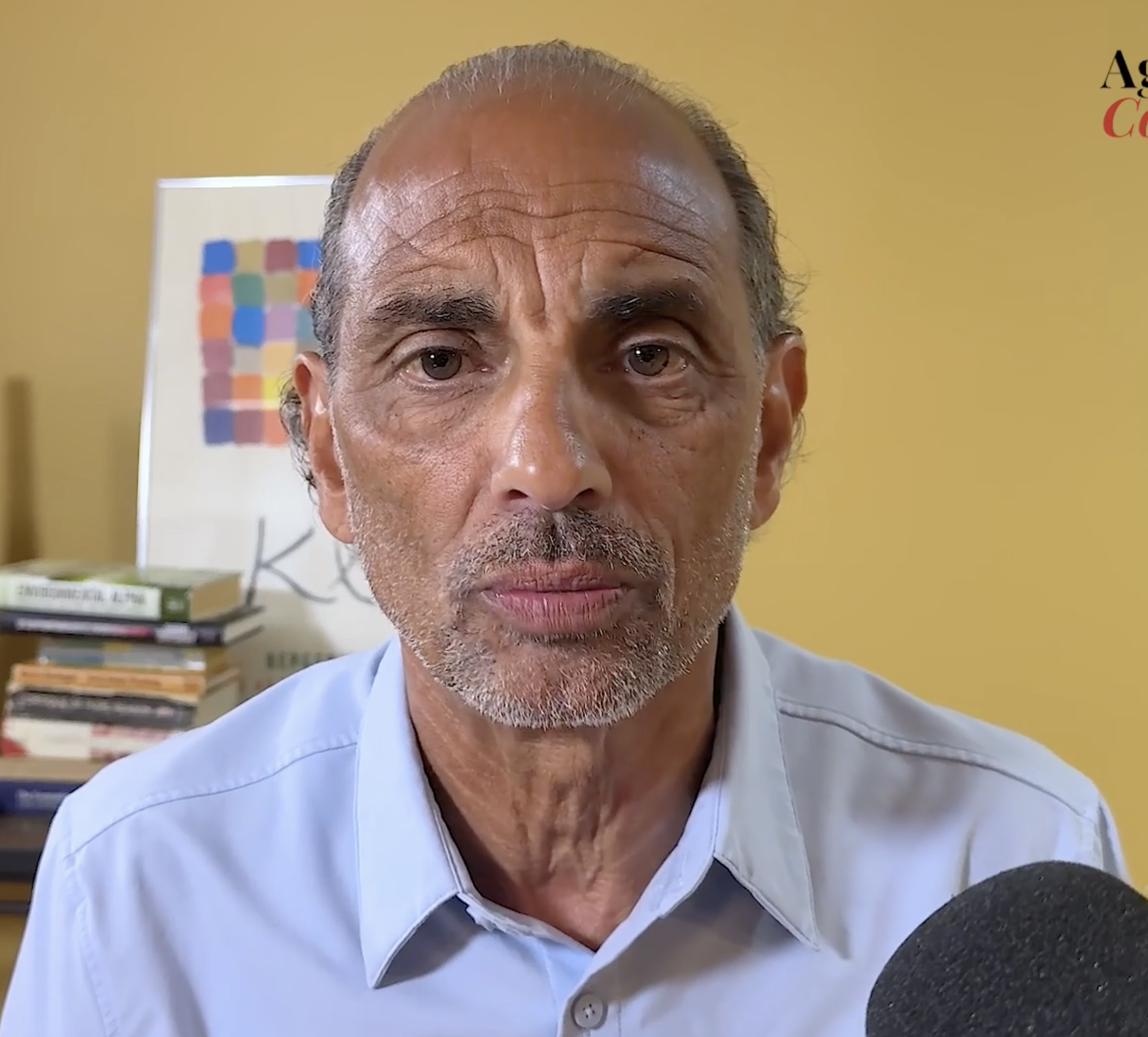
Hi, everyone. Welcome to another episode of the Institutional Edge. I'm Angelo Calvello and today I'm being joined by one of my favorite financial journalists, Justina Lee. And I have to say Justina is right up there with David Brancaccio. My old friend Justina is based in London. She's a senior reporter for Bloomberg News on the Cross Asset Markets team. She covers global markets, including stocks and bonds, and in her words, some nerdier financial topics like cryptocurrencies and quant strategies, and even again in her words, weird asset classes like prediction markets. Today we're going to discuss a topic that's gaining plenty of attention among asset owners. Total Portfolio Approach, or tpa. Justina and her colleague Lou Wang published a piece on TPA earlier this month, and we'll be sure to put that in the show notes along with links to several other of Justina's recent articles. Justina, welcome to the show.
[00:01:57] Speaker A: Thanks for having me.
[00:01:58] Speaker B: It's great. I read your stuff, honest to gosh, I do. I'm not one of these guys just saying it. I do read it. And you know, you and I have communicated via LinkedIn before we even knew each other. I would tell you you're wrong and this is why. And that's.
[00:02:12] Speaker A: But hey, before we get into those messages.
[00:02:14] Speaker B: Yeah, before we get into the topic, I'm going to give you a few warm up questions just to loosen you up. You ready?
[00:02:20] Speaker A: Okay, let's do it.
[00:02:21] Speaker B: Coffee or tea?
[00:02:22] Speaker A: Coffee.
[00:02:23] Speaker B: All right. If you could instantly be teleported to any place in the world for a weekend where Would you go?
[00:02:29] Speaker A: Well, I'm from Hong Kong, and I haven't been back much lately, so. Hong Kong.
[00:02:33] Speaker B: Okay. What's your go to comfort food after a long day of reporting when nobody's answering your calls or returning your emails?
[00:02:41] Speaker A: Hot pot, which is like this Chinese, like, stew where you can kind of just like, put anything you want in it. And it's very warm.
[00:02:48] Speaker B: Okay.
Outside of markets and finance, what's your hobby? What do you love to do?
[00:02:54] Speaker A: I like to read and I like to dance, but not well.
[00:02:58] Speaker B: Well, you read well, but I assume you don't dance well, right?
[00:03:02] Speaker A: Exactly. Okay.
[00:03:04] Speaker B: And then finally, and this one here, I'm not really sure on, but your Twitter handle. It's Justina. Nope. Am I saying that right? Nope.
[00:03:13] Speaker A: Yeah.
[00:03:14] Speaker B: So are you a Parks and Rec fan?
[00:03:16] Speaker A: Exactly. So I got it when I was in college, and I was a huge, like, Parks and Rec Leslie Knope fan, and I loved, like, her optimistic spirit, which I definitely don't have. You know, as, you know, all journalists are cynics, and I just kept it. And sometimes I get people thinking that that is my actual last name that I like, married Ali or something. But no, yeah, it's just because I love proxy rec.
[00:03:41] Speaker B: All right, well, good to know we got a little insight into your background. Appreciate that. So let's talk about Total Portfolio Approach, tpa. I'll say. You know, to me, what's at the core of this idea is that it's, you know, investments should earn their way in a portfolio, that each investment has to be sufficiently attractive to warrant an allocation. It's that idea of, you know, kind of competition for capital.
So I'm going to ask. This has just been bubbling up. What was your motivation for writing this article?
[00:04:12] Speaker A: It's been a buzzword that we've been hearing a lot, and it's one of those where when you kind of spell it out the way you just did, it's about competition for capital, finding the best investment for the whole portfolio.
It sounds like a very duh kind of idea. And so I think that a lot of our motivation was like, why is this suddenly a thing if it seems so obvious? And we also had what we in journalism call a really good News hook, because CalPERS was going to vote on it, while they just did last week.
And in their case, because you can watch their board meetings, you know, practically what it would mean. And in their case, it does kind of seem like a pretty big shift, going from 11 asset class benchmarks to a single reference portfolio of, like, 75% stocks, 25% bonds. And so we kind of use that opportunity to kind of write this story.
[00:05:07] Speaker B: You've been hearing a lot about it. I mean, are people coming to you, or is this part of your reading and research?
Are you seeing it in other publications? How did you come on the topic? Because I'll tell you, this kind of popped up on me, and I'm close to this industry. This is 30 years here.
How did you come on it?
[00:05:25] Speaker A: So last year, I wrote a story about the increasing use of quant techniques in private markets.
And I think a lot of that story was about how people are starting to do factor analysis and kind of quantitative performance attribution on their private portfolios. And I think that kind of led me to tpa, because a lot of TPA is about that. And also TPA has gotten to this status where a lot of people are trying to connect whatever they do to it. Right. Like, you kind of get these pitches from, like, service providers or, like, asset managers, saying, here's our take on tpa. Here is how we can help you in your TPA journey. And so there's also, like, a little bit of that. Like, it's getting to this level where people are using it to sell whatever they want to sell.
[00:06:12] Speaker B: It's getting beyond the cottage industry, tpa.
And I'm frankly, I'm a little confused as to why now. But I'm not asking you to answer that, but I'll get into my opinions a little bit later, so let me just hold off. So when you were going through this, did you come on any.
The kind of opinions that you thought were, like, crystal clear, or, how would I say, pushing back on the idea? I mean, is there, like, a tension in the industry you're seeing between different types of allocators?
[00:06:45] Speaker A: Yeah. And obviously, like a lot of these stories, the people who love it are more willing to talk about it. And so we actually struggled initially to get any critics to speak to us bluntly. In the end, we spoke to Max Townshend at the local pensions partnership in the uk, and what he said was that there are a lot of good things about TPA that you can already do within an saa. And the downside of TPA is that, like, in Copper's case, you're losing these asset class benchmarks and you're replacing it with one reference portfolio, but you kind of risk losing a bit of that accountability that comes with asset class benchmarks.
And I think a lot of the subtext of TPA is actually about governance, because in the case of saa, you have your board agree on the asset class targets, and then each asset class team know that, okay, I just need to allocate my portion and do better than the passive benchmark.
And then in the case of tpa, the whole idea is the board kind of gives the investment team a lot more discretion.
And so I think there's a bit of tension there in that. You're basically kind of just. I think a lot of it is just about the investment team getting more discretion. And then that raises the question of, like, then where does the accountability come from?
[00:08:15] Speaker B: I've heard that argument made about governance, and I think going along with that is empowerment, shifting some authority or responsibility directly to the CIO CEO.
I mean, you could do that within an SAA framework. There's no reason you don't do that. That's just a decision that somebody makes from the governance side.
So I have to just share my view of this. I gotta tell you, this reminds me of Portable Alpha and Justine, I was early to Portable Alpha. You know, I go back to 1989 when I came upon Portable Alpha. I was at the CME at the time running product development. We had just come through the crash and I saw that there were institutional investors that were using S and P futures. And I went and I asked these asset owners what they were doing and they told me it's Portable Alpha. And now here we are in 20, in 2002, it all starts again. It's like people are looking for some kind of idea to hang on to. And now, of course, it's still bubbling all over. Portable Alpha.
[00:09:22] Speaker A: Yeah. Portable Alpha also making a comeback.
[00:09:25] Speaker B: Yeah. Well, the thing with Portable Alpha, though, that is something that asset managers can get their arms around because they can sell product in that space. I can do Alpha Beta separation for you, or I've got the perfect Alpha piece for your, you know, your. Your beta piece. But here, there's not a lot that asset managers can sell.
This is an asset owner decision on reconfiguration of the portfolio of governance, et cetera. But there's not a lot for asset managers to sell here. I've seen some kind of dance around this about how they're trying to, you know, be more accommodating to this model. But I think it's not going to be like Portable Alpha, but it sort of is in that somebody came up with an idea now, and we think we're going to make this major improvement.
[00:10:10] Speaker A: I think there are two ways as managers can sell to this trend.
One, we didn't really get into the story, but one read of TPA is that you can do more tactical overlays because you're looking at your whole portfolio and you're thinking, okay, maybe I'm overexposed to this, maybe I'm underexposed to this.
And so I think there are some asset managers that say, okay, you should kind of buy these overlay strategies from me to kind of fix any issues that you're seeing from a total portfolio perspective. And I think another part is we're seeing already that there's a lot of consolidation among asset managers and allocators want to turn to fewer managers that can do more. Right. I mean, I think TPA can potentially fit into that. In that if you're thinking of your PE and your public equities together, does that mean that the asset manager can maybe actually provide a solution that combines the two? Right.
So I mean, it's kind of speculative, but I think that is like one potential solution.
[00:11:19] Speaker B: Yeah, that seems to me it would be a bit of a reach, to be honest, that, you know, first, I'm not sure asset owners want to consolidate into more and more. And I think if you're moving to a TPA approach. I guess I used the word approach twice. If you're moving to tpa.
[00:11:36] Speaker B: It would seem you're looking for best in class, you know, across the board. And it's hard for a multi asset manager to be best in class.
I saw that from my experience being at a big shop. You know, it's like you open up your suitcase when you go see somebody. What do you want? Public, private? Private, alt Real estate? I'll give it to you. So let's go back to your research here. You said you had difficulty finding what I'll call critics.
I'm assuming that's not because you didn't do your research, Is it because you think people are just taking a wait and see attitude and they don't want to get in front of this and say it's really not what it's cracked up to be.
[00:12:16] Speaker A: Yeah, I think it's really like hyped up right now.
And one thing about tpa though is that I think there are a lot of different interpretations of it. There are people who say they're doing tpa, but they're actually doing away lighter version of it. And so it's almost like you can always find a version of TPA that you're signing up for. And also obviously the idea of it sounds pretty ideal. And so I think in that case people it's harder to find critics of it.
[00:12:49] Speaker B: Have you had asset owners and asset managers contact you after you published a piece?
[00:12:54] Speaker A: Yes, we've had both actually. So asset owners just said, you know, well, but basically you always have this after story, people coming to you being like, I wish you had interviewed me. And a lot of the time we're like, we wish we had interviewed you. So yeah, but like, yeah.
[00:13:10] Speaker B: Are you planning a follow up piece or pieces? I mean this isn't going away, I can tell you that. There's a deluge of publications coming out on it from asset managers and consultants.
[00:13:21] Speaker A: Not for now. I'm curious what you think, like, what do you think is like the next story about TPA or what else can we write about?
[00:13:30] Speaker B: I think the next story is going to be one that critiques it.
I haven't seen a solid critique yet from the community. I've seen some in the academic space, but I haven't seen it from the community. And I think asset managers and consultants are afraid to get on the wrong side of this because they're sensing there's going to be a change.
But I think a critique would be helpful.
I've seen some stuff on LinkedIn that's pretty entertaining, but at the end of the day that's what I'd like to see. John Bowman at Kaya has put out a lot of good stuff. I mean, John's a friend of mine, we sit on a board together.
But I think it's a little one sided right now and I'm sure he'll call me after this comes out. And John, I welcome your call. So a critique is what I'd like to see. Justina.
[00:14:16] Speaker A: Yeah, yeah. And actually I spoke to Jane Bach who's at Kaya and she's the head of investments for Asia at Willis Towers Watson. And she kind of, she was pretty frank. She said like we're getting to this point where there could be a lot of TPA fakers because it's so hyped up that a lot of people want to say that they're doing it. But in reality she did say that it's actually quite hard to do it in practice because people are so used to saa and so a lot of the time it really depends on having a leader who is really committed to tpa. And a lot of time when you lose the leader, you could kind of lose tpa. Yeah, yeah.
[00:14:57] Speaker B: I've read Kaya's stuff and I've read some stuff that she's put out. I mean, to me there's four issues. One is you're looking through a factor lens and factors are idiosyncratic human constructs and vary from team to team.
So I think asset owners are going to struggle with this piece of the puzzle. The second thing is holdings data. You need to have good, clean data that's updated regularly. You need real time attribution and that's not easy to do right now. And let me add that attribution, that is I think, a core part of the tpa. That attribution in my mind should be done by an independent third party, not the consultant, not the custodian, and it should be shared with the board in terms of governance, it should go directly to the board.
The third is it's going to be hard to implement TPA into existing workflows because we're changing a lot and the staff, quite honestly has been trained in SAA. I mean, this is in the curricula, whether it's CFA or MBA or PhD. Everything goes back to Markowitz in some ways, it seems.
And then you mentioned a point that I think is maybe the biggest deal breaker, in her words. I think she said, you need visionary leadership and that's not easy to find because these people are fiduciaries and their whole job is all about being responsible to the beneficiaries and the participants.
Visionary leadership is not something I saw a lot of.
Those are my four kind of thoughts about barriers to entry. It's going to take time.
So this is not something that's going to be done overnight, in my view. What do you think?
[00:16:46] Speaker A: Yeah, I mean, and to your point, because one part of TPA is about doing factor analysis across the board, Right. But then doing factor analysis on public equities, which everyone is very used to, is very different from doing it in private where you kind of hardly have the data. And so now I think we're seeing a lot of service providers come up and say we're going to de smooth your PE data and do factor analysis. But I think people are naturally going to have a lot less confidence in that analysis than they have in public equities. And people in privates are not kind of used to doing that. And even if you're doing it, it's not like you can easily adjust that part of your portfolio and kind of to. I think another point that you made, one idea is in tpa, everyone should be kind of almost a generalist and the silo should all be down. But in a large enough organization that doesn't really work. People need to be specialized and so if people are specialized, then you kind of need to compensate them based on what they're in control of. And then it sounds a lot less, a lot more like saa. Yeah, yeah.
[00:17:55] Speaker B: That's the workflow issue. I mean, it's the behavioral kind of educational challenge and the workflow. I've been responsible for private credit. Now all of a sudden I have to share this with everyone and compete for capital. At the end of the day, it could be a good result, but it just means it's not easy to get there. And going back to this idea of empowerment that we talked about, the way I look at it, the board is there.
They should set a risk budget for staff, the risk parameters, and they should then empower staff to make decisions to achieve those goals within the parameters. And you see there are CIOs that act this way now, and they're doing SAA. Don Pierce does this at San Bernardino and Sriram at ipers. I believe they function this way and they don't need TPA for that. So, you know, and you already mentioned this idea of dynamic decision making. TAA can do that for you now.
It's not easy, but there's a possibility.
[00:18:57] Speaker A: So I think there's almost a sense that maybe tpa, is there a sort of like a rallying cry to have more discretion? Because one thing that, you know, Stephen Gilmore at Calpers said was that, you know, it's true that Calpers has always had some discretion around the SAA asset class targets, but the truth was no one took advantage of them.
And so you're right in that a lot of these things can be done with sea, but it's almost like you kind of need to convince yourself that this is a big change in order to kind of make those adjustments.
[00:19:30] Speaker B: Yeah, that's a great point. Yeah. And as you mentioned earlier, Calpers did approve the move to tpa. I think it was this week. Earlier this week, if I remember.
Yeah.
[00:19:43] Speaker A: And one thing that we didn't get into the story, but that was really interesting from the reporting, was that in Calper's case, they went from asset class benchmarks to the reference portfolio of 75% stocks, 25% bonds. And I think it feels like in reality that will then be a benchmark for the whole plan, which is actually a pretty black and white measure compared to having 11 asset class benchmarks. But I think the role of the reference portfolio is a bit ambiguous in tpa.
Sometimes it sounds like it's just meant to be a reference for your risk budget. Sometimes it sounds like it is meant to be a performance benchmark. And then if you look at the last 10 years, if that's your performance benchmarks, that was pretty hard to beat, given the performance in equities.
[00:20:34] Speaker B: Yeah.
I'll tell you a little bit more about my struggle with tpa. There's no question we need a better way to solve how we allocate capital to achieve a desired outcome. But ultimately we're trying to solve an optimization problem.
What's the optimal mix of assets and capital at time T that has the highest probability of meeting our liabilities? Speaking as a pension fund. But endowments also have liabilities and so do foundations and insurance companies.
And they have this optimal target of meeting or generating an aggregate risk adjusted return for the portfolio. There's no question SAA has flaws. It has some serious flaws and we can talk about that. But I don't think TPA solves the problem either. It doesn't go far enough. To me, I look at TPA as an incremental improvement. It's not something that's totally radical, that's changing how we're going to solve that optimization problem.
But here's where I'm going to take a twist and ask you to think a little bit about your writing about artificial intelligence. To me, we have techniques that can solve this optimization problem and that would be deep reinforcement learning.
It can handle the path dependency, the changing correlations, the evolving liability structure, the multiple competing objectives without forcing you into some kind of static reoptimization that both SAA and TPA they require.
And that to me would be really transformative. Because deep reinforcement learning is really good at solving these optimization problems. They could do it in a sequential way and they can also do it in a way that detects these. Because you hear the TPA proponents talk about the complexity and the non linearity of some risks. This is what they identify. They look for these non linear risks. So if the industry really wanted to solve the problem, they would move beyond human intelligence into artificial intelligence and using deep reinforcement learning.
I don't know if you can give me an opinion on that, but I'm trying to be circumspect with your counsel. But that's how I'm looking at it. If you really want to solve the damn problem, take the big step, put on the big boy pants and look at deep reinforcement learning. Any comment or do you want to.
[00:22:57] Speaker A: That's going to blow the minds of the board.
[00:23:02] Speaker A: It raises the question of, I mean, people always. I think that people are more Comfortable now at like the, I mean this is a kind of, we're totally pivoting here. But like at the quant hedge funds, people are more comfortable with the black boxes now. But I think the interpretability will be an issue for like.
[00:23:23] Speaker B: Justina. There are real problems to moving to deep reinforcement learning. Interpretability is a problem in terms of outcome, but getting the talent to build these systems, and this is an incredibly complex problem that it's going to take time, it's going to take compute, it's going to take a production environment. So it's not easy. But if we're thinking grandly about the future and we want to achieve better results for the beneficiaries and participants, well, I'm going to stop there. But let's kind of move into this topic about AI for a minute. You wrote a piece this week about Numerai. You remember it because you write so many pieces. I want to make sure you remember it here.
[00:24:03] Speaker A: It was just a few days ago.
[00:24:04] Speaker B: So yes, and Richard's a friend. He and I have done a number not of these podcasts, but we've had conversations and I really admire the way he's trying to change the model for, I'll say alpha generation.
You know, he mentioned in here, just going back to your article, that you know, his platform is very scalable, but you know, most quant platforms are not scalable because the alpha decays. Did he talk at all about how the crowdsource model can get beyond this scaling problem?
[00:24:36] Speaker A: It's partly sort of a matter of talent, right? Because with his crowdsourcing model he can access all the talent in the world.
And I think what's kind of distinct about numerai is that they want each of their contributors to stake this native token onto their models. And so there is sort of a built in mechanism where if your models have been doing well, you get rewarded. If your models haven't been doing well, you get punished. And so it automatically sort of, I guess, selects for the stronger models and anyone around the world can participate in.
And so I think a lot of his idea is like, oh, instead of having to spend all this money hiring a portfolio manager and kind of having to wait for their gardening leaves, this is a way you can tap all the talent in the world and it kind of has a natural survival of the fittest mechanism. And so I think that's why he thinks that his model can scale a lot more easily.
You know, Richard, I mean, he kind of thinks that this, he will compare his model to a lot of the current potshop multi strategy hedge funds. And yeah, he talks a big game.
[00:25:49] Speaker B: Yeah. But he's getting that allocation from J.P. morgan. And his valuation as an entity is way up now for numerous valuations. Way up. And I have to say I admire the way he approached this trying to solve problem of generating good risk adjusted returns for clients. Good in the sense that they are positive and not necessarily correlated. I mean, it's taken him 10 years, if I remember the timescale, nine or 10 years.
And I like the way he crowdsource. I like the way he uses digital currency and as you described, kind of the punishment and reward structure to it. And the way he solved the data problem too, because, you know, Bloomberg never lets you share your data, so he's got to anonymize it all. It was really cool the way he did it. It's taken time, but now it seems like he's on the cusp of success.
I will say I didn't know Paul Tudor Jones had backed him. I thought his original backers were from Renaissance, were Rentech people.
But what do I know? I don't do the research you do.
[00:26:55] Speaker A: Yeah, it's kind of been interesting because I think I wrote a few years ago a story about Quantopian, which is this crowdsourced hedge fund that did not succeed. And so I think it's a very tough model to crack. And it seems like kind of Richard has, as you said, kind of been kind of growing the aum and they just kind of raised additional funding and kind of. That's been really interesting.
[00:27:23] Speaker B: If I remember, you mentioned something in the article, and I'm reaching here about institutional adoption.
Did you talk about endowments that we're looking at, or am I reaching too far here? Justine, I thought you talked about endowments.
[00:27:38] Speaker A: Yeah. So Numerai raised additional capital from their.
[00:27:44] Speaker A: Earlier investors, including venture capitalists and Paul Tudor Jones and also three university endowments. And actually these endowments were the main part of the fundraising this time.
And so it does show that there is institutional interest in this very unconventional business model.
[00:28:03] Speaker B: Yeah, and I give him credit for his perseverance. He had more tenacity than I did after doing a deep reinforcement learning model for five years and before that, a deep learning model for 10 years. The black box was just. It was too dark for asset owners, I found. But his perseverance and he had good backing. It's pretty cool.
Maybe I'll get him on the show one day. I don't have managers, but I appreciate what he's done with AI Crypto crowdsourcing. It's pretty cool. And we got a little bit of time. Could we talk about prediction markets? It seems like it's another one of your favorite topics.
[00:28:41] Speaker A: Yes, they are currently. So let's get into it.
[00:28:44] Speaker B: Okay. Are you seeing. This is for my own interest. Are you seeing serious institutional interest from asset managers, treasury teams that are using prediction markets for decision making or hedging?
[00:28:59] Speaker A: So yesterday we wrote a story about how Jump Trading, the Chicago high frequency market maker, has started market making on prediction markets. And at least from what is publicly known, they would be sort of the second big shop to do it after Susquehanna, which started market making on Kalshi, well, one of the biggest prediction markets right now last year. And we are seeing in sell side research, for instance, in a lot of the kind of Wall street conversation, there is definitely a lot more people citing the odds on polymarket and Kalshi, especially when it comes to topics where you don't normally get any odds on, such as the length of the government shutdown.
And so I think there is definitely a lot more interest in them. I don't think there is necessarily a lot of serious institutional money trading, these markets being a taker and kind of making bets and all that just yet.
[00:29:57] Speaker B: For what it's worth, I'd agree with you. But I think we're going to see an acceleration of adoption. If I'm not mistaken, Poly Market is still restricted in the U.S. am I right?
[00:30:07] Speaker A: So they are returning to the U.S. market. Yes, right. So they were until recently.
[00:30:12] Speaker B: Okay, so they're back and then Kalshi's here. That's CFTC approved, if I remember, they had some approval to do something or other.
[00:30:21] Speaker A: Yeah. I think the one big obstacle right now to further institutional adoption is the fact that there is still some regulatory uncertainty. Kaushi is still fighting some court cases against state gaming regulators because you know, they've introduced markets on everything, including sports, by kind of being a federally regulated derivatives exchange, which the state gaming regulators see as sort of a violation of kind of the state gaming regime. And so that's been kind of a very interesting sort of like legal drama that's still playing out in the courts right now.
[00:30:58] Speaker B: Yeah, it's a good point. Regulatory constraint. I mean, regulations don't move as fast as markets. That's the problem.
And especially innovation in the markets like prediction markets. I haven't done anything with them. I just started reading about them after you and I talked. They're pretty cool and they've been around for centuries. I mean this is not something new, but now we have the ability to, I guess, automate it. I didn't know jump trading got involved. I didn't read that article. I'll admit it. I mean, I'm trying to stay current.
[00:31:28] Speaker A: It just came out yesterday.
[00:31:30] Speaker B: Current on your bibliography. But it's not easy.
So I'm gonna go to my question and ask you about. I can't ask you about the worst investment pitch you ever got, but are you comfortable telling me what's the worst kind of journalistic pitch you ever got?
[00:31:47] Speaker A: I actually don't remember, but we get so many and it's cause, like we get pitches that are not completely unrelated to our beat. Like, I'm looking at my email right now and I have pitches about the most and least, oh, the best places to retire and kind of, you know, this singer going on the Tonight show with Jimmy Fallon. Like, it's like, it's just a lot of things.
And you know, if you write one story about crypto, you will get pitches on crypto for the rest of your life. That is a rule.
[00:32:22] Speaker B: And you've been writing on crypto, I think, since at least 2016, if I remember.
[00:32:26] Speaker A: Yeah, I started.
Yeah. In 2016 when I was still in Hong Kong. Yeah.
[00:32:31] Speaker B: Wow. Yeah, you've got some history there. So I'd say one of my favorite topics. Maybe for another time, but.
[00:32:39] Speaker A: Yeah.
[00:32:40] Speaker B: Well, Justina, let's wrap it up here. I'm going to say thank you for sharing your information on TPA and then AI Numerai and prediction markets. We could have gone on longer, but most people only listen to podcasts for 30 minutes, so who am I kidding? So thank you.
Great.
[00:32:56] Speaker A: Thank you so much for having me. This has been fun.
[00:32:59] Speaker B: Thanks for listening. Be sure to visit P and I's website for outstanding content and to hear previous episodes of the show. You can also find us on p and I's YouTube channel. Links are in the show notes. If you have any questions or comments on the episode or have suggestions for future topics and guests, we'd love to hear from you. My contact information information is also in the show notes and if you haven't already done so, we'd really appreciate an honest review on itunes. These reviews help us make sure we're delivering the content you need to be successful. To hear more insightful interviews with allocators, be sure to subscribe to the show on the podcast app of your choice. Finally, a special thanks to the Northrup family for providing us with music from the Super Trio. We'll see you next time.
[00:33:51] Speaker A: Namaste the information presented in this podcast is for educational and informational purposes only. The host, guests and their affiliated organizations are not providing investment, legal, tax, or financial advice. All opinions expressed by the host and guest are solely their own and should not be construed as investment recommendations or advice. Investment strategies discussed may not be suitable for all investors as individual circumstances vary.
[00:34:11] Speaker B: It.