Episode Transcript
[00:00:00] Speaker A: All financial markets are gambling in some broad sense of the term.
And pretty much all of them were once illegal as gambling. And history was the creation of exceptions for particular markets because of a perception, typically correct, that they had social value, that there were good reasons for that. So that's also true of these markets. They're all, in some mechanical sense, gambling.
But the question is, which should we allow and even approve of because of the social value of the offer? And you might well say that sports markets do not seem to offer much social value, but markets on economic events and world events more plausibly do.
[00:00:39] Speaker B: Welcome to the Institutional Edge, a weekly podcast in partnership with Pensions Investments. I'm your host, Angelo Calvello. In each 30 minute episode, I interview asset owners, the investment professionals deploying capital, who share insights on carefully curated topics. Occasionally we feature brilliant minds from outside of our industry, driving the conversation forward. No fluff, no vendor pitches, no disguise marketing. Our goal is to challenge conventional thinking, elevate the conversation, and help you make smarter investment decisions. But always with a little edginess along the way.
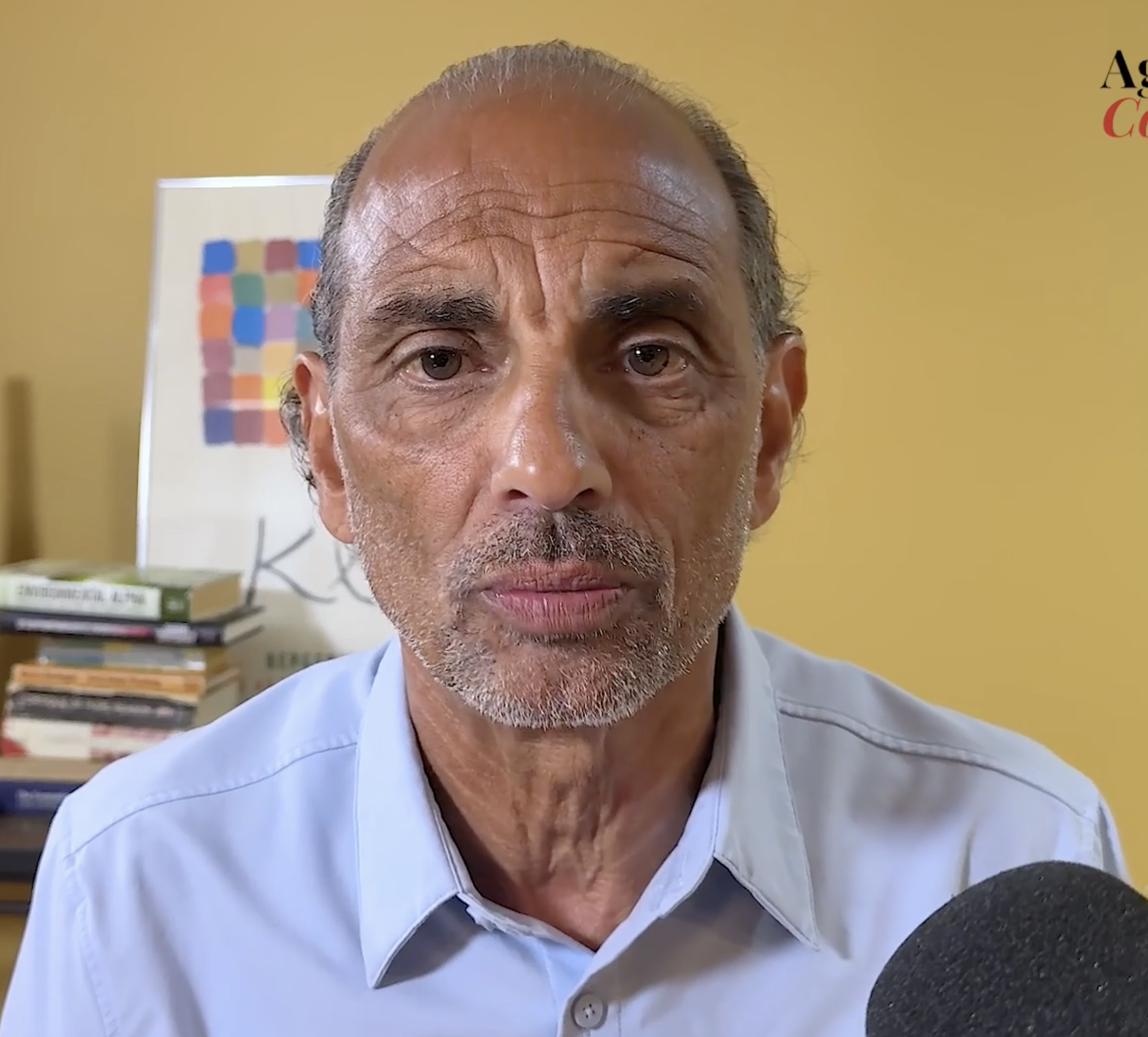
Hi, everyone. Today we're talking about prediction markets, and my guest, and I'm fortunate to have them, is Professor Robin Hansen. Robin has pioneered prediction markets since 1988. He was the first to write in detail about creating and subsidizing markets to gain better estimates on a wide variety of important topics. He was the principal architect of the first internal corporate markets. Those would have been at Xanadu in 1990.
He was the first with web markets, and that would have been Foresight Exchange. Since 1994, he worked with DARPA on the policy analysis market from 2001 to 2003, Professor Hansen developed new technologies for conditional combinatorial and intermediated trading and studied insider trading, manipulation and other types of foul play. He has written and spoken widely on the application of idea futures to business and policy and has advised many ventures. Robin, welcome to the show.
[00:02:21] Speaker A: Thank you for having me.
[00:02:22] Speaker B: My pleasure.
Prediction markets. I'm gonna set the table quickly. As you know, our audience are asset owners, asset managers. They're curious, but they're skeptical about prediction markets. They wanna know how these markets actually work. They wanna see concrete applications beyond the headlines. They wanna understand the associated challenges and limitations of these markets. So that's what we're gonna talk about today. Robin, why don't we just jump in and tell us, from your perspective, what are prediction markets?
[00:02:52] Speaker A: Well, mechanically, prediction markets are betting markets. You can bet on, you know, celebrity actions, sporting events, economic indicator numbers published, whether your project deadline is achieved. You can bet on any of these things and mechanically it's just like a betting market. The question is, what purposes are you using for?
So traditionally, most financial markets, the main purpose that regulators and others have seen them justified for is risk hedging, risk transfer.
Although they're also acknowledged to aggregate information, they aren't typically created for that purpose and customers aren't typically paying much for that information.
People of course, have over centuries created markets for entertainment to have exciting action which we might call gambling.
And it's the same market, it's just being used for different purposes. I've been most interested in the purpose of information aggregation and my hope is that eventually customers who want information on key decisions will pay to make markets like this about their decisions. And then the traders will be suppliers of information who are paid for their information, while the consumers will be the decision makers who pay to subsidize the markets to get the information they want. That's my long term vision. But the market itself is just a betting market that can and is used for many different purposes. I'm interested in a particular purpose that will drive, say, your thoughts about what particular versions and how they would be used. But the mechanism is just a betting market.
[00:04:33] Speaker B: There's been a lot of press recently about polymarket and Kelshi. They seem to be the two most common covered prediction markets. I know there are others, but we're seeing, as you described, there's thousands of different events that are now posted on these markets, specifically polymarket and Kelshi, and I've got no relationship with them, but I just keep reading about them. Are these primarily binary decisions that people go on these markets and whether it's a football game or an election or an interest rate cut, are they binary?
[00:05:06] Speaker A: Most of them are, yes. I mean, you could also have more than binary in terms of having maybe five possible answers. And then some of them are scaled in that the payoff will be scaled by some number within a range. So you might have, say, who will win an election is a binary event, or perhaps there are five candidates and then it's one out of five. Or you could have a scaled market, say about the vote share of each of the candidates at the end. And then you could have the assets pay off in proportion to Potomac particular share number.
[00:05:37] Speaker B: And this is continuous trading on these, am I correct?
[00:05:40] Speaker A: Typically.
[00:05:41] Speaker B: Okay, and is there any automation in this yet? You know, there's a lot of talk about AI in, in the entire ecosystem, but do we see an AI trickle in for market making?
[00:05:52] Speaker A: As you may Know, in, in the ordinary financial industry, there's a great many organizations that use automation a lot to support their trading, but it's usually subordinate to executive decisions about which trading policies to follow where. So the financial industry is quite computerized.
Very few people are trading by hand or conducting particular trades by hand. They typically figure out some edge and then embody that in an algorithm. And then the algorithm supervises trading according to the algorithm that's been approved to pursue some trading strategies. So in Kalshi and polymarket, more of the trades are probably done by Hadan because these are smaller markets with many individual retail participants. But you certainly expect that as larger organizations get more involved, they will be more systematic and automated.
[00:06:43] Speaker B: Yeah, I saw Susquehanna Trading has just signed up to be a market maker on one of the platforms, which I think will be automated and kind of bring a little bit of professionalism instead of just having individuals do it. You've got a, I guess what I would say a bigger infrastructure behind it. Are these markets for price discovery?
[00:07:06] Speaker A: Well, that's again the question of the purpose of the markets.
So the same things can be used for many different purposes and typically are.
So again, most financial markets have been approved officially for their risk transfer features. And then many markets have existed for entertainment or speculative gambling purposes. And in markets that are approved for risk hedging, most of the traders there are in fact there for speculative purposes and we could allow markets for either of those purpose. But I'm interested especially in markets where the purpose is to collect the information.
And I'm hopeful that we could eventually have those customers pay for that information and then that would be the product. But that's not how it is going. Now most of the people trading in Calshea Polymarket are individuals paying the tax basically to trade there because the markets charge a fee. And those traders are their main customers. And most of those people are not hedging risks, they are speculating.
[00:08:09] Speaker B: I mean, you're making the argument several times for information aggregation and I guess for my audience, these institutional investors, information is important. Is the aggregation of this information something that they may want to look at if it were for a specific event or topic?
[00:08:27] Speaker A: So if your institutional investors are primarily just transferring risk and hedging risk, then they shouldn't be speculating, they shouldn't be focused on speculative events. But if they identify that a particular company, say is facing a risk and that risk is correlated with one of the markets that is available here, they could hedge that particular risk in those markets by trading. And then if they're going to maybe hedge the risk somewhere else. The market prices could be informative to them about that hedging strategy. So these markets are first offering hedging risks. That is, there are, say, markets on particular economic numbers and you could hedge them in those markets, or alternatively, you could use those market prices as information to advise other strategies you take elsewhere.
[00:09:15] Speaker B: Your second point is the one that resonates with me and I'm sure with the audience, and that is, if you're going to make consistently good investment decisions, you need good information.
And the question is, I'm not too worried about the hedging piece because I envision anything that they may currently pull out of a prediction market event in terms of information, it would be used to supplement their current decision making. I mean, so it's like, is this information additive to their current process? Because it's a new source of information.
[00:09:50] Speaker A: And sure, these people are reading the news, for example.
So if you look at the total amount of information that journalism supplies at the moment, it's vastly larger than the number of markets available here in. In these prediction markets. So the information available here is at the moment a tiny fraction.
It's a small source of information compared to all the other sources you might have. So at the moment, you should look for it for that small contribution. In the future, though, we might have more markets here that are more informative, and then it will become a larger source of information. You might want to prepare yourself for that future day by tracking these markets to see when they are starting to have information about the topics you care about.
[00:10:32] Speaker B: I saw something came out on Bloomberg. I'm looking forward here. It says prediction market companies are likely to see their revenues grow by a factor of five to more than 10 billion in 2030, according to analysts.
I assume we're going to see more participation and some kind of a fee structure like you've suggested. You got to pay for this somehow, correct?
[00:10:53] Speaker A: Of course. They are, in fact charging fees now. They haven't forgotten to do that.
Initially, when these markets were small, long ago, one of their main ways of charging was that they did not pay interest on deposits.
But now they have been pressured to do that. And so you can actually, you know, count on getting some return of money sitting there. So it's not just bleeding away that way. But then there are trading fees that, you know, will, as in most markets, take a little cut.
But as these markets get larger, if there's a factor of five increase in the next four years, then of course that will allow the costs to go down. All of these systems basically are driven by fixed costs for the overall infrastructure and marginal costs intrinsically are quite low. So as you get larger trading volumes that they can lower their costs and will be driven to by competition. So we may see competitors beyond these two current entrants and they will compete with each other to some degree and so hopefully costs will fall.
[00:11:56] Speaker B: I wanted to ask just about the mechanics. Are the prediction markets primarily using cryptocurrency? Is that how you access these with your own wallet?
[00:12:05] Speaker A: The polymarket is a crypto based market, but Kalshi is not.
So whether it's based on crypto is a technical implementation detail. But one of the reasons why many markets were on crypto is that people thought at least that they could evade regulatory constraints more easily. In crypto, that's a matter of dispute, but certainly the perception of that was what made many initial markets be crypto based.
[00:12:32] Speaker B: How does the settlement process work? These are time dependent, right? I mean the event ends, right? Like on election day, if we're looking at elections.
So how does the settlement work?
[00:12:44] Speaker A: You know, typically they have some judging process that makes the decision about the settlement. And once the settlement has been chosen, then you can just extract your winnings in the same way you would deposit or extract them at any time. Your assets at any time. You might ask how carefully designed is the settlement process to not make mistakes?
And in the past people often tried to have a lot of language or something to map elaborate descriptions in order to clarify these things. But I think the more common current approach is just to try to have a reputation for doing that well and not necessarily have a long elaborate text of explanation.
[00:13:24] Speaker B: I could see where it's pretty clear because in some instances, especially when it comes to what I'll call gambling, did the 49ers win or lose? It's pretty clear, but in a lot of other instances I don't think it's that clear. So you're saying the decision on settlement is determined by the prediction market? They try to write it out as best they can, but if it's not one that's totally clear.
[00:13:50] Speaker A: So the basic approach is possible in this space. One is you could just be very legalistic about having a long detailed text that defines how the issue will be settled and then, you know, making sure you follow that text.
Another approach is that you try to go with a reputation for doing it well, and that's part of the brand of the site.
Another approach is to just delegate that to particular judges who then have their own reputation so some websites basically let a wide range of people create claims, each of which then has their reputation of how they're going to judge it, how elaborate they do it, what their policies are, and then buyer beware.
You have to judge who you trust in terms of which claims you're willing to bet on.
[00:14:36] Speaker B: Can you speak to the regulatory framework surrounding this, the prediction markets, specifically in.
[00:14:42] Speaker A: The U.S.
in the U.S. the primary regulator has been seen as the CFTC, the Commodity Futures Trading Commission. And for a very long time they just simply wouldn't allow any of these things. And then in the last few years, legal permission has been given for some and that's part of what started this change in the last few years. And then they have, of course, their precedent and language of what they're allowing or not. And sometimes that has been in dispute and court cases have settled, you know, who's allowed to do what.
[00:15:13] Speaker B: Yeah, I see. Some of the states are also now looking at these markets, you know, kind of a state by state basis if they're gambling or not gambling. I'm trying to get away from the gambling side, specifically related to sports and events. I'm thinking, you know, more macro events, interest rate cuts, presidential elections.
[00:15:32] Speaker A: Right.
[00:15:32] Speaker B: You know, weather events. Those are important too.
[00:15:35] Speaker A: I mean, just to be clear, all financial markets are gambling in some broad sense of the term.
And pretty much all of them were once illegal as gambling. And history was the creation of exceptions for particular markets because of a perception, typically correct, that they had social value, that there were good reasons for that. So that's also true of these markets. They're all in some mechanical sense, gambling.
But the question is, which should we allow and even approve of because of the social value of the offer. And you might well say that sports markets do not seem to offer much social value, but markets on economic events and world events more plausibly do.
[00:16:15] Speaker B: Let's talk about the risks. We've talked about how they work at a very superficial level. I recognize that, I want to go back to that in a minute. But the risks associated with these.
What do you think? Go ahead.
[00:16:27] Speaker A: First of all, there's a platform risk platforms like this that existed in the past, didn't last forever, and sometimes they died, and then the they left some people holding the bag when they disappeared. So you should trust the platform to exist for the duration of whatever investment you're planning and therefore that you should worry about new short term, fly by night platforms that have not proven to you that they will last or perhaps proven that they couldn't grab the assets. That was another thing about say polymarket. If you're trading crypto, then you're not trusting the platform to hold your assets and then you can more trust the platform to execute your trades because they're not holding your assets and you know, have the risk of running off with them. So that was a benefit of crypto for these sorts of markets. So one risk is that you will the site just functionally manage the trade. Obviously a second risk is that you misunderstand the question, misunderstand what you're betting on and therefore you know misspat. But perhaps you know more fundamental risk in any of these financial markets is that you aren't as well informed as the people you're trading against.
Now if you're just trying to hedge a risk, you're going to just weigh the adverse selection that you expect that on average you're going to lose trades because you don't know as much as people against the insurance benefits you'll get from being able to hedge your risks. But the more you're a speculator as opposed to a risk hedger, the more you should wonder how sure am I that I know better than the person on the other side of my trade. And that's a standard issue for all financial markets. And any investment person should understand that. And that's true in these markets as well.
There are people who know a lot more than other people, often even called insiders, and they have a strong incentive to trade and to trade against whoever will come willing, willing to take that. Then that could be you, in which case you could be trading against an insider. And then you're of course much more likely to lose in that trade. So the basic risk in general of speculation in financial markets is that you aren't as good as you think. But that's something I approve of. That is, you know, if, if a journalist calls somebody up, they just blather, even if they don't know that much because they're happy to just talk. And the journalist doesn't necessarily know how much they know. This is an institution that has the strong incentives to shut up if you don't know what you're talking about.
And the people who in essence speak are the people who have enough reason to believe they are world class, knowledgeable about the particular thing they're speaking on. And that means this is a megaphone that we can trust more to listen to because it is dominated by people who know what they're saying.
[00:19:03] Speaker B: I'm thinking about markets. You just did a nice description and the parallel to whether it's the stock market, futures market, the risk of manipulation exists in these markets.
[00:19:16] Speaker A: Trades manipulation is an attempt by someone to mislead those who look at the prices by trades that they might, on average, expect to lose.
So there's other kinds of foul play, like sabotage or lies.
So we want to distinguish kinds of foul play. But the kind you're talking about here specifically is making a trade in order to mislead those who interpret the prices. Now, first of all, if you're not listening to prices, you're not likely to be misled by prices. Secondly, if you just notice, on average, this source is just more accurate than other sources, you could still accept it as a source, even knowing that it has errors and that this might contribute to the errors. But third, it turns out that compared to other institutions, speculative markets are just very good at suppressing manipulation.
So much so that on average, when markets are expected to be manipulated, they are more accurate than otherwise. Manipulation adds to the accuracy of speculative markets.
That's not true of most other sorts of institutions. We have to aggregate information. Not true of journalism, not true of juries, not true of committees. But speculative markets in fact get more accurate when people expect them to be manipulated.
[00:20:28] Speaker B: Interesting. I hadn't thought about it that way.
I'm reading it about the one example that keeps popping up in the media is Maduro, and he was going to be arrested and transported.
[00:20:40] Speaker A: Now, that wasn't manipulation. That was an insider who knew more than other people. So that wasn't the price being inaccurate or misleading you. That was the price definitely leading you correctly about events and telling you things you wouldn't get from another source. What bothers people is that maybe whoever revealed that information wasn't supposed to.
Maybe they had it legal or employment obligation to keep something secret and they instead told. All information institutions do this. Journalism does this, Academia does this. All information institutions will tempt people to break their secrets, to reveal secrets. And we have to ask in general, how important are secrets? And how much do we want society and law to make people help people keep their secrets?
[00:21:27] Speaker B: So let's look at a comparison for a minute to other sources of information.
Prediction markets versus expert forecasts. Have you looked at anything to see how prediction markets fare versus expert forecasts?
[00:21:42] Speaker A: Yes, we have.
[00:21:44] Speaker B: I knew it.
[00:21:45] Speaker A: We've had a large literature comparing prediction markets to other sources, many kinds of sources at the same time with similar participants. So we've compared them to polls and statistical models aggregating polls, we've compared them to expert committees who make issue forecasts collectively and a wide range of alternatives. And the consistent answer is that the speculative markets are about as accurate or substantially more accurate, almost never substantially less accurate than alternative sources. It's important to distinguish, though, between forums and, you know, data or sources.
The same experts can participate in different institutions. So this isn't about ordinary people versus experts. If you have experts, yes, of course they will know better than other people. The question is, what institution should we use to extract that information from them? You could put those people on a committee, you could take polls of them, or you could let them participate in speculative markets. We'll get more information out of them faster if we use the markets, is the question. It's not that they aren't experts or that we're somehow saying somebody is better than an expert. The question is, how do you find out who the experts are? So for an expert committee, you have to decide who the experts are to put on the committee spec. The markets will invite people to say, do you really think you're an expert? Consider it very carefully. But if you do come, add what you have here. And so they are more flexible about people deciding for themselves and revealing who really is an expert.
[00:23:15] Speaker B: I like the way you frame that.
I mean, you've done that throughout our conversation, looking not at prediction markets narrowly, but broadly. And that's very helpful. I appreciate that perspective, but maybe that's the perspective of an academic instead of a practitioner.
[00:23:30] Speaker A: I'm also just putting them in the context of speculators markets more generally, that is, prediction markets aren't as different from other markets as you might think. There's less for you to learn here.
If you think you understand other financial markets, you already understand prediction markets pretty well.
[00:23:44] Speaker B: So we understand how they work. Now it's just a matter of deciding how do I use the information available in these markets to help me make better decisions, knowing the risks that you mentioned. So I'm sorry, I cut you off. What were you gonna say?
[00:23:57] Speaker A: So if you're wondering what can I believe in these prices? A good standard result is that they are well calibrated. So if a market says there's an 80% chance of an event, we take 100 markets like that, all of which said 80%. At some point, 80 out of the hundred will typically have been right.
That is, when they say 80%, you can take that to the bank. It is on average 80% of the time. Now, some other source might be better informed, but this source is telling you how much it knows. You don't have to Wonder, what does 80% mean?
It means 80 times out of 100, this will be in this direction. The other 20, it'll be the other way. And so speculative markets with that probability estimates are just directly interpretable that way.
[00:24:44] Speaker B: Let me expand this a bit because we've been talking about prediction markets and in my mind it's been mostly very binary. But you've also written extensively about decision markets. How does a prediction market differ from a decision market?
[00:24:57] Speaker A: So standard decision theory says the reason you want information is to inform decisions. And it says what to do when you have a decision is you list out your options. And for each option ask, what do I think will happen on average if I pick that option? You're looking for a decision conditional estimate to inform your decision.
So these markets are the most useful to you if they can do that for you, if they can give you a decision conditional estimate.
So for example, for many decades in the United States, when we've had presidential election markets, we've had markets in who will be nominated by the party and then who will win in the election.
The ratio of those two prices is a conditional estimate of the chance of winning if nominated. That's giving decision advice to these political parties. It says, if you wanted to win the election, here's the candidate you should pick. That's an example of decision advice.
And we now have a number of other markets that offer this. So in the last presidential election, metaculus and manifold sites offered conditional estimates of what would happen if the Democrat or the Republican won in the presidential election. They gave you many particular outcomes in the economy and society conditional on that. Therefore, they offered you information about who to vote for if you wanted those sorts of outcomes. There are now companies, small ones, that are experimenting with using this as a governance mechanism. That is when they have a key decision. Let's say you have a company with a token price or a stock price. You ask if a proposal is made. We say, if we say yes to the proposal, then what's our stock price? If we say no to the proposal, what's our stock price? Pick the option that gives you a higher stock price. That's a way to make a decision. And it's a way that the market is directly speaking to you about your decision in a way you can't mistake.
What it's telling you is that an.
[00:26:53] Speaker B: Internal market you were talking about?
[00:26:56] Speaker A: They are markets relevant for a company, but allowing anybody to trade.
So that doesn't mean it's sometimes many markets have, that companies have made, have been private. That is they're only accessible to people in the company, only visible to people in the company.
But then other times, companies can make a market about their topic, but available to anyone. There's basically telling the world, hey, if you know anything about our issue, tell us what you know.
[00:27:23] Speaker B: But those internal markets is kind of interesting. If again, it's private, it could be used for internal decision making.
[00:27:30] Speaker A: And they have been. Yes, yeah, yeah.
[00:27:32] Speaker B: I mean, I think we think about prediction markets broadly, but here they're an internal decision making tool.
[00:27:37] Speaker A: One of the most popular market for a long time had been project deadline markets.
They're very simple binary markets. Will we make this deadline? And often organizations want to know, will we actually make our deadline on this project? And quite consistently, the speculative market estimates are more accurate than what the usual project meetings will say. As you know, quite often project meetings will be optimistic about making deadlines and then when the deadline comes up, they actually fail. And people are sometimes surprised. But the market will give you a much more realistic estimate about the chance of making the deadline.
[00:28:15] Speaker B: And again, that would be an internal.
[00:28:17] Speaker A: Or private market where again, it's about an internal issue. Whether it's private or not is a choice.
[00:28:24] Speaker B: Right? I'm thinking about it as the choice that they want to see. It's basically canvassing their employees.
[00:28:30] Speaker A: But you could also canvass outside suppliers, outside consultants, customers. You could let them participate in a market on an internal issue.
[00:28:39] Speaker B: You're right, I was myopic there thinking about it's only employees. It could be any of the vendors, stakeholders, et cetera. But it's another way of making what I'll consider to be a management decision using a different source of, or a new source of information. If they haven't done this before, that's pretty cool too. That's something to consider because in our business, one of the key decisions is the allocation of assets at the very top of the portfolio. You know, 60% stock, 40% bonds. I mean, in this case, you could work with your own team to say, we've got this external estimates from consultants.
[00:29:14] Speaker A: What do you guys think? So another application here is when you're picking particular, say grants to hand out to particular applicants or you're asking what clients you should bid for.
So say you, you're a company that you bid to clients and it's a lot of work to put together a bid. And you want to know who should we bother to put together a bid for? You can then ask the associates. Here, here is a long list of potential clients we could bid on and tell Us, if we bid on this client, what's the chance we will actually get a successful contract out of that? And that would tell you which opportunities were the most promising.
And markets have been created, say, in crypto ecosystems.
They often want to fund grants to help promote the ecosystem. And they've had markets saying, if we fund this organization, how much actual ecosystem activity will it produce? And then they've used that to choose those grant allocations.
[00:30:11] Speaker B: What am I not asking you about this since you've been there, since the beginning, but I mean, I'm new to this. What should I be asking you?
[00:30:19] Speaker A: In the last few minutes, we've been talking about the promise of organizational benefits from making decisions. I should tell you the key obstacles there are, that these are often politically disruptive.
So as you might know, if you're an experienced person in the world, many people and organizations pretend like I'm just a scientific decision maker collecting information to make the most accurate decision. But often they are in political coalitions trying to support the coalition and trying to manage the narrative, in which case they're often wary of independent, uncontrolled sources of estimates that people would believe.
So it's like putting an autist in the C suite table. You know, you imagine the C suite table and where all the big people around the table and you got some person at the table who knows a lot about the company, whenever a topic comes up, they just blurt out their best estimate on it and they have no idea who wants to hear this thing or not. They're just not going to be let sit at the table very long. Right, but that's what these prediction markets are. They are out of control. They will aggregate information and give you their best estimate, no matter who wants to hear it or not. And that's a problem. So, for example, for deadline markets, often the people in charge of a project do not want markets to reveal the chance of making the deadline. That disrupts their ability to control the narrative about their project.
Often what they really want is a good excuse if they fail.
And their favorite excuse is we were going along fine, and then the last minute something weird came out of left field and destroyed our chances and it'll never happen again. So let's just forget about it. And if the market's been telling you all along for six months, you're not going to make the deadline, you don't have that excuse. And you'd rather have a good excuse if you fail than get good information about the chance of failing.
[00:32:01] Speaker B: Yeah, good point. Yeah, I could see that that's. Wouldn't it be a behavioral bias that these people have?
[00:32:08] Speaker A: So the key thing here is speculative markets, especially including prediction markets, are a powerful source of information. And if you want information, this is a source to look to. But ask, do you want information?
Often you don't. Often you pretend to, but you actually don't want independent, accurate information.
Just be honest about whether you want it.
[00:32:30] Speaker B: I guess it depends what seat you were at in that boardroom having that conversation.
Final question to you, Robin. We see the valuations now for polymarket and Kelshi. They're through the roofs. I mean, the question is, are we going to see these prediction markets continue?
This is a prediction, of course, I'm asking you to make sure. Is it going to continue to move beyond some of this, what I'll call this froth, this hype that we're seeing right now?
Because you've been around. Let me just finish. You've been around a long time. You've seen them stop and start, I assume, you know, they kind of stumble here. And there is now the time that we're going to see these things grow.
[00:33:06] Speaker A: So 20 years ago there was a wave of growth and interest in the topic and then that declined and now we're having another wave of growth. I don't know how long it will last and whether there'll be a backlash and decline and how soon. I'm most confident about the long run. I think this basic technology has enormous power in the long run and eventually we will see wide application of this. But we could possibly have a backlash in the short run. I mean, obviously you're seeing a lot of media about complaints about thinking, no, this isn't right, this shouldn't be happening. You know, what about, you know, shouldn't the authorities be in charge? Why should these out of control things be allowed to speak? And when nobody is controlling them and making sure they're, they're, you know, aligned with the proper authorities. And of course, there's people who just don't like the fact they're facilitating what they see as gambling.
Yeah. And that could cause a backlash. So I don't know. But I hope they go for longer because that will lower the costs and allow a wider range of topics and make it more possible to experiment in this area. And I think that eventually such experimentations will have very large applications. So if you look at say, the size of the market in the past for say, speculation in sports even, or the size of the market for risk hedging, I think the size of the market for information is actually much larger than those other two. The implicit demand, the latent demand in the world for information about important decisions is really large. And if we can tap into that, we can create a much larger market serving that demand than we can merely from the risk hedging and the speculation demand.
[00:34:44] Speaker B: I wonder if that's why the VC firms are putting such high valuations.
And well, I mean, there's a huge.
[00:34:50] Speaker A: Potential market, but of course a low chance in the short term of tapping into it. And of course, even if collectively the industry taps, these early founders may not take a big share. Often it's second third movers who win.
[00:35:05] Speaker B: But there's a chance well, Professor Robin Hansen, thanks for sharing this much of what you know. I know that because you've been in here for years and years and we'll make sure we put your contact information. This idea of an internal private conversation, you know, prediction market could be attractive to some of our folks, so they need to know how to reach you, but you're pretty public. It's not hard to find shit. I found shit, so indeed. But thank you for for playing along. I appreciate it and sharing this much. Okay.
[00:35:34] Speaker A: It was nice to meet you, Angela.
[00:35:36] Speaker B: Thanks for listening. Be sure to visit PNI's website for outstanding content and to hear from previous episodes of the show. You can also find us on p and I's YouTube channel. Links are in the Show Notes. If you have any questions or comments on the episode, or have suggestions for future topics and guests, we'd love to hear from you. My contact information is also in the Show Notes, and if you haven't already done so, we'd really appreciate an honest review on itunes. These reviews help us make sure we're delivering delivering the content you need to be successful. To hear more insightful interviews with Allocators, be sure to subscribe to the show on the podcast app of your choice. Finally, a special thanks to the Northrup Family for providing us with music from the Super Trio.
We'll see you next time. Namaste.
[00:36:29] Speaker A: The information presented in this podcast is for educational and informational purposes only. The host, guest and their affiliated organizations are not providing investment, legal, tax, or financial advice. All opinions expressed by the host and guest are solely their own and should not be construed as investment recommendations or advice. Investment strategies discussed may not be suitable for all investors, as individual circumstances vary.