Episode Transcript
[00:00:00] Speaker A: Well, I think there's a lot of benefits from a secondary opportunity. I mean, there's obviously trying to get exposure and trying to mitigate the J Curve in the process. And you're buying typically a diversified portfolio of something, unless it's a single asset vehicle. And so it's diversified often by vintage year and geographies and sectors. So that's a great benefit there.
[00:00:27] Speaker B: Welcome to the Institutional Edge, a weekly podcast in partnership with pensions and Investments. I'm your host, Angelo Calvello. In each 30 minute episode, I interview asset owners, the investment professionals deploying capital, who share insights on carefully curated topics. Occasionally we feature brilliant minds from outside of our industry, driving the conversation forward. No fluff, no vendor pitches, no disguise marketing. Our goal is to challenge conventional thinking, elevate the conversation and help you make smarter investment decisions, but always with a little edginess along the way.
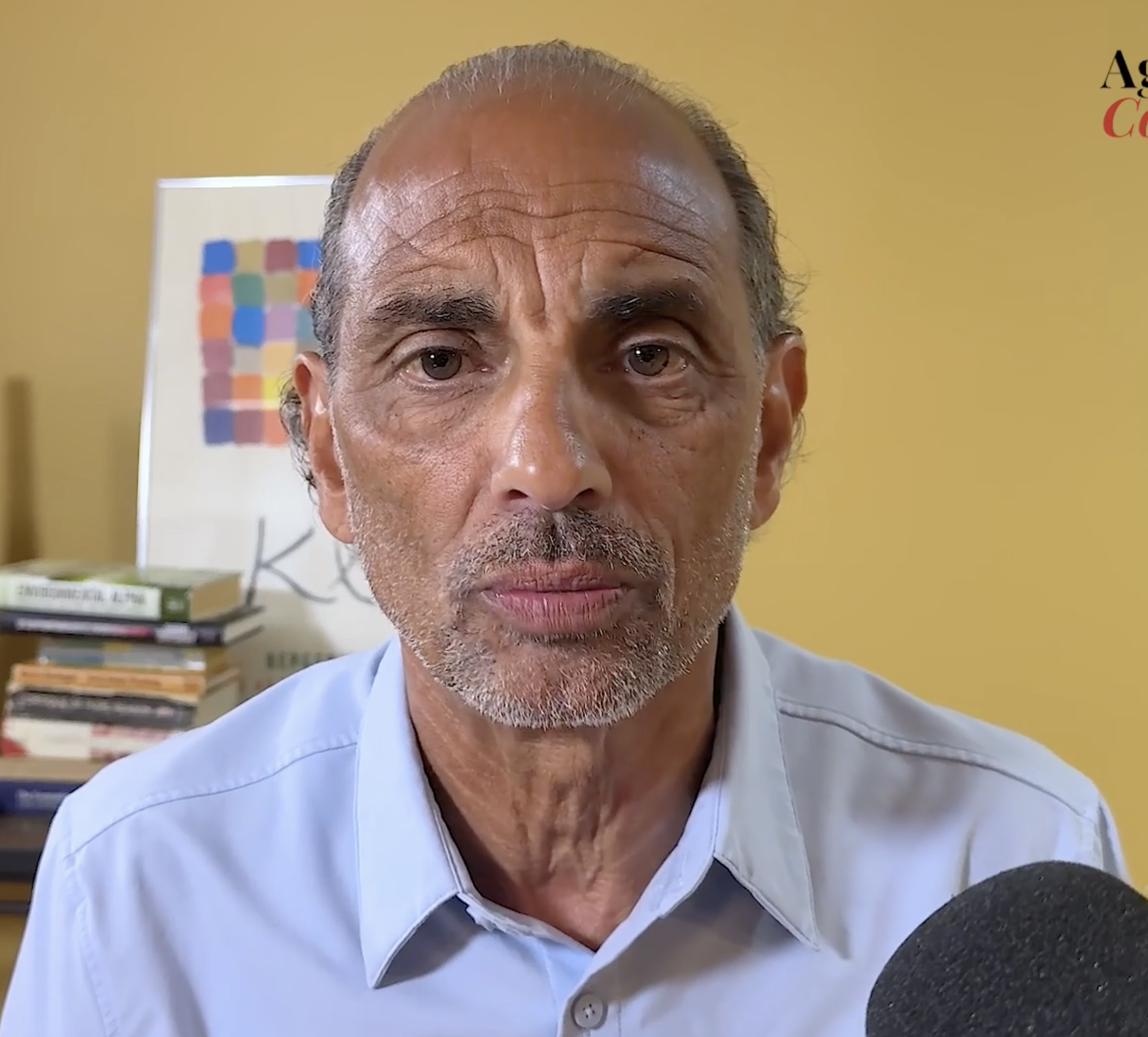
Hi everyone and welcome to another episode in our Private Market series. I'm Angelo Calvello and today we're exploring the booming secondaries market. McKinsey reports that in the first half of 2025, secondary transaction volume hit a record of $100 billion. And many expect that record to be exceeded in the second half of the year. And we've seen this growth in secondaries across asset types, pe, credit infrastructure and real assets. And secondaries have become an essential portfolio management tool for many LPs and GPS. My guest today is Andy Green and Andy has generously offered to share his thoughts on secondaries. Andy is the CIO of the Toronto Transit Commission Pension plan and oversees its $10 billion fully funded defined benefit pension portfolio. His responsibilities include all investment strategy, portfolio construction, due diligence and risk management. Under Andy's leadership, the pension plan has significantly increased its allocation to private markets, growing from about 20% to roughly 40% of the portfolio. Before TTCPP, Andy worked at OP Trust, Northern Trust and the University of Wisconsin foundation and wtw.
Hey, the bio is in the show notes. I wanna mention that Andy was recently named the 2025 Public Fund CIO of the Year by Institutional Investor. This is a well deserved recognition that comes as no surprise to those of us that know Andy. I first met Andy when he was at Northern Trust in the late 1990s. I was running a family office in Chicago and Andy was my go to contact at Northern Trust and we've been friends ever since.
I can tell you, throughout his career, Andy has distinguished himself as one of the industry's most rigorous and original thinkers. A professional who consistently prioritizes his team and his stakeholders above personal advancement and personal recognition. Andy, welcome to the show.
[00:03:09] Speaker A: Thank you very much, Angelo. I appreciate you having me here, Andy.
[00:03:12] Speaker B: My pleasure. Now, everybody might know you as a Canadian, but I know, Andy, you grew up in Chicago, and if I'm not mistaken, it was Lincoln park, am I right?
[00:03:22] Speaker A: That is correct, Angelo. A long time ago. Very long time ago.
[00:03:25] Speaker B: Yeah, yeah. So, you know, I do these warm up questions, but these will have a distinctive Chicago tone.
[00:03:32] Speaker A: Oh, I love it.
[00:03:33] Speaker B: You read them?
[00:03:34] Speaker A: I love it.
[00:03:35] Speaker B: Okay, Cubs or Blue Jays? Wow.
[00:03:38] Speaker A: That's a real.
I gotta go. I gotta go Cubs. I still gotta go Cubs. It was pretty amazing. I was. I was hoping for a Cubs and Blue Jays World Series. We got close.
[00:03:49] Speaker B: We got close. Okay, second one. Deep dish or thin crust?
Wow.
[00:03:58] Speaker A: I've become a fan of the thin crust, I gotta say.
[00:04:01] Speaker B: Okay, beef sandwich or hot dog?
[00:04:04] Speaker A: Is a beef sandwich dipped?
[00:04:06] Speaker B: It gotta be dipped.
[00:04:07] Speaker A: I mean, it's gotta be dipped and.
[00:04:08] Speaker B: I gotta get dipped in here.
[00:04:09] Speaker A: We can't get those here.
[00:04:11] Speaker B: Okay.
[00:04:12] Speaker A: It's a crime. It's an absolute crime.
[00:04:14] Speaker B: So yogurt, beef sandwich is your choice, right?
[00:04:17] Speaker A: 100%. Whenever I.
Whenever I go to Chicago, I go there. Or whenever I can find a pot bellies, which is about as close as I can find to that.
[00:04:27] Speaker B: There are. That's a Merck beef sandwich, Andy.
[00:04:29] Speaker A: Yeah, no, no.
Gotta get dipped with the sweet peppers and onions and all that.
[00:04:35] Speaker B: Final question. If you could pick one morning routine that fuels your success as a cio, what would it be?
[00:04:42] Speaker A: Oh, my God. I don't. I don't think there's nothing like yoga or anything like that. Honestly. It's getting up in the morning, going for a good long walk. I find I have a lot of epiphanies or whatever when I go for a long walk with the dog and actually make a. Make a point not to bring any devices with me, no podcasts or whatever. I just want to unplug and walk around and think for a little while.
[00:05:08] Speaker B: But it kind of breaks my heart. You're not listening to me when you're walking your dog, but I guess you've had enough of me over the years. Andy.
[00:05:15] Speaker B: All right, we're through our warmup. Let's jump in.
[00:05:18] Speaker A: Right on.
[00:05:19] Speaker B: Andy, I think it's fair to say that you and the team have built a high performing investment platform from the ground up. So could we start with just an overview of what you've built? Tell me about your current private market allocation.
[00:05:34] Speaker A: Sure, yeah.
When I joined in 2017, I was joined as the first investment person and been fortunate enough to have the support of CEO and the board to build a team. So we're up to about nine people now. We're a pension plan of 10 billion now. And so we've built the portfolio from about 20% private markets. We also have a hedge fund allocation in the public markets portfolio. So we were at about 20% private markets and we've now built that up to a little over 40%. It's actually 41% and that's comprised of 10% private equity, 7% private credit. And then maybe this is where we're different than some 12% real estate and 12% in infrastructure because you know the Canadians, we love our infrastructure.
[00:06:29] Speaker B: You sure do.
Okay, so now we know kind of how you're thinking about things. Let's move into a discussion about how limited partners in private equity and venture and private markets in general, they see these converging challenges of liquidity and pacing. And this complicates portfolio management and manager selection.
Let's go right into the secondaries. Tell me how secondaries can help you with pacing and liquidity and more generally, what are the benefits, Andy, to do in secondaries for an asset owner?
[00:07:02] Speaker A: Well, I think there's a lot of benefits from a secondaries opportunity. I mean there's obviously trying to get exposure and trying to mitigate the J curve in the process. And you're buying typically a diversified portfolio of something unless it's a single asset being.
And so it's diversified by often by vintage year and geographies and sectors. So that's a great benefit there.
Obviously they're cheaper.
I think it's a great tool to, in our case, if I think of where we use secondaries, we have not used secondaries as a liquidity tool to sell per se. I mean we just know that secondaries, we get our cash back factor. So when we factor that into our pacing models, like that's a nice investment, that we earn a high IR and a solid multiple and then we get our cash a couple of years quicker than we would normally would. Right. In a, in a primary fund. So I think a tool from that, that way because cash is king, but have not used it as a, oh, we're really over our skis. So we've got to do anything in a, in a secondary market. But I just think, I think overall the, the, you know, the increase in secondary, I think it's just a massive benefit for, for private markets. It's just another tool like it'll never be as liquid as public markets. An equity portfolio manager does this all the time. Where they have a stock, it hits a price target and they sell a third of it. Like, I don't understand, like, it's really. You could do the same thing now and to some extent in private markets. So I think that that's a great tool. I got to take some chips off the table.
I get a hold of an investment or get out of it if I want. I could think about the opportunity costs now and I could actually do that. I also think obviously people's views of where investment opportunities are change, so you may want to move on from an idea or a gp. Something's happened and you just want to pivot to a different strategy.
[00:09:07] Speaker B: Andy, stepping back just a second. When we're talking about pacing, does that to. You mean portfolio rebalancing?
[00:09:15] Speaker A: Absolutely, Absolutely.
[00:09:16] Speaker B: Okay.
[00:09:17] Speaker A: Yeah. So I mean, we would, when we were modeling our private markets, we would probably, like everybody else does, have different, you know, models for primaries versus co investments or direct investments, like when we would expect our capital back. So we would model each of those differently. So there's some benefits that way. So we're doing, we're depending on kind of where we are in our portfolio. We're a mix of both of those.
[00:09:45] Speaker B: And would you consider using secondaries, for example, if you had a, I don't know, an underperforming manager that you want to get out of in the private space? Is that another, like kind of liquidity event?
[00:09:58] Speaker A: That's another tool. I mean, we've looked at that. But most, I think what's, what's dissuaded us is often the price that we would get for that asset is just isn't worth it. And so we kind of feel like we've sold that down to this point. And unless we think things are going to get worse, you know, we're going to, we're going to do that. But we do, I mean, we do, you know, if I think about things that we're doing in our portfolio and my portfolio, you know, if I think of kind of the four private market areas that we invest in and our portfolio is in different positions or places or in the cycle, I guess, where we are relative to our pacing. So, you know, some places where we're quite mature and then I think of somewhere like real estate where we're quite, you know, we've been doing a big restructuring and there it is, been a, you know, is selling a property, Is that a secondary? We have, we've sold a couple of Them as packages of assets, not as. Not fund investments. But we've sold those to try and restructure, underperform, sell underperforming assets. Because we look at the opportunity cost is too high and we're going to redeploy that in something else. We just have to take on reinvestment risk and secondaries once again, is another way to kind of help with that.
[00:11:15] Speaker B: You also mentioned how it reduces the J curve exposure.
[00:11:19] Speaker A: Yes.
[00:11:20] Speaker B: Is that something that's top of mind when you're looking at this, looking at these opportunities? I should say.
[00:11:26] Speaker A: Yeah. I think that. I would say it's fair that that is definitely a lot. A lot of that. And in our case, you know, to us, we see, you know, that in the marketplace, you know, the funds are all. It's also an. It's an opportunity. Right now, Angela, I think that's the other part. I heard, you know, on your last call with Don, he was talking about that as well. Leaning into these opportunities, you know that these GPS are stressed. Right. And so these. There's some. A lot of these GP LED secondaries are really good.
We're able to buy some of these at good prices, you know, so this. This might be an area that we lean. Have leaned into a little bit more. So, yes, it's part of an overall portfolio construction. But, you know, when the wind's in your back in a theme, you know, you want to lean into that a bit.
[00:12:15] Speaker B: You've got the benefits here of.
I'll try to summarize it. You got liquidity, you got pacing, you got pricing.
Those could all be advantageous to you as a buyer of secondaries. Yes. What are the challenges, Andy, that you face when you start looking at secondaries? I mean, it's a different kettle of fish than investing in a fund as an lp.
[00:12:35] Speaker A: Absolutely, absolutely.
[00:12:37] Speaker B: How do you and your colleagues deal with the challenges?
[00:12:41] Speaker A: Yeah. So, I mean, in our case, we've got a team of three people internally that focus on this, and there are cases where we will bring in consultants to help us evaluate these opportunities.
I think the other part that's important to, you know, you mentioned what is a challenge. The challenge is very often you get them and you've got to move quickly. And so I think one of the things that we've been lucky with is over the years is our governance has evolved over time. So originally everything had to go to a board or an investment committee, and now we have a limited delegation where the CEO and I can make investments without taking things to the board.
So we're able to enact, you know, move much quicker, but the reality is you still have to move quickly. Right. And so, you know, you're dealing with limited information.
Right. And so you're, you're trying to. You're right. I mean, we can much more easily underwrite the GP that's. Or the GPS that are involved in the deal. It's when there's specific securities that are in the, you know, in the mix as well, or holdings. I think that's where you're. What you're getting at that that skill set is much different than just picking funds.
[00:13:56] Speaker B: I would.
[00:13:57] Speaker A: I definitely agree with you.
[00:13:59] Speaker B: It seems to me, as a guy who's never done secondaries, two things come to mind and I think you've kind of touched on, well, at least one of them. But we'll go to governance later. There's a certain valuation complexity when you're dealing with secondaries.
You may have, I don't know, dated, maybe incomplete information, which I guess you mentioned with this informational asymmetry. How do you overcome this valuation complexity in the information asymmetry?
[00:14:27] Speaker A: I don't know that you can.
You can't totally.
Right. I mean, I just think you've got to go in and with the best information that you have and try and triangulate the valuations as many different ways as you can. But at some point, I think it's, in my mind, I think that's why these kind of investments, the hurdle is a little higher, is there's probably a little less certainty. And I would also say kind of to that point, it also varies a bit by asset class. Right. I think private credit and private equity, you know, those are faster moving.
In our case, real estate and infrastructure are moving around, but, you know, at a much slower speed.
So that's in our case, where we've tended to lean into more is in my mind, the cash flows and the valuation on a longer dated asset is just easier to underwrite.
[00:15:23] Speaker B: I think it may be easier to underwrite, but isn't there a certain. I don't know what I would call it, Andy? Like, I mean, there's an operational execution to this.
[00:15:32] Speaker A: Absolutely.
[00:15:32] Speaker B: And I assume where you're used to looking at fund documents, those are pretty straightforward. Now you're looking at what could be complex legal documents because you're transferring these limited partner interests.
[00:15:49] Speaker B: You want to move quickly, but that must take some time. Again, takes you to governance. If you have the ability to make that decision, if you've been empowered with that, I assume you spend quite A bit of time on this operational, I'll call it a burden, but it's a necessity, I guess.
[00:16:03] Speaker A: Yeah, it for sure is a bigger part of, of what we do. And, you know, that's why for us to do it ourselves, I would say the hurdle is, is higher. Right. Like if it's really quick and really technical, we're not going to try and do adjust with ourselves. We're going to get some, you know, you're obviously going to get legal and tax advisors, but you may need to hire some other kind of advisor to on the deal. And if we can't do it, we're going to get help like that. And so we'll often bring someone in to help us underwrite the deal.
But it is easier if, you know, if it's a gp, you already know or something like that, if there's some. But you do have to move quicker. I mean, that's why it's interesting as we've evolved as an organization, we're in the market. I remember hearing Don talking about he was recruiting, but we're recruiting for an operational due diligence person because it's a much heavier burden now to take on more secondary and co investment deals ourselves. And what we find also is what we get is different from asset class to asset class. Right. So trying to standardize that is also part of what we're trying to do.
[00:17:17] Speaker B: It's kind of interesting, you know, so you talk about challenges, you got valuation issues, you've got informational asymmetry, you've got this operational, I'll call it again, complexity in some ways that you have to deal with. And yet you're still working under the exigency of time that you have to move quickly. I assume, Andy, that exigency, that force of time only applies for so long for certain deals. As a good fiduciary, you got to say, at some point I would think I need more time. And if you're not giving me more time, I'm out. Am I right?
[00:17:51] Speaker A: Oh, absolutely, absolutely. And we, you know, which is, I would say we probably say no, a good percentage of time just because we don't have time. Right. Because we can only handle, you know, so many of those. I mean, my team's trying to, you know, look at, look at a couple right now and we kind of have to go, you know what, there's three we're looking at. And, and how do we move? Let's get this down to one really quickly because what really on top of everything else, what else can we Action and what can we do well and if we can't do it well or we're rushed, we're just not going to do it.
[00:18:25] Speaker B: Yeah. So you've mentioned certain types of exposure that you've gained with secondaries. If I remember, Andy, you said you're doing private equity in secondaries, infrastructure, real estate. Are you doing private credit also in secondaries?
[00:18:43] Speaker A: So far, private credit is the one area that we're not doing secondary. So last year we went into our first real estate and infrastructure secondaries funds, but have not done that in private credit yet. We are looking at that. I mean, I think also in our case we actually have a very large secondary investment in our portfolio already.
So there's been kind of limited ability to do much more.
[00:19:10] Speaker B: How do you source secondaries?
[00:19:13] Speaker A: Our case is a team that relies pretty heavily on external managers. I mean we're relying on our partners. Right. We're trying to be good partners to those that we invest with and whether it's lpacs or whatever and to be really engaged and to challenge them. And when things come up, if we say, hey, we're interested in combat because I think most LPs sort of put their hand up to their GPS and say, well, please tell us about Go Invest. And then 95% of the deals they say no to that they can't look at because they're too busy. And so, you know, we kind of, what we do is we tell them ideally what we're looking for. So if I think of in the infrastructure space, I know data centers are all the rage. We're actually very heavily invested in the data center space. So we've actually said we'd like to look at other stuff. Right. Like we're not really going to look at a data center deal. Like, you know, we've still seen them, but that's not areas of focus. So if I think of we're going to lean in areas that we want to, you know, holes that we might want to fill or themes that we want to lean into. But because this we do have to rely on, you know, our GPS to help. I mean most of our co investments will come under alongside a gp and often our, you know, if I think of most of the secondary transactions have come in through an an advisor. So we're not right now where our flow that's coming directly to us is lower than I'd like. But that's just now a matter of the team's got to do. They know this, the team's trying to get out there More to help source that. I mean, if I, if I think about it, it's just a, it's, it's a people issue. Angela. We had the nine people that just happened as of about a year, well, as of July. So, you know, I feel like we're finally, finally at our, at our full team size. And so we're going to try and spend more time working with the market, whether it's brokers, engaging brokers or different advisors, as well as our GPS directly.
[00:21:21] Speaker B: India, are many of the secondaries that you look at and invest in, are they GP led increasing?
[00:21:29] Speaker A: Obviously increasingly more. They're a lot, a lot more GP led. I mean, from, from where I sit. I mean, you know, I don't, I mean the reality is my private markets team see, I don't see every deal that they see. But my, you know, when I talk to them and when I interface with, you know, the industry and whatever, it seems like GP LEDs for sure is. And I think because of the, you know, one of the rationales I brought up earlier is every fund is being stretched out. Every fund has to keep going. Every GP has their LPs screaming they need more capital. Right. And they've got to do something.
[00:22:04] Speaker B: Yep.
As part of this ecosystem with secondaries, GPs are using continuation vehicles. They're selectively monetizing weaker assets or restructuring portfolios in a way that, I don't know, has, you know, kind of less favorable, in a less favorable exit environment.
Are you involved in any way in continuation vehicles or any thoughts on them? You don't have to tell me.
[00:22:31] Speaker A: We've done some as part of a portfolio of secondaries, we bought continuation vehicles as, as a, as a part of that, but not, have not invested directly in any continuation vehicles.
Everything that we've looked at is, just doesn't make economic sense. It's too expensive or whatever or. Right. There's no exit strategy for these assets.
[00:22:54] Speaker B: Andy, I wanted to go to another topic. There's another trend that's occurring now that I'm seeing more and more among your peers. I don't know where you stand on this, but I'll take your thoughts and that is limited partners are acquiring GP stakes. They're taking minority stakes in private equity and alternative asset management firms.
Any thoughts on this?
[00:23:17] Speaker A: I think it's an interesting exercise. Right. I mean people have done this for years, whether it's the Petershill groups and Dial Now, Blue Owl, I would say, hey, I don't know if the governance around that. Right. I think it's as a Revenue stream. It's really interesting because we know obviously these firms are making a lot of money. I would just argue.
Well, I wouldn't argue. I would say that going into some of these things we all know, like we talked about, the fundraising environment is much more difficult now. So to expect these firms to grow at the same rate they have the last five years seems silly. Right. And so I think if one goes in with that understanding. But it is, I mean, it's a diversified business and all that. I mean, we've done. About 10 years ago, we did an investment, minority investment in a private credit firm and it's been a fantastic investment. That was done before my time, so I could speak of sample size of 1.
It's been a fabulous investment.
[00:24:25] Speaker B: If it's been so good, why haven't you looked at other ones?
[00:24:28] Speaker A: Sporadically, to be honest. I mean, we've looked at some fun ones. I think the challenges is, you know, the governance and where does it fit in the portfolio? In our case, we've also, for us, it was a very large position.
So I think that that has precluded us from doing any more because our current investment is, you know, I would say one of the larger holdings in the fund right now.
[00:24:51] Speaker B: Okay. You don't need any more concentration risk?
[00:24:54] Speaker A: I don't know that we need. It's pretty diversified, but I don't know that we need. You know, in the. The other challenge with it is it's not very liquid.
[00:25:02] Speaker B: Right.
[00:25:03] Speaker A: But now there's the secondaries market. So there you go, Andy.
[00:25:07] Speaker B: Not only is there a secondaries market, we're seeing a lot of tokenization occurring too. The tokenization of funds, of real world assets too. So you never know. That may kind of open that up even more if you start putting it on chain.
[00:25:20] Speaker A: Absolutely.
[00:25:22] Speaker B: I may do an entire series on tokenization, Andy. I find it to be incredibly complex and innovative.
But you got any thoughts on that? And this is not part of our outline.
[00:25:34] Speaker A: Yeah, no, no, no, I, I really don't. I mean, I think it's, you know, if it's something that, whether it's some, you know, blockchain or something that figures out a way that it's easier to sell a stake in something to some. Somebody else. I don't know how KYC rules and all that work and you know, in that kind of world, but I think, you know, I mean, because one of the challenges right now is with a secondary is you have to get the GP often to agree to it. How does that work in digitization?
My Understanding is you can do it. Now, I think the question, does the GP want to lose that control or how do they feel about losing that control? There's clearly some upside, there's some, some positives of doing that, but I don't know to the extent right now the GP would, you know, they have control. They could say who owns a stake in their fund. I don't know what that means in that world. But it's pretty, it's pretty interesting. Right? The whole KYC process and AML is very complicated and burdensome for a lot of folks. I think we would all kind of welcome. I don't know if how the lawyers feel about it, but I think the rest of us would love it.
[00:26:45] Speaker B: I'm going to see if I could pull it together and do something on that. There's just so much going on in that space. My problem is, Andy, once I start reading, I start going down these rabbit holes.
[00:26:56] Speaker A: You're too smart for your own good.
[00:26:59] Speaker B: That's what my wife tells me. Andy, I appreciate that, but usually she says it ironically or sarcastically.
So I'm trying to get to a summary here because we're coming up to our ideal time limit here, given the benefits that secondaries offer in terms of liquidity, pricing, pacing, diversification. You've talked about being able to take chips off the table, the challenges they have in terms of some of the complexities. What I'm kind of getting to is that, and you may have told me this, asset owners can no longer be passive LPs in private markets. Do you agree with that? Because the old days, you just buy a fund and you just wait for an exit and you're stuck.
[00:27:43] Speaker A: Yeah, I mean, I do think you have to be more active. I mean, I do think the hurdle to sell is pretty high. I mean, you would have to really have some questions or a big, like I said, a change of strategy. But I think you gotta watch what's going on because the thing is also you still get, you know, there's still that information gap that you talked about. Right. And so you have to be active with your GPS to understand what's going on in the portfolio. You know, now there's a little bit more option to sell a stake or maybe sell a partial stake. Maybe your fund's done really well. It's not always, you know, this fund is done awful. I got to get rid of it. Maybe it's like, wow, this fund is done great. I'm going to take some chips off the table and either use that for, for their Next fund or for something else. Like, I think it's. I think it's. It's a great tool. You know, I thought you were going to go with this. Angela's like, oh, what's the downside of these? Right. We talked about the, you know, the time constraints and all that. But, you know, also, sometimes you don't get all good stuff in these things. Right. There's stuff you get in there that you're kind of. I wonder that you're stuck with later.
[00:28:50] Speaker B: I mean, that goes back to your sourcing capabilities, right. And vetting.
[00:28:55] Speaker A: I think so. But, you know, that you might do. You might say, you know what? I'm going to. I've done all my homework on it, and 70, 80% of this stuff is great, but in order to get that, I've got to get 10 to, you know, 10% of just. It's. I don't know what I'm going to get with it. It might be a zero. It probably is a zero, but everything else is worth it. So I'm going to do it. And. But then you're stuck, you know, when you've been able to sell everything else, what do you do with whatever left? Does it wind down? Is it a direct holding in a. In a company, you know, or what happens? Right. Or if this.
Who knows? So I think that's the thing. I mean, I think we've all had these legacy assets that have been on our books forever, that our CFO is like, when can we write these things off the books already? Right. And so we all have some of those.
[00:29:43] Speaker B: I've got some of my own portfolio. I got to tell you, Andy.
[00:29:48] Speaker B: I think that's an interesting point about how you could get, so to speak, stuck.
And then suddenly, if you're doing private credit, you may be taking ownership in the underlying asset, and you have no interest, perhaps, in doing that as a good fiduciary. I mean, you don't want to own an operating company unless that's the decision at the beginning instead of getting stuck with it at the end.
[00:30:10] Speaker A: But I don't know what asset owner could actually deal with that. Right. Or has the resources to deal with that. You would have to bring in a TP to take it on your behalf, probably. Unless you had those kind of internal capabilities.
[00:30:23] Speaker B: Yeah, and you're right. I don't think many asset owners have the ability to run an operating company.
You're more comfortable doing something in the traditional capital markets rather than in corporate finance.
Absolutely.
[00:30:38] Speaker A: Yeah.
[00:30:38] Speaker B: Andy, that's all I got for You, I don't want to keep you much longer because I know you got things to do, but I do want to ask you, what's the worst pitch you ever heard?
[00:30:51] Speaker B: Hey, you've been in the game for years and years, so I'm sure you've heard some interesting pitches.
[00:30:59] Speaker A: You know, I mean, there's some that are really salesy and I can't, you know, it's usually the super pushy, you know, expect you to do something right now that you know, hey, our three month performance is awesome and you should come check out our fun, right? It's something along those lines, probably a number of those.
Or the other one is where the manager tries to dump the whole kitchen sink on you. And here's 10 things we're talking about. Which one do you want? I think the industry folks have gotten better at trying to figure out the asset owners needs before trying to sell them everything.
I feel like that's gotten better. The industry's gotten a little more consultative and hopefully gotten a little bit away from that. Hey, can I have a 15 minute meeting with you? Because I've got a check, you know, that's one of my KPIs as a salesperson. Yep, I think it's gotten better.
[00:31:59] Speaker B: That's a good point, Andy, about how it's important for the people on the front lines to understand what you do and how they might have a solution for you or something that could help you. I learned that from our mutual friends at BP back in the day, Marv and Greg and Mark Thompson. You know, don't come in here with a suitcase where you just open it up and say, I got this, I got this. Come in here understanding I've got a specific need or problem.
[00:32:28] Speaker A: Or at least look at our website, you know what I mean? And look at our asset mix.
I think that's probably not a bad place to start or money market directory or wherever you get your data.
[00:32:38] Speaker B: Exactly.
[00:32:39] Speaker A: We'll get that first.
[00:32:40] Speaker B: Randy, again, thank you. This is great. Next time you're coming to Chicago and I know you get here up in the northern suburbs on occasion, let me know. I'll bring you a beef dip with sweet peppers. I could promise you. I don't think that's going to violate your gift policy. I'll keep it underneath.
[00:32:55] Speaker A: I don't think so. I don't think so. I feel like I need to make another excuse also to come back for Italian beef and probably a Bears game.
[00:33:03] Speaker B: Well, we could talk Bears if you.
[00:33:05] Speaker A: Want, Andy, but.
[00:33:07] Speaker A: I'm getting excited. But I'm trying not to get too excited because I know how it works with the Bears. You get excited and then you get disappointed.
[00:33:14] Speaker B: Well, we got the big games coming up.
[00:33:16] Speaker A: Well, I gotta play the packers twice still, right?
[00:33:18] Speaker B: So the packers twice. I think the Lions and I think we got the Eagles still, right.
[00:33:22] Speaker A: They got a really tough. It's hard to get too excited, but.
[00:33:26] Speaker B: Especially the way they've been winning. I mean, I don't know if you get the games up there in Toronto, you may have the package you could buy and watch the Bears. All you gotta do is watch the last quarter. Basically, that's when it all happens.
[00:33:36] Speaker A: So yeah, I know it's been pretty crazy. It's been just when I think I should turn the TV off and start getting mad, they. They make a great comeback.
[00:33:46] Speaker B: Me too. I do the same thing. I say, I'm gonna go outside, take a walk.
[00:33:50] Speaker A: Oh, they blew another game again. Damn it. And then. Oh, we won't chatting with you, Angelo.
[00:33:59] Speaker B: Thank you, Andy. I always enjoy our conversations. I'm glad we're able to share some of or at least one of our conversations with some people because we have some good ones over the years, so.
[00:34:08] Speaker A: Absolutely, absolutely. Well, thank you.
[00:34:11] Speaker B: Thank you very much, Angelo, Andy, you're welcome.
Thanks for listening. Be sure to visit PI's website for outstanding content and to hear previous episodes of the show. You can also find us on p and I's YouTube channel. Links are in the Show Notes. If you have any questions or comments on the episode, or have suggestions for future topics and guests, we'd love to hear from you. My contact information is is also in the Show Notes and if you haven't already done so, we'd really appreciate an honest review on itunes.
These reviews help us make sure we're delivering the content you need to be successful. To hear more insightful interviews with allocators, be sure to subscribe to the show on the podcast app of your choice. Finally, a special thanks to the Northrup family for podcast providing us with music from the Super Trio. We'll see you next time. Namaste.
The information presented in this podcast is for educational and informational purposes only. The host, guest and their affiliated organizations are not providing investment, legal, tax or financial advice. All opinions expressed by the host and guest are solely their own and should not be construed as investment recommendations or advice. Investment strategies discussed may not be suitable for all investors as individual circumstances vary.
[00:35:26] Speaker A: It.