Episode Transcript
[00:00:00] Speaker A: When I started thinking about natural capital, sort of over seven years ago, I recognized that and read a, read a report by the UN about just the scale of the challenge in order to get to a nature positive net zero by 2050. We're talking about 7 trillion of investment annually to get there. And I started thinking about, well, trying to put that number, such an enormous number, what does that mean? And looked at what's the total pool of philanthropic capital globally? Well, that figure comes to less than 10% of that figure.
[00:00:35] Speaker B: Welcome to the Institutional Edge, a weekly podcast in partnership with pensions and investments. I'm your host, Angelo Calvello. In each 30 minute episode, I interview asset owners, the investment professionals deploying capital, who share insights on carefully curated topics. Occasionally we feature brilliant minds from outside of our industry, driving the conversation forward. No fluff, no vendor pitches, no disguise marketing. Our goal is to challenge conventional thinking, elevate the conversation and help you make smarter investment decisions. But always with a little edginess along the way.
Welcome to the Institutional Edge. I'm Angelo Calvello. Natural capital is a topic I've been thinking about since I published Environmental Alpha way back in November of 2011.
The core idea for natural capital is straightforward. Nature has economic value, tangible assets like timber and water, intangible but essential processes like photosynthesis and pollination. Strip those out of your accounting and you're not measuring the world accurately. What's changed since 2011 is that the investment case has matured and so is the skepticism. Many of you have sat through enough ESG talking point presentations to know the difference between a genuine return and a rebranding exercise.
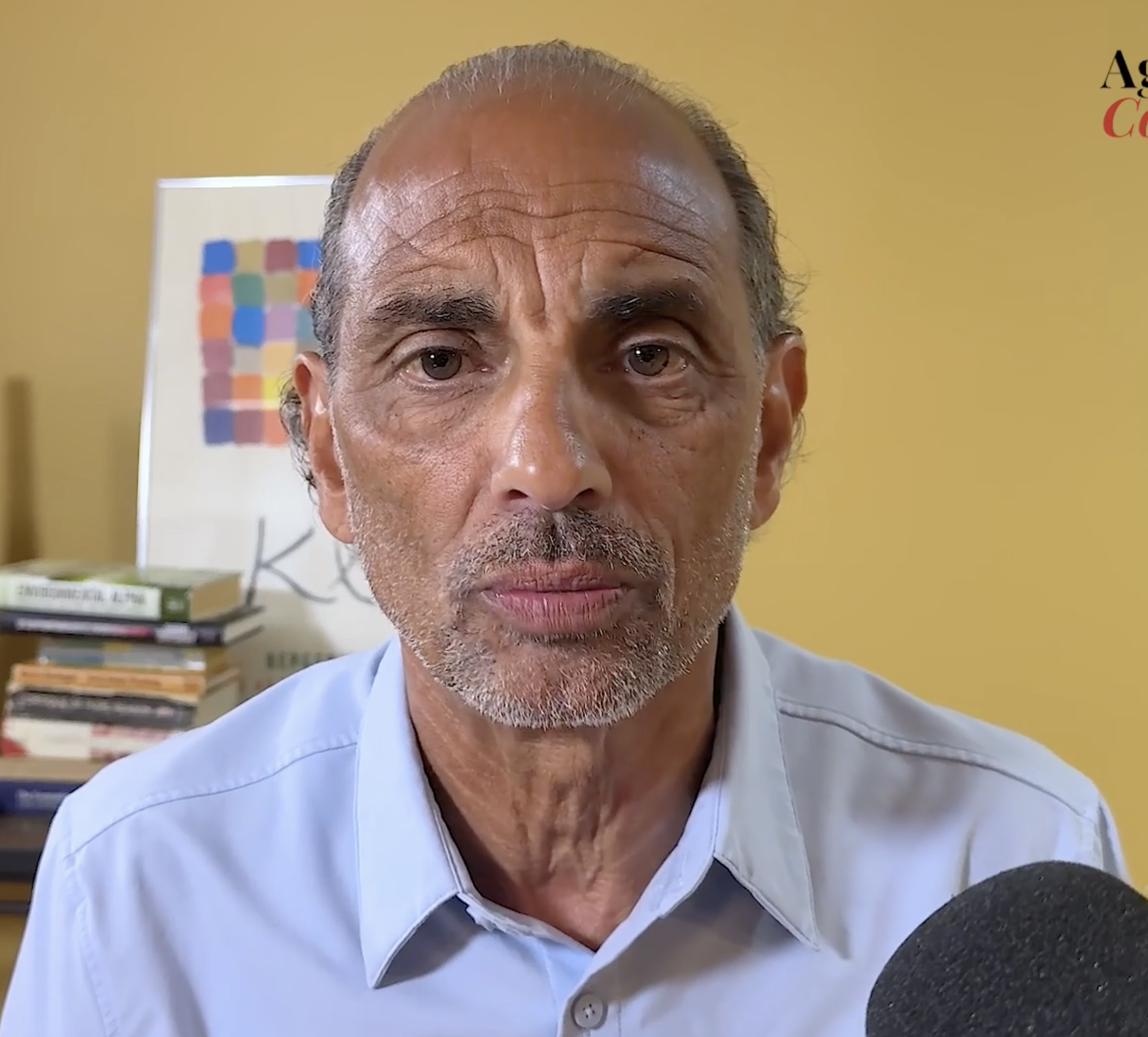
So when I look for a guest on this topic, I wanted someone who comes at it through a fiduciary lens. Somebody who insists that natural capital has to deliver real risk adjusted returns, not just environmental outcomes. Richard Kelly is that person. Richard is the managing director and co lead of Foresight Natural Capital at the Foresight Group where he works directly with asset owners and regulators on natural capital and forestry investments. That combination markets and policy, returns and regulation is exactly the perspective this conversation needs. We'll put links to Richard's bio and the research papers in the show.
[00:02:36] Speaker A: Notes.
[00:02:37] Speaker B: Richard, welcome to the show. It's great to have you on.
[00:02:40] Speaker A: Yeah, thanks Angelo. It's fantastic to be on the show. Thank you.
[00:02:43] Speaker B: Thank you. You know, before we jump into natural capital, I wanted to ask a couple warm up questions just to get you going.
So there you go. Forest or ocean? Forest or ocean?
For me, forest, plant a tree or plant a seed.
[00:03:00] Speaker A: Plant a tree.
[00:03:01] Speaker B: Okay.
Long term compounder or short term catalyst?
[00:03:05] Speaker A: Long term compounder.
[00:03:07] Speaker B: And my last question, your choice of auto combustion engine or EV?
[00:03:15] Speaker A: Yeah, I drive a rather embarrassing car. I have three children and they don't do many EVs that come with enough seats for the number of kids that I have. But hybrid.
[00:03:27] Speaker B: There you go. Okay, I like the compromise there. All right, well done with the warmup, let's jump in. And Richard, if you would please help me set the table. Let's just give us a definition of natural capital. What does it mean? Tell us.
[00:03:43] Speaker A: Natural capital is essentially everything. I mean, it is essentially planet Earth. It is the land, it is the oceans, it is the air that we breathe. It is the world stock of natural resources.
And natural capital in many instances produces what is known in the industry as ecosystem services.
So these are outputs and there are kind of three buckets of these ecosystem services.
You've got provisioning services, so they will be familiar with these. These are, you know, producing food, producing timber, for example.
You've got cultural services as the second bucket. So these are, you know, societal benefits, like mental health benefits from being in nature, the ability to use, use nature recreationally, for example.
And then the third category is regulating and maintenance services.
So these are services that regulate the natural environment and regulate climate, for example.
So there's those three systems. And natural capital generally in the investment sphere refers to investment in that stock of natural resources. And what's really interesting at the moment is that natural capital is by definition the oldest asset class and one that we've been as humans investing in since literally the dawn of time. But what's particularly exciting at the moment is that some of these ecosystem services, many of which have been free for the past, so bees that pollinate their pollination services, as an example, that's been free. Increasingly now it's possible to actually monetize those ecosystem services. And that's unlocking investment into, you know, more holistic natural capital and ecosystem services. That hasn't been possible until, until really very recently.
[00:05:39] Speaker B: To me, as an institutional investor for many years, what falls into that first bucket, the provisioning of services is like you said, it's timberland and it's agriculture. That's where most people think of it. You're telling me it's more than that. You're talking about biodiversity fits in somewhere here, right? Is that the cultural bucket?
[00:06:02] Speaker A: Well, biodiversity, I would say is probably a regulating and maintenance service.
The cultural is more, it's very intangible. But it's the benefit that Largely humans derive from enjoying nature, being in nature.
[00:06:15] Speaker B: And where do you put carbon credits, carbon offsets in your three buckets?
[00:06:20] Speaker A: That's probably a sort of a regulator, a regulating and maintenance service. Because carbon sequestration from the atmosphere, that's directly contributing to the, to the regulation of climate and the global temperature. So it's a regulating, regulating and maintenance service. It's that third bucket.
[00:06:38] Speaker B: Why are we talking about this now? If this is the oldest asset class, we should have been talking about it a long time ago, am I right?
[00:06:44] Speaker A: If it's that old humans have been investing in natural capital, as I say, since the dawn of time, investing in agriculture, investing in forestry and harvesting forests for timbers, fishing in the oceans. We have been investing in natural capital since forever.
Why this is becoming an asset class with this new label, natural capital is really recognition of the fight against climate change and global biodiversity loss. You know, those twin and related issues have gone from fringe issues that you know, were not in the mainstream to now, you know, there is global recognition of those two challenges.
Governments are recognizing them as global challenges. And we've seen, yeah, an unprecedented level of kind of corporate support now actually for the fight against climate change. We've seen a literal exponential increase over the last decade of companies making validated science based pledges against, to contribute against the fight against climate change. For example, the big picture is globally we've been over consuming. There was a book published by Partha Dasgupta called On Natural Capital and his assessment in that book is that globally we would actually need 1.7 Earths for our current level of consumption to be sustainable. So we are environmentally overreaching and we've been doing that for a while. But we are now pushing planetary boundaries of that over consumption. And we're now starting to see the negative knock on impacts of that overreach. And it's things like global deforestation, it's rising global temperatures, it's a collapse in biodiversity. And so it's, you know, the science has caught up and it's now being recognized. So that's why I think this is a topic, you know, the last decade it's gone from fringe to mainstream as an issue and as an asset class.
[00:08:46] Speaker B: So you would think it's now mainstream.
[00:08:49] Speaker A: I think it's on the cusp now of becoming mainstream. I think natural capital as a term with institutional investors, I would say almost every institutional investor you would talk to now would understand at a high level what natural capital is, what you sort of mean when you talk about that. And There have been two very large surveys in the U.K. for example, of institutional investors and their allocation intentions over the next few years. And both of those studies have concluded that natural capital is now the number one area of allocation interest for institutional investors across the uk. And I'm sure there are other studies out there that would support that for, you know, in Europe and other developed economies. Now, I think it's an allocation interest that's been expressed. I think the actual amount of capital that's flowed so far, I think it's 0.2% of global allocations or institutional allocations are invested in natural capital.
The intention and what the ambition that's been stated in these surveys is getting up into the sort of, you know, low single percentage points. So we're talking sort of 3 to 5% of investors overall allocations and that's a staggering shift in capital from 0.2% today to 3 to 5% perhaps over the next decade. So, yeah, I think it's on the cusp of becoming a core part of institutional allocations.
[00:10:18] Speaker B: One of the things I focused on with my research in climate, I do a little bit in this space, I hope you know, that is, I've always argued that when you're dealing with climate and the risks associated with it, with climate, there's sort of a. Well, not sort of, there is a temporal exigency. I mean, you have to do something about greenhouse gas emissions and people often put ESG together. I always focus on the E because we're reaching a point or we may have reached that point where we're going to deal with adverse consequences that are irreversible. So that's another reason, I think, why now is that. And you've hinted at this, but I put my own language on it, this exigency to do something.
[00:11:05] Speaker A: Yeah, once, you know, once you recognize the risks and actually you start to see these risks materializing, you can't unknow that you realize this is not just a possibility but a probability.
And when you know that as an institutional investor, it's not just about structural, well, how can we avoid the risk? The problem is that the risks are so all encompassing. I think 2/3 of global GDP are directly dependent on natural capital.
It's very difficult to invest today with climate change, with a collapse in biodiversity and not come across the risks that those two global challenges face. And so once you know that these are issues, you've got a pool of capital, you can actually deploy some of that capital towards contributing towards a solution and that will help de risk your other investments. Not directly related to natural capital, but that are dependent on natural capital.
[00:12:03] Speaker B: I like that point. But this issue of biodiversity, loss of biodiversity, in my mind, I mean, that's tied to climate change. I mean, it's. I mean the deforestation of course could lead to loss of biodiversity, but in my mind it seems like it's just like you said, it all just fits together. Am I right about biodiversity?
[00:12:24] Speaker A: They're completely interwoven challenges. You can't separate one from the other. Climate has been given far more airtime and it's an easier concept to grasp. I think, you know, we're talking about tons of CO2 or other greenhouse gases in the atmosphere and you know, you can measure that, you can, you know, how many tons over what timeframe.
Biodiversity is fiendishly difficult to quantify and to measure and to demonstrate improvement. But just because it is difficult, and I think because of that, that challenge and that, yeah, that global challenge is definitely lagging in terms of global recognition, but it's on an equal footing with climate and actually completely interwoven with it. And it's just because it's a much more complex challenge to address and to articulate. But yeah, you're completely right. They're completely interwoven and interlinked challenges.
[00:13:22] Speaker B: Richard, just stepping back, one of the reasons I connected with you is because your focus on natural capital is through a fiduciary lens.
You may have the opportunity to talk to more investors or prospective investors than I would, but it seems like your conversations are very similar and that you tend to focus on, I guess what I'll call real risk adjusted returns and not just environmental outcomes.
Do we share that view?
[00:13:50] Speaker A: Yeah. When I started thinking about natural capital, sort of over seven years ago, I recognized that and read a report by the UN about just the scale of the challenge in order to address get to a nature positive net zero by 2050. We're talking about 7 trillion of investment annually to get there.
And I started thinking about, well, trying to put that number is just such an enormous number. What does that mean? And looked at what's the total pool of philanthropic capital globally?
Well, that figure comes to less than 10% of that figure. So even if you could deploy all philanthropic capital to climate and biodiversity loss, that doesn't even scratch the surface. Less than 10% of what's needed.
My epiphany moment was that, well, so these solutions with these investments, they're actually going to have to go to toe. They're going to have to go toe to toe with anything else that investors could deploy their capital towards from a risk adjusted return basis.
And these solutions they're going to have to compete. And it was with that realization that co founded Foresight Natural Capital where the focus is on we want to provide attractive risk adjusted returns first so that we can attract the capital at the scale that we need. And as a byproduct is this very direct and meaningful contribution to the fights against climate change and biodiversity loss. But if it doesn't offer a compelling risk adjusted return competitive with anything else, we're just not going to get the scale that we need. And so it's with that ethos very much in mind that we've developed our strategies.
[00:15:33] Speaker B: We're kindred spirits more than you know it. I mean when I wrote Environmental Alpha in 2011, boom.
I had the good fortune of being in presenting at COP15 and my takeaway was similar to yours that we need a lot of money. This money is going to have to come from the private sector, it's going to have to come from these large pools of capital. And yet at cop 15 I couldn't find any institutional investors that weren't even thinking about it. So that's kind of like the why now? But since we're framing it in terms of investment opportunity, what is the investment case look like? What's the opportunity set? And Richard, be honest, what's investable now versus kind of aspirational, what they're attracted
[00:16:21] Speaker A: to, those investors who have deployed into natural capital.
It has these actually really interesting and compelling fundamental characteristics.
So natural capital historically has offered a compelling return relative to the risk. So the Sharpe ratio, the additional return that it offers versus the additional volatility is compelling versus other traditional asset classes.
The other key thing that it offers, and this has become really relevant over the last really since the COVID pandemic, is its correlation with inflation.
We saw a global rise in inflation off the back of the COVID pandemic. It's only just managed to get it to become under control. And now with the latest Middle Eastern crisis, we're seeing natural capital. And the goods and services that can be produced from natural capital are strongly correlated with inflation. They're often commodities, food, timber, and so provide a natural hedge against rising inflation. And a lot of investors are really attracted by that.
And then the third key fundamental is the diversification of the asset class, the diversification benefits. So natural capital, it's not really correlated with equities or bonds or real estate or renewable energy or has very low correlations to those asset class. So when you add natural capital into a portfolio, it provides portfolio diversification benefits. So in times of volatility and uncertainty, it can be considered a relative safe haven versus other asset classes. That's the kind of the fundamental why invest in natural capital?
In terms of the specific areas that are investable at the moment, I think land based strategies are in focus.
I think timberland strategies have been around for a long time. Actually there's a broad spectrum of funds that can be invested in that invest in timber, they acquire forests, harvest them a bit, replant I think so that, that is investable. It's at the kind of the lower end of end of the risk spectrum. You've then got at the other end of the spectrum kind of carbon credit related strategies. So these can be, you know, and it's a pure play carbon credit strategy where it might be afforestation or it might be protecting existing forests. Now those sorts of strategies are much more volatile. The carbon credit prices do move around and much higher potential returns.
And then in the middle of that, as a sort of a blend of the two, proactive development based strategies.
So this is where similar to the kind of traditional timberland funds and AG funds, there's an ownership of the land and the return is underpinned by land, but the return is primarily driven by development.
So by changing the land use, transitioning the land use from one use to the next. So for example, afforestation is an example of that proactively changing perhaps pasture and grazing land into, into forestry. And there's an, there's an attractive arbitrage opportunity available on the, on the land value. And then you get carbon credits as the, as the sort of the cherry on top. So there's those broad sort of three strategies and I think interest is moving.
There's always going to be a place for traditional timber funds. But I think where the real impact and the higher returns, but still underpinned by land is happening in that middle space that I described, those proactive natural capital development strategies. And then I think it's early days for carbon credit strategies and highly volatile, not asset backed, doesn't necessarily have those kind of qualities that I talked about. So diversification, inflation hedge.
[00:20:21] Speaker B: Just stepping back, it looks like investors should consider natural capital because there's the possibility of good risk adjusted returns. There's cash flows associated with some of these investments. Correct? I mean you think about timber, I mean there's cash flows, it's an inflation hedge and it's a diversifier because it doesn't look like equity at the End of the day.
[00:20:41] Speaker A: Okay, Correct.
[00:20:42] Speaker B: All right. And then we've got these land based strategies. You've got credits and, and what you're calling proactive development strategies. I get it. The challenge I have with this is honestly in the carbon credit space, I will tell you just, you know, a little more background. At Rosetta, when I was working with my colleague Julia at Bonafetti, we had a carbon trading strategy, but we traded compliance credits EUAs.
The voluntary market has always been, how would I say, a little bit difficult for me. I mean, I was reading something, I think it was out of Oxford. They talk about how these voluntary offsets are riddled with intractable problems.
And I've heard this from investors too, because some of and even corporations have gotten burned in this space. I'm not calling you out on it, but I think this is one of the, as you talked about, kind of a nation area that's growing, but it just seems like it's embedded with a lot of risk for an investor.
[00:21:45] Speaker A: Voluntary carbon credits are absolutely an emerging sort of asset type. And voluntary carbon creditors have a potted history. The biggest sort of scandal that there was was there was a big Guardian expose of avoided deforestation credits. So these are the thinking being that there's a forest, the base case is it's going to be deforested and that carbon's going to be released into the atmosphere. If we do something to prevent that, then we should earn credits and then we can sell those credits to corporates.
There are some fundamental question and the Guardian exposed that a lot of those credits were sort of phantom. And how do you prove that a forest, the base case is a forest is going to be deforested and how do you prove the additionality of your intervention prevented that from happening?
And I think what we have seen, I think that expose was yes, it's challenging for voluntary carbon credit markets, but it's actually been incredibly helpful at driving the market towards higher integrity credits. And we've seen a massive shift away from low integrity credits such as avoided deforestation towards much higher integrity carbon removals based credits. So afforestation based credits, soil carbon credits, where you can demonstrate, you know, there was no forest there before.
We have proactively additionally planted this forest and you can literally see the carbon in the trees that was previously in the atmosphere. And I think that's the market is reflecting that now. We now see significant premiums for higher integrity credits removals based credits. And so there's a risk of sort of throwing the baby out of the bathwater. Any industry, any. This is a new type of asset. There are going to be issues, there are going to be bumps along the road.
And these previous scandals have really helped shine a light on. Okay, well, what does good quality look like and what do we need to be looking for? And I think the industry has moved on at lightning speed since those sorts of scandals.
And what I'm really encouraged by is the pace at which companies, the biggest companies in the world are making these validated science based net zero pledges. There are now over 10,000 companies globally who have made these pledges.
And these are, you know, these are validated pledges. These have gone through a full independent review. The decarbonization plan is credible and those companies account for over a third of global emissions. And what's exciting is that every single one of those companies is going to need a long term supply of voluntary carbon credits to offset the final 5 to 10% that it's just impossible to, to avoid.
And there's a global shortage of these high, you know, high integrity credits and there are long lead times to produce them.
So I think, yes, there have been scandals, but I think the demand is coming and we're very excited about the future of voluntary carbon credit markets. Certainly the discussions that I've been having with family offices on natural capital is that it's the next generation who are very concerned about what's happening with climate change and biodiversity loss and they want the family portfolio to be tilted towards something that is going to make a positive contribution.
And as the next generation are kind of coming up the ranks and starting to become in control of family portfolios, that's an increasing trend and I think already the majority of family offices have exposure to natural capital. But I think as that next generation come through the ranks, that's something that's going to continue to accelerate.
[00:25:32] Speaker B: So in the US we don't have that natural affinity from the family office to pasture land. You know, this may be occurring in the uk. Are you seeing it occurring in other areas? Whether it's, you know, Europe, Asia, us What's it look like? I mean you're building a whole business on this. I assume it's not just UK based.
[00:25:55] Speaker A: No, it's certainly in the UK and it expands across Europe.
Think of Highland estates, large estates in vineyards in France, for example. In Italy there's all sorts of different ways that olive groves, high net worths are investing in nature and it comes in lots of different varieties. It can be a whole spectrum, but there is this affinity and connectedness with Nature that exists across Europe.
[00:26:27] Speaker B: What are you seeing in the U.S. come on, my audience, I talk to a lot of CIOs at big plans. What do you see in the US and I know about the political climate, believe me.
[00:26:38] Speaker A: Yeah, I think honest, I don't talk to that many. We're not that focused on the US If I'm completely honest.
[00:26:47] Speaker B: There's your answer.
[00:26:48] Speaker A: Yeah, we don't get a huge amount of inbounding inquiries from the US I think what's happening the US came out of the Paris Accord. But what's interesting is from a corporate perspective, the companies who have made science based net zero pledges in the US even though the US is no longer in the Paris Accord, we're not seeing companies renege on those commitments. We're seeing these companies are continuing to decarbonize, they're continuing to invest in natural capital to secure supplies of carbon credits, but they're just doing it sort of under the radar and they're being much less vocal about it. I think those companies believe that is the US going to be out of the Paris Accord forever and they're laying longer term plans than perhaps one term.
[00:27:39] Speaker B: I would assume that the companies you're mentioning, many of them are multinational anyway.
We're not talking about a mom and pop shop.
[00:27:47] Speaker A: No. We're talking about some of the biggest companies in the world. Microsoft, Google, Meta, these are some of the biggest companies in the world. And actually they are clubbing together and there was something called the Symbiosis Coalition which was a coalition of these biggest tech companies globally where they're aggregating their buying power and they're going out to source long term supplies of voluntary carbon credits.
And I think from these big tech companies they're investing very heavily in data centers, in AI and AI related data centers. Now these data centers are hugely energy intensive and they're increasingly co locating renewables and securing long term PPAs of renewable energy. But they recognize that their long term business plan data centers, it doesn't stack up unless they can get to decarbonize that whole business model. And a long term supply of voluntary carbon credits to offset the final 5 to 10% that's unabatable, is essential for the long term viability of that whole exciting growth area.
[00:28:57] Speaker B: So we're still talking about the investment case. We haven't talked about the barriers to adoption. And again, I want to move beyond necessarily the political or the cultural barriers and think about it from an investment perspective because to me I see some of the same barriers I would see in any private market investment. But hey, you're the guest. People didn't come to hear me. So what are the barriers to adoption, Richard?
[00:29:23] Speaker A: The barriers to adoption, number one, it's about education.
I think it's an understanding of the asset class.
I think for many institutional investors, it's just understanding the business model of owning a forest, the business model of owning a farm, the business model of regenerative agriculture. It's an education process. And I think I spend probably most of my time talking to institutional investors. And it's educational, focused. It's. All right, explain to me, how do you turn a farm into a forest? How do you monetize carbon sequestration? How do you monetize biodiversity net gain? Yeah. How do you monetize reducing flooding risk? And so a lot of it is about education and it's about sharing what is possible and the range of different options that are available and the different kind of risk return buckets and where they sit. So that I think is definitely a barrier.
[00:30:22] Speaker B: You frame the barriers in terms of the, the investment opportunity. I was thinking in more traditional terms. If I'm an asset owner and I'm looking at an opportunity in natural capital, it's going to most likely be illiquid. So I've got a liquidity issue to deal with.
I'm also thinking track record, asset owners. Oh, I love three to five year track record.
I'm assuming that length of track record. And let me throw two more at you real quick. One is there's just not a lot of product available in this space. It's not like large cap value.
And then finally there's. And you've touched on this. We could, I'll just say it out loud, the return credibility because, you know, the offtake, et cetera. So, you know, length of track record, liquidity concerns, not a lot of product. That's kind of how I was thinking of it. But you framed it differently. Am I close?
[00:31:13] Speaker A: No, I think, yeah. If you take the kind of. I'm an institutional investor and I want to deploy.
You're spot on with those, with those three things. Liquidity is a, is a big issue. Inherently. Natural capital is an illiquid asset class.
We're talking largely about land and it's a real asset play. So you've always got that challenge of how you equate liquidity in an inherently illiquid asset class. Track record. Yeah, there is track record available for what I would describe as the kind of traditional natural capital managers. So those traditional timberland funds for example, where it's a more passive strategy, where it's sort of a buy, long hold, sell sort of play. But I think yeah, you're spot on for the more proactive natural capital development strategies where it's all about land use change and enhancement.
We're only.
There aren't many managers who are older than 10 years and have multiple vintages proving the business case. So there is absolutely that track record issue. Natural Capital has been around now.
There are a few managers now who are starting to demonstrate realized track record. And so I think again that is quickly.
[00:32:25] Speaker B: But that still gets back to the issue of a small opportunity set.
You're saying there's some managers that have a longer track record, a good track record. But if I'm a large pension fund and I need to deploy capital in this space, I need to make sure I don't have concentration risk. And I think that's just part of the maturation process. In my view. If we're at this inflection point, there will be more smart. I'll call them asset managers versus asset owners. Coming in here to say I see a very good risk return opportunity here and it's got a couple more. And one is what are the structures? These are not. I mean I've talked about it as if everything is private. I'm assuming there are like thematic equity funds I could invest in or SMAs or co invest.
What structures are taking shape now?
[00:33:12] Speaker A: Certainly from our perspective, our sort of flagship natural capital strategy started as a listed entity. And yeah, we IPO'd a company called Foresight Sustainable Forestry on the London Stock Exchange because we recognized there was a clear gap in the market. There was no ability really for investors to gain exposure to natural capital in a daily, liquid, daily traded format. And we ran the strategy listed for about three and a half years. But ultimately we decided to take the company private because basically equity conditions were not suited for that kind of listed structure. And it was our belief that we would have actually better prospect as a private strategy given how things had changed. High interest rates and inflation off the back of COVID But yeah, the product set is thin.
There are evergreen vehicles out there. There are a few that are listed. There are timberland REITs. They listed timberland rates that you can invest in. Listed sort of agricultural REITs as well. But I would say the majority are it's private structures. So you can either invest in a kind of a private company that's, you know, their raising debtor is natural capital development or it's a. Because of a Limited life fund, typically, you know, 10 to 20 year classic sort of LPGP type fund. So yeah, the emphasis is, leans very heavily towards private structures with a limited life.
[00:34:45] Speaker B: So you could also lump in like direct loans or project finance in this space.
[00:34:50] Speaker A: Yeah, different types of. There are different types of capital. I mean, I think most structures are focused on land ownership, but there are a few sort of niche players there focused on, you know, providing credit to farmers and structured debt and those sort of projects. But I would say most are kind of, it's about land, you know, freehold ownership of the underlying assets.
[00:35:10] Speaker B: What's the top of my mind is we'll see more investors attracted to natural capital opportunities because of the benefits you mentioned. The challenges are there, but to me they look a lot like other challenges in private markets. And then again, you mentioned carbon and the voluntary carbon market. I think we can get over those.
I'm thinking, are we going to see, just speculating here greenwashing. I mean, there's been a lot of greenwashing in the ESG space over the last five years. You think we'll see some folks decided to kind of, I don't know, blur the line between genuine natural capital strategies and some rebranded ESG crap. Probably shouldn't have said crap, but it's too late now.
[00:36:05] Speaker A: I think you will see some rebranding and we have seen some rebranding of traditional timber and ag funds that call themselves natural capital and use that coin, the term.
So I think it's important for investors to look under the bonnet and ownership of a natural resource, whether it's a forest or a farm on its own, is not necessarily a good thing. And it's not necessarily, you know, you can own a farm or a forest and you can manage it in a way that is unsustainable and is net negative for.
So I think it's important for investors to get under the bonnet of, despite what you call it, what is actually happening to the assets on the ground, how are they being managed? What is being proactively done to improve the environmental and social outputs of this asset from when it was first acquired and when it will ultimately be exited by the fund.
So I think investors do need to be wise to that and to interrogate managers about what proactively have they done during their tenure. Look, I think greenwashing, there's always that risk. I do think the legislation is quickly catching up. There is now in the uk, for example, there's anti greenwashing legislation legislation and that has really. It used to be a lot Easier to be able to claim to be green or sustainable. But those terms have been legally defined and there are quite heavy fines now in place for companies that mislead investors around greenwashing claims. And we'd certainly be keen to see that anti greenwashing legislation replicated in other markets. So there's always that risk. But I think regulators are wising up to that and I think increasingly it will be very difficult, increasingly difficult for investors to greenwash.
[00:38:03] Speaker B: We're seeing that here in the US too. There's been a number of cases the SEC has brought against some mutual funds where it was more hand waving than anything.
Well, Richard, I'm good. I mean, my takeaway here is if you're an asset owner and you're thinking about natural capital, make sure the opportunity is credible, it's investable and the output is measurable. I mean, I have to do that for all my investments. So natural capital should be here, but it comes with those benefits, like you said, of diversification, inflation, hedge performance and some cash flow sometimes. My last question, anything else you want to tell me or I should ask before we hit the stop button?
[00:38:45] Speaker A: No, and I think it's important.
Talking about timber in particular, we talked about carbon credits and that's really interesting. But I actually think timber is as an eco, as a provisioning service.
Timber is an incredible material. It's a carbon negative material. It can be used in all sorts of applications from construction. Globally there is a shortage.
Decades of deforestation have reduced world's timber stocks and in certain markets, certainly where we're investing in the uk, there is a real shortage of timber and there's a compelling investment case purely off the back of timber and it's complemented by carbon to increase the homegrown supply of timber which has these incredible carbon negative properties.
And I think as we know, as we're seeing oil prices increase, that's going to make more fossil fuel intensive materials like steel and cement relatively more expensive. And I think, you know, we're sort of expecting to see, you know, increased demand for timber which is, you know, is, you know, zero carbon and doesn't, doesn't rely on those inputs, you know, position well to capture, to capture the opportunity. So I think it's important not to forget the kind of the traditional provisioning service of timber. Carbon credits is great as a cherry on top, but at the core of it. And they say we could plant all the trees that we wanted to today, but it will literally take decades before those trees are mature enough to harvest and hit the supply. And so with this fundamental mismatch of supply and demand, there's a compelling outlook for owning commercial forestry over the next couple of decades.
[00:40:30] Speaker B: Well, Richard Kelly, thanks for being a guest. I appreciate you sharing your knowledge even though you don't know who I am. I'm glad you did it.
[00:40:37] Speaker A: No, thank you. Thank you very much for reaching out. It's been a pleasure and I really enjoyed it, and I'm certainly a subscriber now.
[00:40:46] Speaker B: Thanks for listening. Be sure to visit P and I's website for outstanding content and to hear previous episodes of the show. You can also find us on PNI YouTube channel links are in the Show Notes. If you have any questions or comments on the episode, or have suggestions for future topics and guests, we'd love to hear from you. My contact information is also in the show notes, and if you haven't already done so, we'd really appreciate an honest review on itunes. These reviews help us make sure we're delivering the content you need to be successful. To hear more more insightful interviews with allocators, be sure to subscribe to the show on the podcast app of your choice. Finally, a special thanks to the Northrup Family for providing us with music from the Super Trio. We'll see you next time. Namaste.
[00:41:39] Speaker A: The information presented in this podcast is for educational and informational purposes only.
[00:41:42] Speaker B: The host, yes, and their affiliated organizations
[00:41:44] Speaker A: are not providing investment, legal, tax or financial advice. All opinions expressed by the host and guest are solely their own and should not be construed as investment recommendations or advice. Investment strategies discussed may not be suitable for all investors as individual circumstances vary.