Episode Transcript
[00:00:00] Speaker A: We moved from multiple systems. You know, each asset class essentially had its own system to evaluate risk to one single system across the entire plan that has had tremendous benefits. That was a game changer for us. It creates a common risk platform for everybody on the floor, all the PMs, so anybody on the floor can look at what every other PM is doing and they're using the same methodologies for calculating risk. And, you know, it's a flexible system. You can change your methodologies.
But for me, what it did is it gave me a dashboard for the total plan, which I did not have before.
[00:00:36] Speaker B: Welcome to the Institutional Edge, a weekly podcast in partnership with Pensions Investments. I'm your host, Angelo Calvello. In each 30 minute episode, I interview asset owners, the investment professionals deploying capital, who share insights on carefully curated topics. Occasionally we feature brilliant minds from outside of our industry, driving the conversation forward. No fluff, no vendor pitches, no disguise marketing. Our goal is to challenge conventional thinking, elevate the conversation, and help you make smarter investment decisions. But always with a little edginess along the way.
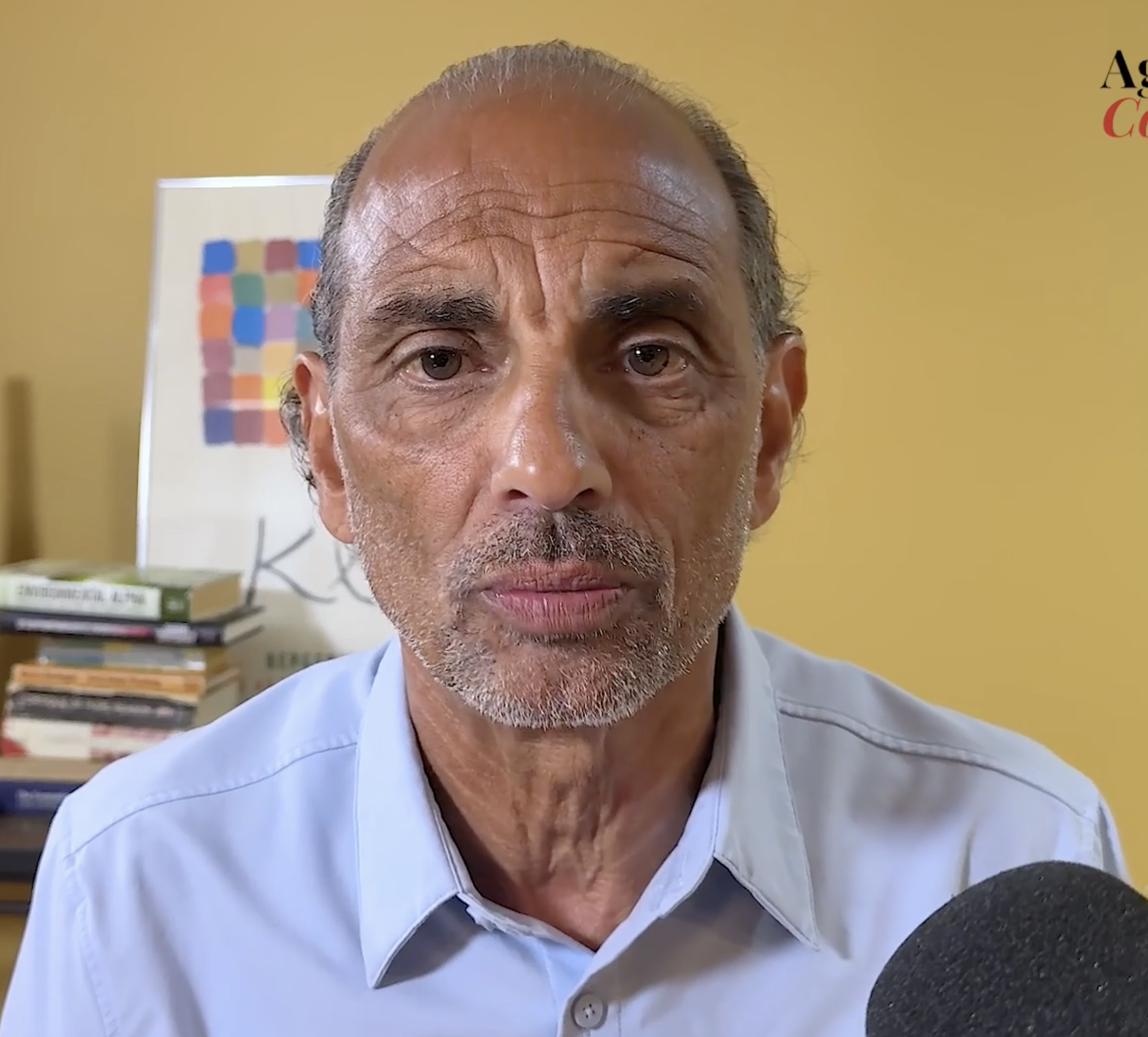
Hey everybody. Welcome to another episode of the Institutional Edge. I'm your host, Angelo Calvello, and my guest today is Paul Greth. Paul is the Chief Investment Officer at Ohio Public employee retirement system OPERS, a position that Paul has held since 2018.
Before that, Paul was serving as the Deputy CIO for years and he spent seven years as the Head of Global Bonds at OPERS. Prior to his tenure at OPERS, he was the Senior Managing Director and Head of Global Fixed Income at State Street Global Advisors. That's where I first met Paul and had the privilege of working with Paul on a few funky strategies I was trying to come up with. Paul was always very cooperative there.
Paul brings 35 years of institutional investing experience across public and private markets. Beyond his investment acumen, Paul has proven to be a transformative leader. Since becoming the CIO at Opers in 2018, he's reshaped the culture, the organization, the asset allocation and even some of the strategic infrastructure, with always a singular focus of meeting the fund's liabilities and securing beneficiaries retirement. We'll put Paul's bio in the show notes. Paul, welcome to the show.
[00:02:28] Speaker A: Thank you, Angelo. It's good to see you again. We went a little too long without talking to each other, but it's been great to catch up recently.
[00:02:35] Speaker B: Indeed. Thank you. Paul, a couple quick fires for you, okay? Just to get you warmed up. So, for vacation, what do you think? Are you going to do a beach vacation or A mountain getaway.
[00:02:45] Speaker A: Oh, I tend to lean towards non beaches. I get bored. I just recently came back from Antarctica and I'm going to Machu Picchu with my daughter. So I tend to like to do something a little more exotic with your
[00:02:59] Speaker B: daughter that I had a chance to work with years ago.
[00:03:02] Speaker A: No, that was, well, the future trip. I went with my wife to Antarctica and. But no, this is my middle daughter. You have not met her.
[00:03:10] Speaker B: Okay, number two, sparkling or still water?
[00:03:14] Speaker A: I prefer sparkling. With a lemon.
[00:03:16] Speaker B: What's your most With a lemon. Well done. What's your most used emoji?
[00:03:22] Speaker A: Emoji probably thumbs up.
[00:03:25] Speaker B: Okay, and my final question, Medieval literature or contemporary literature?
[00:03:33] Speaker A: Oh, I like contemporary literature. About medieval history. How's that?
[00:03:40] Speaker B: There you go. I like the way you hedge in the family.
Okay, Paul, so now we're ready. Let's start with how you transform the culture at opers. You mentioned in our pre call that you've been striving to build a culture of open innovation.
What does that mean to you and how does this translate into better investment decision making?
[00:04:01] Speaker A: When I became the cio, that was really the first thing. I think any successful investment organization really starts with the culture. We're in a business where there's new ideas every day. There's thousands, you know, hundreds of thousands of incredibly intelligent people, you know, and to stay abreast and stay up with them, you've got to, you know, be open to innovation. And so the traditional type of culture that, you know, I think most companies that I work for were more, you know, hierarchical, more fear based, punishing failure. And so I think in this business you have to encourage innovation and you have to do that without fear of retribution.
So you know, what I tried to do is say, hey, let's go ahead and let's experiment, let's take intelligent risks and let's see where they take us. Let's see what works and what doesn't and what doesn't. We move away and then what does work, we move on with that. And really when you create, it's called a failure tolerant type of culture.
And really what you're saying is go ahead and experiment. If it doesn't work out, there is no retribution. Your career isn't going to be limited, it's not produce or you're out. This encourages a sustainable culture of innovation, in my opinion. And the other side of it is on the risk side.
What it does is encourages people to surface problems early and not hide them. Right. And when things there is a mistake, they're Quick to escalate them. We talk about them, we figure out a solution, we do a postmortem what went wrong so that the organization doesn't make the same mistake again, and then we move on from it. And so that, you know, the type of people we want to hire into that are people that are intellectually curious and creative.
So that's kind of what we're striving to do. And how does that translate into better investments? Well, it means you're staying abreast of the recent technologies, recent events, recent new securities, new strategies. And you're always looking for ways to implement them in your portfolio to make it more dynamic and more relevant and hit the target returns that we're charged to do so.
[00:06:09] Speaker B: Paul, many organizations have silos.
They build these kind of hard silos, often around talent and asset class. Are you struggling with that? Have you remediated that? Are you living with that? What's your approach to silos?
[00:06:24] Speaker A: For most of my experience at opers, we did have silos. We have a traditional asset allocation where you have every asset class and a PM that head of it. But there was very little conversation between a lot of these asset classes. EMS and as an example, you know, I was head of fixed income, and we had my deputy CIO was head of our external managers. So we had fixed income external managers, and we're managing a big chunk of our assets internally in fixed income. But there was no conversation between our internal team and the external managers, or me and the head of that external management, which just seemed ridiculous to me. They're, you know, very sophisticated managers. They're out in the market, they're on the cutting edge. You know, we should be hearing what they're doing so that we can kind of tailor that to what we want to do. And we can help the external manager sitting in on meetings when they're vetting new managers to kind of, you know, maybe call BS on certain things or say, yeah, these guys are sharp. What they're doing is. Makes sense. None of that happened. And so, you know, first thing I wanted to do when I became the CIO is let's just get people talking. You know, I think we've. Even though we still have asset class silos because we are in a traditional strategic asset allocation framework, I've set it up so that we have a lot of meetings where we have people from different groups and they bring each other in from other groups when they're assessing managers or strategies. So I think we've broken those down pretty well.
[00:07:49] Speaker B: Did you make Any changes in headcount or responsibility? I mean, besides the cultural change, for sure.
[00:07:55] Speaker A: You know, I think when you look at the talent that you have and you look at the way the organization was structured, you know, I just wanted to make some tweaks to the organization as well as, you know, basically putting the right people in the right seats. Right. Let's match up the skill sets with what the job is and let's maximize what people do well. You know, we all have weaknesses, but let's work on those over time. But for the time being, let's make sure that we let people kind of do what they do well and just let them go. And so, yeah, I moved a lot of seats around. I created a department called the Quantitative Research which is in the office of CIO to kind of assist me in the office of the CIO in doing more back testing and evaluation of new strategies, new managers. And a lot of the PMs of the asset classes will work with this Quantitative research department to again evaluate, you know, why something's working, why something's not, whether they should be doing a new strategy, whether it's complementary or it's just, you know, doubling down on the same factor. So, you know, we created a high yield team.
So half our assets are not managed internally, the other half external. So we did make some tweaks on the organizational side and the headcount did reduce because we had some redundancies. But we've been sitting around 60 to 62 people now for eight years. Pretty lean staff.
[00:09:19] Speaker B: Paul, tell me a little bit about that quantitative research group. That's a new formation, am I correct?
[00:09:26] Speaker A: Correct.
[00:09:26] Speaker B: How big is that team? I know where they sit, but how big is that team?
[00:09:30] Speaker A: Oh, it's tiny. You know, like I said, we're only 60 people. So right now it's two gentlemen. It's headed up a gentleman with a PhD and he was in another function where I just didn't think his skill set was being used, maximized. So I brought him in and really his first role for me was I wanted staff to play a greater role in sitting at the advisory seat to the board along with the consultant. But we just had limited resources. And really his first task, and it sounds simple, but he essentially took the consultants capital market expectations and he reverse engineered their methodology and framework for calculating expected returns for different asset mixes and the expected volatility, sharpe ratios, all these other metrics that, you know, the consultant would present to the board. And in the past I would have to go and say, hey, can you Run these numbers for this mix, this mix, you know, and it was time consuming and I'm sure the consultants got tired of us.
So bringing that in house was like his first task. And it really enabled us to kind of do an iterative process internally so that we could present mixes to the consultant and say, hey, we really like these, you like these, let's whittle them down to these two, present them to the board. So that was kind of the initial job that this group did.
[00:10:49] Speaker B: And you mentioned consultant, did you make any changes there? Add subtract consultants or anything?
[00:10:55] Speaker A: We did, we had a long term consultant for probably a good 12 years. And we brought in a new consultant in 2024.
And really the board, I had been talking to the board about establishing some type of risk mitigation allocation, some type of hedges instead of having just a pure growth portfolio.
And this consultant, they endorsed that and they actually did education to the board on their risk mitigation allocation and the sub buckets underneath that and how they were supposed work and the various types of drawdowns we've seen historically.
And so they, they did a lot of the lead work to the, for the board and for me it was important because the type of performance characteristics that I would like to see is let's just be above average every year. I read a Howard Marks note early on in my career that really resonated. And you know, instead of trying to be top decile every year and then being bottom decile, you know, I really embrace the approach. Just be above average every year, especially in down years. And so having the portfolio, I felt whenever the markets were rising we were doing great. But when they went down, we did just as bad and dug a big hole. So having this risk mitigation allocation, kind of if we were a ship, it just gives us a rudder and some ballast.
So it gives us confidence to stay invested in our growth assets, private equity, public equities.
But knowing that we do have this allocation, that should protect us on the downtrend.
[00:12:27] Speaker B: Let's talk a little bit more, Paul, about asset allocation and the changes you made to the portfolio. So you gave us a good and meaningful description of how this is a culture of innovation. Some of the changes you've made, but those changes now are going to be reflected in your portfolio. And you mentioned risk mitigation strategies.
What else have you changed since 2018?
[00:12:51] Speaker A: Yeah, a lot.
From 2018 to 2023 it really was a pretty major restructuring of our plan assets.
The first thing that I did was we went through and we looked at every asset class and we evaluated it in this matrix of active versus passive, internal versus external. And so what we're looking for is for a particular asset class, does it lend itself? Is it fertile ground for active management? And that's easy to determine when you look back at how managers have done versus the index.
And if they underperform, it probably lends itself to passive. And then we say, okay, well, can we do that in house? Can we replicate that? Do we have the skill set or do we need to outsource that? And the example I'd give you are US large cap equities.
I looked at that and we were getting after fees with our external managers index returns essentially. And it's a very deep, liquid, efficient market. And so, you know, we decided, hey, we already have an internal passive fund. Let's just bring all of our large cap. And we did mid cap too. Equities in house, which, you know, we have about $20 billion worth. And so we manage all of that right now passively. And so our fees came down and, you know, the returns are index and index plus. So we can impose a little implementation changes with derivatives to try to get a little more. But that's an example how we, how we did that. And our, you know, internal assets moved from a low of 35% to, we're now at 55% internally managed. I think the other was, you know, one of the big ones that took years really, was to unwind the hedge fund allocation. Now, I have nothing against hedge fund. I don't just like them. I think there's a place for them. But the way we were treating them was as an asset class. And they are not an asset class. You know, they're, they're just a whole handful of idiosyncratic, heterogeneous strategies. And in my opinion, you know, you have to have a very specific targeted need for a hedge fund. And so, you know, we had about 10%, which was really sizable for 100 at the time, $110 billion portfolio, we're 130 billion now. And so it took three years to kind of unwind program. But what we were left with by bringing assets in house, you know, and then trying to optimize which ones are going to be more active versus passive. You know, we ended up with a portfolio that had much lower fees. You know, we reduced the complexity of the plan, we increased the transparency. All of which is better when you want to try to model and do scenario analysis and the reliability of data. If it's that Transparent.
And most importantly, I think we increase the liquidity of the plan. You know, we're a mature Plan. We're paying 6 billion in benefits a year and that number's targeted to go up to maybe, and this is gross, maybe 8, 9 billion over the next 10 years. So liquidity is really imperative for us at this point.
So, you know, those big changes kind of brought this portfolio to be pretty lean, probably as low cost as it could be, and then ready for us to now build it out. And that's kind of what we've been doing since 2023.
[00:16:08] Speaker B: Did you make any changes, for example, in your. I know you had a global TAA program.
Did you make any changes there?
[00:16:17] Speaker A: Yeah, I would put that in the hedge fund category.
[00:16:21] Speaker B: Hedge fund. Okay.
[00:16:22] Speaker A: Because they were essentially hedge funds with just a 60, 40 overlay.
[00:16:26] Speaker B: Okay. And early on you mentioned risk and how you focus so much on risk. When we talked, you indicated you made a change to your risk system. Or I guess it was originally systems, now it's a system.
Could you tell us a little bit about that shift, why you made that shift and how it's worked out for you?
[00:16:45] Speaker A: Sure, yeah. That was a seven year long project we started in 2018. We moved from multiple systems. Each asset class essentially had its own system to evaluate risk to one single system across the entire plan.
And you know, that has had tremendous benefits. That was a game changer for us. You know, it creates a common risk platform for everybody on the floor, all the PMs. So anybody on the floor can look at what every other PM is doing and they're using the same methodologies for calculating risk. And you know, it's a flexible system. You can change your methodalities. But for me, what it did is it gave me a dashboard for the total plan, which I did not have before. I couldn't just sit down in the morning and look and say, where's my fixed income, total exposure and drill down to a particular strategy and what's my total equity? And where am I at my total risk? And what factors am I from a total plan perspective, exposed to?
And so having one system in place really gave me that ability to do that.
And it's been tremendous. And it is a lower cost to do it, which is even a bigger plus. But that was not the reason we did it.
Simple questions like something happens with a company or stock out there, what's our exposure? Or some geopolitical event, what's our exposure to this country?
That might take three days for us to answer as we combed through every system and each one looked at our assets in a different way.
Now we're looking at all our assets in a particular same way. And that could be answered, no joke, in five to 10 minutes.
So it was a tremendous productivity gain for us. So I'm pretty happy with the one system.
[00:18:31] Speaker B: And Paul, in that culture of open innovation that we talked about earlier, does staff have access to the risk system now?
[00:18:40] Speaker A: Yeah, this risk system, and it's all 60, 62 people's desks.
So that's why that's like I said, you know, if when I want to go in and I want to drill down into, let's just say our core fixed income portfolio, that's $10 billion, I don't need to create a report on my own. I can go into the portfolio manager's workspace and he has tons of reports that he looks at. And so I can pull up any one of those and just look at those and get an understanding of what his exposures are. Or I can go to our risk team who runs the whole system and say, hey, I'm looking for this type of report. I don't see it out there. Can you generate that? And it doesn't take them long. It's a very, very easily intuitive system
[00:19:22] Speaker B: to use, easy system to use, but open access is the other piece that it's not just you, but others could use this as well. I mean, that's, it's kind of a lot of introduce a lot of transparency. Seven years is a long time to transition, man, I got to tell you that.
[00:19:38] Speaker A: Yeah, well, you know, when you have tens of thousands of securities and types and, you know, we're a big user of derivatives and so, you know, we're a little more further out on that spectrum and they're a little more complex to measure and monitor. But I will say that, you know, to your point that everybody, you know, has access, that's just another way to break down the silos.
So, you know, the external managers who are overseeing external fixed income managers have the ability to look at what those external managers portfolios are like and then go in and look at our internal managers and kind of say, hey, you know what, you guys are overweight, this, underweight, that these guys are the opposite. You know, what's the rationale? So I again, it encourages people to talk and discuss.
[00:20:29] Speaker B: Yeah, it seems that way. I mean, with good information, you make better decisions, but you make better decisions when you have this collaboration. It's this conversation, no question about that. I agree with that.
[00:20:39] Speaker A: Yeah. I agree.
[00:20:41] Speaker B: Paul, were there any changes in governance?
Because you've made some substantial changes to the plan in the last seven now going on eight years. Any changes in the governance structure?
[00:20:53] Speaker A: If you're referring to governments, I would talk about, in terms of the way we're set up, broadly speaking, no. The board is responsible for setting the asset allocation, and staff has a lot of discretion to implement that. That really hasn't changed.
We still have all of our policies. We still all have all of our guidelines for every portfolio. So those haven't changed too much.
[00:21:20] Speaker B: It sounds like staff has continued to be empowered to make decisions within the framework established by the trustees. Is that fair?
[00:21:28] Speaker A: That's fair. And that's fair. And, you know, and I worked hard to gain the trust of the board because I think if you're going to be an effective cio, you have to work with your stakeholders really well.
And really, what I. You know, as I mentioned before, I really wanted to have a bigger say in what the asset mix might be, because we just bring a different perspective to the table than the consultants might. Right. We're practitioners. We understand, you know, the liquidity needs. We understand the fees that you have to pay to gain access to certain asset classes. We understand the complexity of certain asset classes, you know, and the transaction costs from just making minor tweaks. You know, sometimes you go, well, let's raise this one 1%, this one down 1%. And in the end, you're moving $10 billion around. That has a cost to the program. And so I really wanted staff to have a bigger say and a seat at the table with the consultant and the board to talk about what our future asset mixes might be, and I think I've accomplished that.
[00:22:29] Speaker B: When you were talking about the portfolio, just going back a minute, Paul, you really didn't talk about your private book. You talked about hedge funds, but you didn't talk about your private book. Did you make changes there? And then again, private book is two words that encompasses a lot of different opportunities.
Any changes There were.
[00:22:48] Speaker A: They were more subtle, I would say not so subtle as that.
We have private equity, we have private real estate, and we just got approval a year ago to have a 4% allocation to private credit. So we're just building that out now. So that's new. We're a little late to the party on that one, but I think it's a good ad.
Both our private real estate and private equity teams have almost 100% turnover on each. We had a lot of retirements, and so we brought in A lot of new PMs and they've brought in new staff, so they're taking a fresh look. So yeah, what they're doing is kind of what I did at the total plan level. They're kind of undertaking now at their own portfolio level. And as you know, it takes a long time to really turn that ship in the private markets. So I think our private equity, we just did our first secondary sale recently and that took a couple years to really figure out from an operational perspective and performance calculation.
There's a lot that goes into it.
So yes, our allocations have been bouncing around within 2 to 3%, but the teams have changed and they have definitely different long term strategies than what we've had before.
[00:24:10] Speaker B: Paul, you have a public markets background, but you also were quite fluent in derivatives and you mentioned just obliquely earlier the use of derivatives when you were mentioning the risk system. Does the, does the plan use a lot of derivatives?
[00:24:24] Speaker A: We do. It's used in multiple asset classes. You know, our fixed income people are using treasury futures, they're using a lot of cds. They're even, you know, single stocks or single name cds.
We use single stock futures. We, we have a global equity team that has a lot of systematic portfolios that are simply just trying to use better capital efficiency to add value over the benchmark. And I think we're upwards near about 8 billion in derivative, some derivative forms. But we're using futures forwards, we're using swaps, we're using options, total return swaps. So yeah, we're pretty advanced now. It takes a lot of work to look through those in our risk system. But our risk system can.
So if you do a total return swap on an index, you're not just getting that one line item that says you have the treasury ag, I don't know, or the US ag. It's looking through at all the underlying components and then aggregating them back up. So again, we did not have that capability before. So this system is enabling us to be more efficient using derivatives.
[00:25:37] Speaker B: You mentioned the treasury ag, Paul. Altea is an aside. I still struggle and not say Lehman ag. I mean that's still part of my background. Lehman AG is what we always called it and I still want to call it Libor. You know, I can't get rid of it.
[00:25:49] Speaker A: I'm in the same case, so I'm not even sure what the term is for the ag. Now it was Bloomberg, but I'm not sure enough. So.
[00:25:57] Speaker B: Yeah, well, Paul, you told us the changes you've made and they've been meaningful and as I said, always focused on trying to make better decisions so you could meet your liabilities and provide for your pensioners.
What's next? What else are you thinking about that you could share with us without tipping anything proprietary?
[00:26:17] Speaker A: Yeah, no, right now we are in the phase of, as I said, it's a build out phase. Now we're in the position where we can now look at what new strategies or asset classes are out there that we can maybe get involved in that we haven't been involved in the past. You know, I mentioned that we were a little late into private credit. You know, I'd like to make sure that, you know, we're evaluating new strategies as they come about and evaluate whether they make sense to us and our plan from a risk reward. You know, and maybe nine out of ten don't, but at least we're aware of them and we're trying to get in early because as you know, as something's new, some of them that stick around all the juices in the beginning. Right.
Not saying you're going to hit that every time, but you know, with the risk system we can now look at a strategy. We have a quantitative research group that can evaluate it, back test it and then kind of put it in as a pro forma what if scenario and say this is how it will benefit the plan. You know, your volatility goes down and you know, so not only just from return enhancers, but hedges. Right. And so, you know, I'm looking for the office of the cio. This is something new from an organizational perspective that I didn't touch on, but I'm trying to build out the office of the cio. You know, we have, I think we're leaving a lot of, a lot of value added on the table because we don't really have a cogent top down analysis, constant strategy and monitoring from the bottom up. We're all set, right? We have every asset class PM and they're trying to outperform their benchmark. They generate two basis points each. We outperformed our policy benchmark by 40. Okay, that's just throwing out numbers. But what we don't have is someone looking at the total plan and identifying possible gaps and exposures that maybe we want to create a completion portfolio.
We're looking at the plan now and saying, okay, you know, we have a, we're really in multiple asset classes in a lot of ways, really heavily exposed to a particular type of factor. Maybe you want to, want to hedge that away. Maybe the markets just run A lot. We've done some opportunistic option, tail risk hedging, you know, doing costless collars. I brought in a sales guy that, that covered me for years, and he's, he understands options and he brings in a skill set we just didn't have. So now we're looking at, you know, how can we do that on a systematic basis without paying too much?
So we're kind of looking at, just trying to get a few basis points here and there, but also possibly looking at new strategies that, that could, you know, really have an impact on the plan. And I will say we, we did add gold back in 2022, and that was kind of a bold move considering that was very tough to find a consultant that would recommend gold. Right. It doesn't have any carry, it doesn't pay dividends. You know, the whole story. But, you know, we had a view and, and we wanted, in our opportunistic portfolio, we wanted to add some strategies that had diversifying effects. We didn't have this risk mitigation allocation, so this was kind of a way to kind of tiptoe into it. And so gold had a diversifying quality about it, and we did add that. Then, you know, it was only 1%. But again, that, that's a way that you can look at putting new, you know, pieces in the puzzle to make it a, you know, a better picture.
[00:29:46] Speaker B: Paul, any thoughts on crypto coming in or in the portfolio?
[00:29:50] Speaker A: I think it's here to stay. I just don't know how it fits in at this point. It's pretty, you know, I, A couple years ago I was explaining to the board, it's like, you know, it's like a fire hose. You turn on high and it's just whipping around. I don't know how to, I don't know how to corral it. I don't know how to say this is where it will fit in. And, you know, I don't think I'm the only one. You know, people say it's, it's an inflation hedge. Some people say it's an equity diversifier or it's just doubling down, down on equity growth. But we'll keep an eye on it.
What I don't want to wait is 20 years after it's become established and then we start dipping in. That's where I don't want to be.
[00:30:28] Speaker B: So, Paul, I'm going to take a step here. You've told us about the changes that you've made and you're talking prospectively about new ideas you'll consider, given you have this, I'll call it a culture of collaboration.
You have within this collaboration discussion among the team about best allocations. Where could we best allocate capital given liquidity needs and liquidity constraints? You've got a governance structure that's empowered staff to make decisions within the framework.
It sounds a little bit like what John Grable was talking about when I talked to John and he talked about a total portfolio approach, juxtaposing it to a total.
I'm sorry, a total fund approach is what John called it instead of a total portfolio approach. Do you have any thoughts about tpa? And it sounds honestly like you're doing a lot of it already. You just don't have any capital letters.
[00:31:24] Speaker A: Yeah, that was my first, you know, that was my first take on it. When I read about it, you know, I don't proclaim to understand exactly what it is, the intricacies, but, you know, if seems to be that it does take a holistic approach to asset allocation.
It wants to remove the silos, it wants people to talk more and, you know, not be so regarding, you know, they want not guarding their turf and growing their aum. But yeah, but you know, recommending, you know, allocations and strategies that benefit the total fund.
It does give the CIOs quite a bit of discretion in terms of implementing, trying to hit whatever targets they are. So, you know, I think on the collaboration side, I think we have a lot of that. I'm not sure that the approach would really. I think the benefits would be marginal there. I think from a risk assessment there's some overlap for us with our system. We are able to look at total plan from a factor level, you know, just going one, one level below. So we do see that probably not as in depth as maybe some of these plans who incorporated what I Understand it allows CIOs to use derivatives to gain more efficient exposures to asset classes versus just physical assets. I've heard that explained and that may be a narrow definition, but, you know, we're doing that too. I think the big difference is that TPA has this very simplified reference portfolio instead of a policy benchmark that's a weighted average of everything.
And just having that alone gives the CIO and staff much more flexibility to design a portfolio to beat the stated objectives.
Right now, you know, every asset class has a target weight and it has bands around that and it has a policy for that. And so when you want to make a move and say, wow, we got to move quickly because this is the new trend in the market, you got to change policies, you got to get the board to approve the new allocation.
So a lot of that takes time. And I think one of the benefits of TPA is that all that discretion is on staff.
So I like that about it. I like having a simplified reference portfolio. It creates a more nimble portfolio, which would be very helpful when you're a large portfolio like us. So I think there's a lot of benefits to it, but I think we are incorporating some elements with it.
[00:33:56] Speaker B: Yeah, it seems that way. Yeah.
[00:33:58] Speaker A: Yeah.
[00:33:59] Speaker B: Well, Paul, I'm going to ask you the question I ask all my guests at the end of our conversation.
And, you know, like you said, you've been in the game for 35 years. I think if, if I could reference. Is that about right, Paul? 35ish years.
[00:34:12] Speaker A: 36 this year.
[00:34:13] Speaker B: 36 years. Okay. And you've been in the asset allocator role, I'm going to think, for what, 15 years, 17 years within fixed income
[00:34:25] Speaker A: as an allocator, but really as multi asset class. It's been seven years, but yes, since I've been in Oprah.
[00:34:32] Speaker B: What's the worst pitch you ever heard?
[00:34:35] Speaker A: Worst pitch? Yeah. How about if I flip that on you, I'll tell you what the best pitch is.
[00:34:40] Speaker B: Okay, fair enough.
[00:34:41] Speaker A: So, you know, you know, when I would have salespeople covering me, and now we have managers coming in. But what I value and what I respect from an asset manager or a bank is that they actually understand, they listen to you, what your view is. Right. Because my job as a PM is to have a view and to say, how do I structure a portfolio that actually makes money if that view comes to fruition? And so what I'm looking for is a partner that's going to come and say, I have a product that helps you express that view. Right. And it could be a trade within fixed income, or it could be a strategy from a manager. And so I think, you know, some of the best salespeople were those that came in, you know, and they listened and said, okay, I'm hearing what you're saying. Here's a couple trades that I think will do what you want and you can make money. Because one of the things that, you know, I've always said and we say at work is, you know, it's much easier to have the right calls on the market. It's really, really hard to make money on it because a lot of times you'll have a trade that you think is expressing that view, and it just goes wrong and for reasons that you just didn't anticipate. So I always value salespeople that come in with a pitch that says, okay, I heard what you said and this is our solution for that. The ones that come in and just say, you know, shotgun approach, here's I got 20 trades for you. Pick one. You know, there's no value there for me.
[00:36:09] Speaker B: So they've got to understand what problem you're trying to solve.
[00:36:13] Speaker A: That's exactly right. That's exactly right. Yeah. And then there are some. Some good ones out there.
[00:36:19] Speaker B: Oh, I'm sure there are.
[00:36:20] Speaker A: Yeah.
[00:36:20] Speaker B: And they're well compensated if they're good health.
[00:36:23] Speaker A: That's true.
I'll do business with them.
[00:36:27] Speaker B: Well, Paul, this is great. I appreciate you taking the time and sharing your transformation within the organization, your plans for the future, and it was just good to reconnect with you. I miss our conversations, but I really appreciate it. Thank you.
[00:36:42] Speaker A: No, no, it's my pleasure. I really appreciate you reaching out and yes, I do miss our conversations. Back at State street, you always had some creat creative ideas that I used to like to bounce around with you and kind of spurred some thoughts for me on my own book. So I appreciate that. Thank you.
[00:36:58] Speaker B: It's kind of you to call them creative. People had other adjectives for those ideas, but thank you.
Thanks for listening. Be sure to visit PNI's website for outstanding content and to hear previous episodes of the show. You can also find us on PNI's YouTube channel. Links to are in the show Notes. If you have any questions or comments on the episode or have suggestions for future topics and guests, we'd love to hear from you. My contact information is also in the show notes and if you haven't already done so, we'd really appreciate an honest review on itunes. These reviews help us make sure we're delivering the content you need to be successful. To hear more insightful interviews with with Allocators, be sure to subscribe to the show on the podcast app of your choice. Finally, a special thanks to the Northrop family for providing us with music from the Super Trio. We'll see you next time. Namaste.
The information presented in this podcast is for educational and informational purposes only. The host, guest and their affiliated organizations are not providing investment, legal, tax or financial advice. All opinions expressed by the host and guest are solely their own and should not be construed as investment recommendations or advice. Investment strategies discussed may not be suitable for all investors as individual circumstances vary.