Episode Transcript
[00:00:00] Speaker A: Hi everyone. Welcome to the Institutional Edge. I'm Angelo Calvello. As we head into the holiday season, we're going to take a brief break from new episodes. Today we're bringing you a rebroadcast of one of our most popular episodes, a conversation that resonated strongly with our listeners and continues to be relevant to institutional investors. We'll be back with fresh content and new conversations on January 6th. In the meantime, we hope you enjoy this episode and we wish you and yours a wonderful holiday season.
[00:00:33] Speaker B: When Crypto I'm going to use Bitcoin as a sort of case study. When bitcoin collapsed from 50 odd thousand down to 17,000, some people thought it was going to zero. And bitcoin has since turned around and is now not at 17,000 nor 50,000. It's at 117,000. Just imagine that type of volatility in your pension account where you rely on a certain fixed income. That type of volatility and fluctuation does not work in the pension world, certainly not for retail investors.
[00:01:05] Speaker A: Welcome to the Institutional Edge, a weekly podcast in partnership with Pensions Investments. I'm your host, Angelo Calvello. In each 30 minute episode I interview asset owners, the investment professionals deploying capital, who share insights on carefully curated topics. Occasionally we feature brilliant minds from outside of our industry, driving the conversation forward forward. No fluff, no vendor pitches, no disguise marketing. Our goal is to challenge conventional thinking, elevate the conversation, and help you make smarter investment decisions, but always with a little edginess along the way.
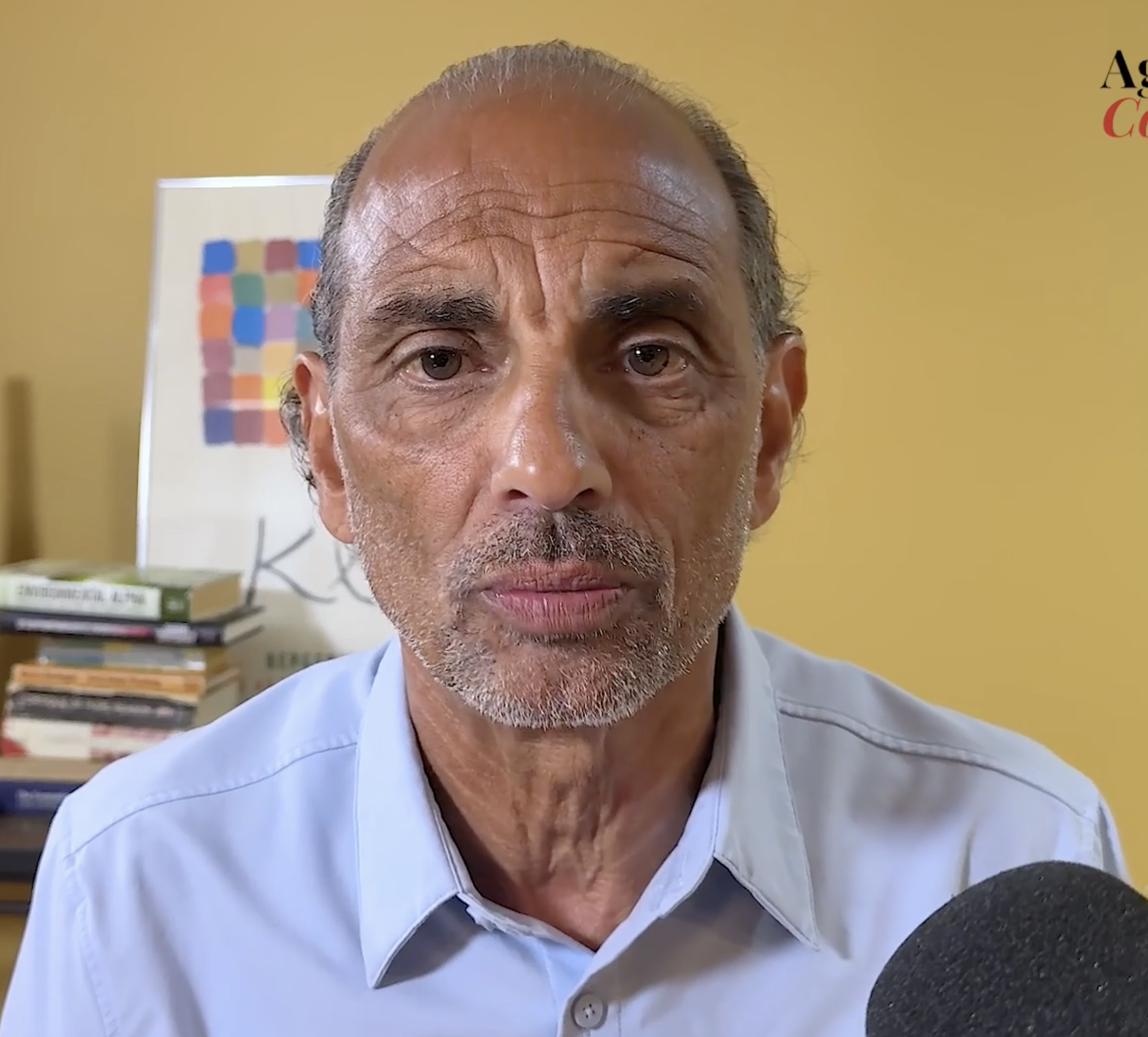
Welcome to another episode in our Private Market series. Our topic today is top of mind for many asset owners and managers. The democratization of alternative investments in 401 plans. And my guest today, Gerald Alain P. Chenyung, is particularly well suited to discuss this topic. Gerald is the Chief Investment Officer for the National Public Pension Funds association, which works with over 300 units of government and manages about a billion in assets. He also serves as an advisor to a major global law firm specializing in securities industry litigation, arbitration, regulatory issues and compliance. Gerald previously served as VP and Chief Investment Officer for the UNCF and has served on multiple advisory boards and committees including the R.F. kennedy Leadership Council, AMA&US and Latin Markets Group. Gerald holds postdoctorate degrees in Economics from the London School of Economics and Political Science and York University, and in Law from the University of Miami and Washington College of Law. His undergraduate degree is in Economics Physics from the American University with honors. Gerald, welcome to the show. I've been looking forward to this man, Angelo.
[00:02:54] Speaker B: So am I And it's a real honor and privilege to be with you. You are such a legend in our industry.
So I feel absolutely blessed to be in your presence. And there's no hyperbole there. There's no hyperbole there.
[00:03:08] Speaker A: Kind words, my friend, that I'm going to try to meet expectations. If you would let me set the table for a minute first, our audience should know we're recording this episode on September 19, 2025.
And I think we both acknowledge that things can change between now and our publication date. But here's where we are now. On August 7, 2025, President Trump signed an executive order called Democratizing Access to alternative investments for 401 investors. And this executive order is directing the DOL and the SEC to broaden access to private funds and other alternative investments through 401k accounts. I mean, there's a lot of questions that remain on the regulatory and legislative front, but here's where we are today. Mr. Trump. His order gives the labor secretary six months to develop guidance for companies offering these alternative investments within diversified funds and, and offering some degree of legal protection.
So my question to you, Gerald, is what do you think?
[00:04:13] Speaker B: In principle, I like the idea of democratization as a general rule. On the one hand. On the other hand, the asset class generally referred to as alternatives, is somewhat arcane and therefore should be dealt with with a certain amount of prudence and understanding and disclosure. Meaning unlike banks that run into trouble that then can be bailed out, or certain investment accounts for public assets, meaning public equities, listed equities that also have insurance through the sipc. So the banks of FDIC securities firms, of sipc, in this space of alternatives, no such protections exist.
That means the standard to which should be applied for retail investors, meaning owners of 401ks, IRAs, et cetera, et cetera, the standard has to be at a level that in essence protects themselves, seeing that there are no other protections. And as you know, normally to invest in private equity, I'm referring now to the illiquid class of alternative investments, not the liquid class hedge funds, the illiquid class privates. As you know, there were normally two different standards that were applied in the past. One referred to so called accredited investors, which required that individuals have a certain amount of net worth, a certain amount of investable assets outside of their homes and other such standards. But it was all done under the label of accredited investors. The other standard pertained to levels of disclosure. And here is where I find opening this field to retail investors could be tricky. So again, on the one hand, I like the idea in principle democratization. On the other hand, I am concerned that not all investors are, and I hate to use this term, but it's what's used in the regs. Suitable. That's a term of art in our industry, as you know. I'm not sure I'm not being pejorative. I'm referring to the suitability of this asset class for certain investors.
[00:06:19] Speaker A: I agree with you. But one thing sticks in my mind in that ERISA has permitted retirement plans to invest in these illiquid private market alternatives for years. DB plans have done it for years.
And even DC plans are allowed to do this now. Although I saw a survey that talked about how only 2.2% of plan sponsors said they offer these alternatives. And I think their hesitation goes to the point you raised here. In terms of the suitability of these investments. I'm puzzled as to why now we have this directive from the current administration.
It just seems to me you could do it already, but maybe they're trying to provide a better framework around it. What do you think?
[00:07:05] Speaker B: I chair the investment committee for a group of insurance companies as well as, you know, based in your great city of Chicago. And I also am CIO of the nppfa, as you mentioned. It's amazing you bring this up because we actually are now looking to expand the sleeve of investable options to our members and pensioners. So this is actually real time for us. We're actually physically in the moment doing this with a company which I won't name at the moment, but it's a global firm. So to answer your question, when those investment options were offered through DBS and generally through DCs, I'm not sure that the retail investor had the connection with what the actual investment was, especially in the case of dbs. Dbs, as you know, carry the onus of investing on the institution. Individuals were guaranteed defined benefit. They were guaranteed X amount per month or per year. DCs, obviously the owner shifts onto the individual. This move by the executive order, coupled with some of the provisions in the GENIUS act transfer a lot of the onus solely to individuals.
And I think that incidence is what's not necessarily properly understood. And I go back to the notion of disclosure again and in the guidelines that the SEC is working on, I imagine that this is going to be front and center.
[00:08:24] Speaker A: So we can do it now. We're going to do it perhaps with better regulatory structure around it and legislative clarity around it. I don't see those fundamental issues of suitability and in a DC Plan, as you know, there's a lot of education involved because there has to be, on the sponsor side, education that allows the participants to make informed decisions. It would seem to me that these sponsors are carrying a huge burden from a responsibility, or I guess I'll say a fiduciary side. They have to meet a certain fiduciary responsibility.
And the downside for sponsors is litigation. And litigation has been growing in this space. I mean, you're a sponsor. I mean, how are you going to deal with the potential for litigation? Is it just more education for these folks, or how do you do it so you meet your obligation?
[00:09:23] Speaker B: It's very interesting that you raise this because in preparation for this call, I shared some notes with a mutual friend. Yeah, Professor Arun Murul Tidar.
[00:09:32] Speaker A: I know him.
[00:09:33] Speaker B: And in those notes, he's obviously a legend like you. He's the only person I know that has co authored with two separate Nobel laureates, which is a. Which, as you obviously, you know, du Sangelo. But in my preparations with him, I used the term onerous when it came to the disclosure statements. And he said, gerald, I get the gist of what you're getting at, but I'm not sure I like the term onerous because of its implications.
So I'm going to sort of tread between those raindrops and try to balance what I'm getting at. If you use the accredited investor standard and you say only those that have a certain amount of net worth and investable liquid assets can qualify. So that's one sort of threshold, meaning you have to satisfy that threshold even to be allowed to invest in it. If you don't satisfy that threshold, you should not be allowed. That's one threshold.
Another safeguard is, and I go back to this notion of onerous disclosures I suggested at an event, or sorry, it was our NPPFA flagship event a few months ago in Wisconsin, that the disclosure requirements for individuals that satisfy threshold A should be such that at no point in the future they should be able to come back to say, quote, I didn't know or I didn't understand. And I used the adjective onerous to say, make it punctilious, make it almost burdensome for them to go through to express that they understand fully that these are illiquid vehicles, that these don't have any recourse to the government, that there are bells and whistles attached, such as gates in the case of certain alternatives, lockups in the case of privates, side pockets, and so on and so forth. Meaning devices that they never hitherto had even heard of. In fact, I'm not even sure that most professional investors, including myself as well, I'm not sure I fully understand all of the bells and whistles associated. So to have individual and I'm going to use the term ma and PA or grandma and grandpa say, you know what, all of a sudden now we're allowed to invest in alternatives. Privates have done so well. We look at the Giants, Blackstones, Carlyles, et cetera, et cetera, we see what their numbers are and in their mind they're making a connection to accessing that sort of outperformance.
On the other hand, they're doing so not necessarily understanding the strictures that come associated with these vehicles.
So disclosure, disclosure, which is one of the benchmarks and foundations of these 33 act and the 34 Act, I'm referring to the securities and Exchange act of 1934 and the securities act of 33. Disclosure, disclosure, disclosure. Yes, but this is disclosure on a different level. Now this is appealing now to individuals.
[00:12:25] Speaker A: I agree with you. Disclosure. And I looked at a survey of that Schroeder's did. I think it's called their 2025 U.S. retirement Survey. And yeah, they talk about private investments. But what's interesting is it says, I mean the majority of the respondents say they either are somewhat knowledgeable, not too knowledgeable, or not knowledgeable at all about private assets in their 401k plan or even what those assets are. So you're going to need a lot of disclosure to educate these folks so it doesn't come back in a litigious form.
So I agree with you, which is.
[00:13:05] Speaker B: Why I use the term owners.
[00:13:06] Speaker A: I agree. But let's go back to another point though. I mean the fundamental argument for including these, if I understand the argument, is first of all you're going to have diversification in the portfolio and second, the possibility of enhanced returns, better returns. Am I right? That's the point of having these in there.
[00:13:27] Speaker B: That's a very interesting point. And you and I shared notes on this yesterday evening. If you do, and this is a case of apples and oranges, if you look at the long term total return streams from public assets and you use a benchmark like the S&P 500 or the Dow Jones or the it doesn't matter which one you use and you compare long term returns from those public assets with long term returns characterized by internal rates of return IRRs or multiples on invested capital MOICs.
Again, this is an Apple and an Orange comparison. Because they're not exactly the same. One is time weighted mostly and the other is dollar weighted. Plus there are other differentiations. But if you compare those return numbers just eyeball to eyeball, the case for private investing, outperforming public has weakened over the recent years.
So yes, I agree in principle it's a diversifier, but in terms of adding additional returns, that is suspect. In other words, the data is not dispositive, especially recently.
[00:14:33] Speaker A: And I guess we have to balance out those potential benefits with the risks. I mean, how do you categorize the risks associated with investing in these private assets within a DC plan? You pointed to some. But let's categorize them. Let's just list them here.
[00:14:50] Speaker B: The biggest risk is obviously complete loss of invested capital. That's the biggest one. Another would be being subjected to lockups.
[00:14:59] Speaker A: Illiquidity in general.
[00:15:01] Speaker B: Illiquidity. Correct. Without distributions.
You see, in theory and in principle, capital gets called by these private vehicles and somewhere in the cycle capital is distributed. And in an ideal world, you'd like your capital calls that the manager issues to be funded at least in part by the distributions that you receive from the manager. However, that is not guaranteed. So point number one, the returns are not guaranteed. Point number two, you could be subject to lockup where your capital is inaccessible for years. And we're not talking about 18 months, as was the case in the auction rate securities debacle in 2008. We're talking about lockups that could easily exceed more than 10 years. And even then there is no guarantee of return of capital.
So the second major risk is loss of capital. And then the illiquidity matter of not being able to access your capital in any way. And the third is no backstopping. We mentioned SBIC in the case of banks. We mentioned SIPC in the case of investment accounts for public assets. There are no such backstops in the case of privates. So those are the three biggest risks. As I see them.
[00:16:15] Speaker A: I'm going to throw another one or two at you.
What about the complexity of valuation?
If I'm investing in a mutual fund, it's pretty easy. End of the day. I know my mark. But here valuation is, how would I say, not that frequent. Would you consider that a risk? The complex valuation methodologies.
[00:16:35] Speaker B: Without a doubt, this is a fourth major risk, as you say. In the case of public vehicles, we have NAVs, net asset valuations, and those are reasonably reliable. Reasonably. In this asset class, there are no such. You're subject only to audits, meaning Regular accounting audits. And the audit and the information is normally done on a 1/4 lag. So whenever you receive a statement in a private fund, normally it's based on one full quarter's lag, which means in theory, you're running three months behind the data.
And then that doesn't even factor into the fact that the assets that are invested in are themselves illiquid.
[00:17:15] Speaker A: I'm going to throw one more at you to see if I'm thinking the same way you are. What about fees? If I'm a 401 participant, I could go to a low cost passive ETF for 7 basis points, you know, whatever the number is. Typically these are higher fees or layered fees may be another way to say it isn't fees. Another challenge for including this type of investment.
[00:17:41] Speaker B: Without doubt, we have carried interests as one layer of fees. There are others, as you well know. And the structure of the fee basis is so arcane to go back to that term that again, most qualified institutional investors themselves don't understand them. Right, absolutely. So we've run through what, four or five different risks.
[00:18:05] Speaker A: Yeah.
[00:18:05] Speaker B: The returns aren't guaranteed. The illiquidity is almost assured. The complexity of disclosures, the fees, and lastly the valuation. Valuations, yeah. Those are the five biggest risks, as I see them.
[00:18:20] Speaker A: Those are to the participants, those risks. Those are the risks participants bear. And I think it's important to mention that right now you could invest in alternatives in an indirect way way, like in a target date fund. This is, I think what the administration is trying to put forth is to provide some, how would I say again, some regulatory safeguards for sponsors to offer these alternatives in an indirect way. I see very few talking about a direct investment in a private equity fund or a venture capital fund. The only place I've heard, if I may continue, the only place I've heard that is this also allows for investments in crypto in 401k plans.
So, you know, now you have an asset that is, I would say, unfamiliar to many investors. I mean, people understand the Dow Jones. They may be familiar with some of the privates that have done well over the years. But now we got crypto, you know, it's a completely different, I think we would say kettle of fish. I mean, you mentioned genius, the genius act already. Do you want to work in crypto into your conversation in terms of now what?
[00:19:33] Speaker B: Oh, wow.
[00:19:34] Speaker A: You could pass if you want, man.
[00:19:36] Speaker B: No, no, no, no, no.
So we've added a sixth category of risk.
[00:19:40] Speaker A: Okay.
[00:19:41] Speaker B: And let's call it regulatory risk.
If we can coin that term of our that phrase.
We have seen that the administration has made moves to lessen the reporting requirements for public companies. We've seen those moves already from being quarterly to now being semiannual. Along that vein, if we extrapolate into the private space, we're in a whole new ball game when it comes to regs. And as for cryptos, which is why when you mentioned, when you label the podcast democratization of alternatives, essentially I try to wed or lump together the executive order from August that you mentioned with the Genius act that came out about roughly the same time, one from the executive branch, the other from the legislative branch. In the Genius act, where crypto is specifically mentioned. I'm not even sure how to wrap my mind around this, because even within crypto, the risks there are so complex as well. Meaning there are certain cryptos that are based purely on fiat, full faith and credit of counterparties, private counterparties. Bitcoin, for example, is the largest of such. Bitcoin has no asset backing other than the full faith and credit pledge of the counterparty, right through the whole blockchain mechanism, et cetera, et cetera. Stablecoin, by contrast, especially and as issued by the great state of Wyoming, a fortnight ago, Wyoming issued their first stablecoin. So the first state has issued one. To the best of my knowledge, Stablecoin is crypto, but it is collateralized with dollars. So it is not based just on full faith and credit. It's actually based on a pool of segregated assets.
Just wrapping one's mind around that differentiation alone for a retail investor is nightmarish.
So yes, I know that it's a flavor of the month, week, year in terms of performance when crypto. I'm going to use Bitcoin as a sort of case study. When bitcoin collapsed from 50 odd thousand down to 17,000 and people thought, well, not some people were wiped out, some people thought it was going to zero. And Bitcoin has since turned around and is now not at 17,000 nor 50,000. It's at 117,000. Just imagine that type of volatility in your pension account where you rely on a certain fixed income. The French, for example, refer to pensions or pensioners as rentiers, to use a French term. It's like a rent. You live off of a fixed income. Imagine if your pool of assets fluctuates from 50,000 down to 17,000.
So at that moment you're in malaise, and now it's back at 117,000 and you're now in paradise. That type of volatility and fluctuation does not work in the pension world, certainly not for retail investors.
So again, disclosure, disclosure, disclosure. I'm going to use the term against our great mutual friends, onerous, meaning make it so burdensome that the people that are investing in these things understand by doing these disclosures, documents, that this is something serious and something noteworthy. The last, of course, is the recourse, which doesn't exist. You mentioned securities litigation. We have not been through a cycle, especially in the public space, where we have seen a collapse of a market. We have seen public markets collapse. We've seen the Dow Jones breakdown, we've seen the S and P breakdown, we've gone through market crashes. We cannot use that same language in the context of privates. But to think that it is not possible in private markets, to me, is fool's gold.
Markets can collapse. And just because the marks aren't there, meaning the marking to markets of the assets, just because the marks aren't there, so you see them as you do daily in your 401k or your IRA, doesn't mean that markets haven't collapsed in the private space either. So they've never experienced that either.
[00:23:40] Speaker A: And we go back to the risks that sponsors bear. I think you and I were both in the industry when we saw intel, when they were sued by participants for including alternatives. That has caused many of your peers to hesitate when it comes to this space. I think it's also caused the managers to hesitate. I mean, my view is the managers are looking for a safe harbor to come out of this from the sec, from the dol. They need a safe harbor that's going to allow them to offer these with the proper disclosure, which I'm not sure anybody could offer enough disclosure in this space, but maybe they can. So you're looking for this safe harbor which is going to slow down the introduction of these. And there's the reputational risk that sponsors have, the litigation risk that sponsors have.
So while there might be a big, you know, kind of flurry in this space, I think, you know, the sponsors are going to be very cautious. I mean, you're a sponsor. I'm only a sponsor on a DB plan, but you're a sponsor, you know. And is that you think this reputational issue, this litigation issue, is enough to slow this down for a while, even with a safe harbor.
[00:24:56] Speaker B: That's a brilliant point as well.
Let's take the universe of cryptos and let's supply or try to apply the notion of safe harbor to that Asset.
[00:25:06] Speaker A: Yo.
[00:25:09] Speaker B: You'Ve seen this already. Cryptos, even by the letter of the law, has fallen under SEC jurisdiction, CFTC jurisdiction and OCC jurisdiction, meaning crypto by their very nature can be characterized as being a security, in which case we'll fall under the safe harbor of the securities and Exchange Commission, the sec, it also has elements that behave like a commodity, in which case there it falls under the jurisdiction of the Commodities Futures and cftc, the Commodities Futures Trading Commission. But it also has qualities of a currency, in which case it falls under the Office of the Comptroller of the Currency, the occupancy. So which harbor do you run for or run towards the sec, the CFTC or the occ?
And that sort of imbroglio, that type of confusion or blurriness now is something that we can, I mean in theory, laugh about. But imagine in a time of crisis, who is going to bear the burden for recourse and the litigation nightmare surrounding that. Who is suing whom.
[00:26:16] Speaker A: Yeah, and even with the safe harbor, you could still be sued. Even if you go to the right safe harbor, which is problematic, you could still be sued as a sponsor. So I think there's just a ton of reputational risk here in addition to the legal and the fiduciary risks.
And one piece we haven't talked about that often goes unsaid is there's an operational piece to this running a 401 plan. And you need to make sure the record keepers are ready for this, that they have solutions in place that meet the needs of sponsors and participants. This is non trust trivial to include these assets in for the reasons that you've disclosed with fees, with liquidity, et cetera. So I'm not even sure the record keepers are ready. I'm sure some of the record keepers will tell us they are, but that seems to be just like a baseline. If you can't get it right operationally, it doesn't matter how good the investments are.
[00:27:11] Speaker B: And we've gone full circle. In the case of bbs, the employer bears the risk of guaranteeing the benefit, the defined benefit. It's defined.
In the case of defined contributions, that risk, that inherent onus, is transferred to the individual investors by virtue of the choices that they make. I'm not sure how to answer that question regarding accountability for record keeping. I mean, even at the institutional level, it's problematic. Can you imagine when it becomes wholesale at the retail level, I can't.
[00:27:43] Speaker A: And then you have a D.C. plan that may have 60,000 participants.
I mean, I'm glad I'm not on that side. That's the side I've always stayed clear of, that administrative and record keeping side. But I think at some point we need to hear from the record keepers if they're ready for this, if the administrators are ready for this, because that also is another point of exposure as a fiduciary. They've got to be ready to provide good books and records to the participants. Right.
[00:28:10] Speaker B: I think the proverbial Big four accounting firms are eventually going to chime in on this.
I have seen some pieces, white papers from them on it. But at some point there has to be an industry standard. I'm referring now to the auditors.
At some point the auditors have to chime in on this and lay concrete ground rules that the regulators themselves adopt and understand.
And again, I go back to the notion of disclosure, disclosure, disclosure. I'm sorry for sounding like a stock record, but I cannot think of any other criterion to use to sift through the morass of risk and complexity that this entire discussion involves both crypto and just opening private markets to retail investors. I can't think of any other aperture or opening to go through other than disclosure, disclosure, disclosure. And even then, even then, Andrew, as you know, when there is a blow up and unlike blowups in public markets, in private markets it won't be as apparent.
[00:29:10] Speaker A: Right.
[00:29:11] Speaker B: What do you do then? What are the average Joe or Jane Doe going to do when their invested pension assets, their retirement funds are inaccessible?
[00:29:21] Speaker A: Litigate.
[00:29:22] Speaker B: And then I go back to the question we just posed earlier. Who do you sue? Which safe harbor do you run to? And by the way, that doesn't immunize the auditors either. They have to sign off on these books, they have to sign off on the records, the valuations. In other words, to go to your point.
[00:29:37] Speaker A: Yeah. So I believe that the clock started ticking on August 7th for 180 days, if my memory is correct. Where you got the SEC and the DOL need to work on this and come up with some additional regulatory and legislative actions that are going to, I would say minimize because they're not going to mitigate, but they're going to minimize some of the risks.
Let's assume we get through that six month period and there is some additional clarity. There's some safe harbors whether they're sec, CFTC or occ.
Do you think you're going to see your peer group begin to offer these, for example, through target date funds? Is it worth it at the end of the day? Is the question?
[00:30:24] Speaker B: Sadly, some will.
Whether they should or not is another mantle. But as with all investing trends, when flavor of the month takes effect, people jump on the bandwagon whether they should or they shouldn't. So again, I'm referring to the behavior of fiduciaries.
[00:30:40] Speaker A: I'm not as, I guess you're not optimistic, but I don't see a lot of them making a move. I just think they're going to wait for clarity because there's very little upside. I guess the risk they have is a participant could say, you're not giving me enough diversification. In my 401k plan, I want crypto, I want venture, I want private equity. But that population is very small. In my mind, the majority are going to say, okay, now we've got a target date fund that has private equity in it. Okay, I'll give it a shot and I'll put 3% in or something. I mean, you know, and most people don't even make changes to their 401ks. They're not day traders. I mean, they kind of set it and forget it. Especially if you got a target date fund. Now, if one of default options is a target date fund with private equity, well, that may certainly grab some assets because it's default option. But I don't see the upside for sponsors to offer this at this point in time.
[00:31:42] Speaker B: Okay, so I'm going to play devil's advocate. I'm going to stop sounding pessimistic and I'm going to play the optimist. So you offer, oh, so you, meaning an entity, offers to the pensioners the option of investing in a sleeve that's entitled risky asset portfolio. So A is conservative, B is moderate, C is risky assets, okay? And it's offered to the pensioners. And there will be a group that will say, you know what, as you say, I'll put 2% or 3% in that third category, risky assets.
Everything is fine if markets are behaving well and things are Crypto is at 117 and so on and so forth. My biggest concern, again, I'm being as optimistic as I can.
My biggest concern is what happens if it turns the other way and enough people are injured or damaged or hurt by their loss of pension assets. The ultimate safe haven is obviously the government. That's the ultimate safe haven, whether it's done through an agency or by the federal government itself. In the back of their minds, they're going to look for recourse from someone and that entity is going to be the government.
So the onus on the government to really get this right. The regulators. Right. You mentioned the 180 day period. And this is so unchartered territory. This hasn't been tested before.
Right. Unlike banks when they failed in what was the 1920s, the run on the banks in the early days or in the 70s with the SNL, there was recourse because, and I know this sounds horrible to say you can print money in the case of a bank bailout. No such option exists in this esoteric asset class.
[00:33:25] Speaker A: We saw with the great financial crisis, how the government stepped in.
Where I'm going with this is something that our friend Arun has talked about for the last five or seven years is simply revamping the retirement system and not simply trying to say let's give individuals more options. And those options are, I'll just say, complex.
And if they offer higher return, they have to be a little riskier. I mean, it's like if there is a bailout, not if there would be or not, but if there were, that was the recourse. It would be easier just to fortify. Social Security, for example. If they're going to write checks, they might as well just go through Social Security. And I'm sure our asset managers that are listening don't want to hear that.
I worked at asset management firms, they're great places, they have alignment of interest.
But it's like, man at a big picture. If you're worried about the recourse and the government may have to backstop this, may have to just revamp the whole system. I mean, that was the beauty of DB plans for years, am I right? I mean, yes, of course that was the beauty.
[00:34:29] Speaker B: And as you say, Aruna's been at the vanguard on this issue. Yeah, and he's correct in my view.
But you also thread the needle very delicately. When you switch from buy side discussion to sell side, you see as buy side CIOs and PMs and so on, we have a certain profile. However, when you work on the sell side, as we both have, in my case, ubs, the Swiss bank and Pain Weber before that, and even Riggs bank even before that, when you're on the sell side, there's something called inventory, whether it is proprietary to them or not. And I again, I go back to the nature of investors when they hear a flavor of the month, think of the dot com era. But we both remember, and this is. I know, I'm willing to bet it happened to you as well. Being in a taxi in New York City, having the taxi driver tell you about the.com issue that he or she invested in.
[00:35:25] Speaker A: Yep.
[00:35:26] Speaker B: And then you going home, pulling it up. In those days, there weren't iPhones, but you'd go up and you would put a few dollars to work in. Precisely the issue that a taxi driver. Now, I'm not disparaging taxi drivers. My father was one before he was a banker and so on. I'm not. But what I'm getting at is going back to the original point at the beginning of this conversation, sense and suitability. And I mean that. And I don't know how else to say that.
[00:35:50] Speaker A: Gerald, I think that's a great place to end, if you don't mind, because you and I could keep going on, and I think we will over a bottle of wine soon, I hope.
[00:35:58] Speaker B: Angelo, I'm so looking forward to it.
[00:36:00] Speaker A: I appreciate it.
[00:36:00] Speaker B: Back in your great city, back in your great city of Chicago.
[00:36:03] Speaker A: It is a great city and I've got a few spots picked out, so. But I do want to close. I want to ask you the question I ask everybody if that's okay. And I hope I'm not throwing you for a loop. You're an allocator. You've been in that allocator chair. You've been an advisor, you've been a trustee. What's the worst investment pitch you ever heard? And don't you know, again, don't disparage any single.
Make it anonymous. In other words, if you got one, great. If you don't, I can live with that, too.
[00:36:30] Speaker B: The worst one I've ever heard, not that it was pitched to me, but the worst one I've ever heard was tulips in the 17th century. That's the worst investment idea I've ever heard of in historical context and in actual practical terms, for me personally, worst investment idea I've ever heard. There was a Russian bank called Venesnikom or something to that effect. And in the early 1990s, it was again, one of those flavors of the month. And someone approached me and us with the prospect of buying it, buying those issues.
And I thought I couldn't even wrap my mind around it.
So in theory, the worst one was tulips in Holland in the 17th century in the Netherlands, and in practical terms, Russian bank paper in the mid-1990s.
[00:37:20] Speaker A: Yikes. And of course, you walked away from that one. And of course, well, well, this was great. Again, I love it. I enjoy our friendship. I value our friendship. And I really appreciate you taking the time to share some ideas off the cuff like this. Thank you, Gerald.
[00:37:37] Speaker B: Thank you. And Congratulations on the new arrival in the family. Many blessings to you and your grandchildren.
[00:37:43] Speaker A: Thanks for listening. Be sure to visit PI's website for outstanding content and to hear previous episodes of the show. You can also find us on PI's YouTube channel. Links are in the Show Notes. If you have any questions or comments on the episode, or have suggestions for future topics and guests, we'd love to hear from you. My contact information is also in the Show Notes, and if you haven't already done so, we'd really appreciate an honest review on itunes. These reviews help us make sure we're delivering the content you need to be successful. To hear more insightful interviews with Allocators, be sure to subscribe to the show on the podcast app of your choice. Finally, a special thanks to the Northrup family for providing us with music from the Super Trio. We'll send you next time. Namaste.
The information presented in this podcast is for educational and informational purposes only. The host, guest and their affiliated organizations.
[00:38:41] Speaker B: Are not providing investment, legal, tax or financial advice.
[00:38:43] Speaker A: All opinions expressed by the host and guest are solely their own and should not be construed as investment recommendations or advice. Investment strategies discussed may not be suitable for all investors as individual circumstances vary.