Episode Transcript
[00:00:00] Speaker A: So back then, in the day that we had primitive tools and very mediocre data sources in consulting, we had to write our own code to use on custody data to do some simple things like calculate rates of return. There were no peer groups for performance evaluation. Benchmark returns were sometimes calculated by hand. Consultants had to do the return calculations because the banks couldn't figure out how to do it on an automated basis. It took the banks a good another probably decade to finally get the hang of it and push the consultants out of the business of just making the mathematical calculations. Return.
[00:00:38] Speaker B: Welcome to the Institutional Edge, a weekly podcast in partnership with pensions and Investments. I'm your host, Angelo Calvello. In each 30 minute episode I interview asset owners, the investment professionals deploying capital, who share insights on carefully curated topics. Occasionally we feature brilliant minds from outside of our industry, driving the conversation forward. No fluff, no vendor pitches, no disguise marketing. Our goal is to challenge conventional thinking, elevate the conversation and help you make smarter investment decisions. But always with a little edginess along the way.
Welcome back to the Institutional Edge. I'm Angelo Calvello, your host and today
[00:01:20] Speaker C: I have a guest I've been looking
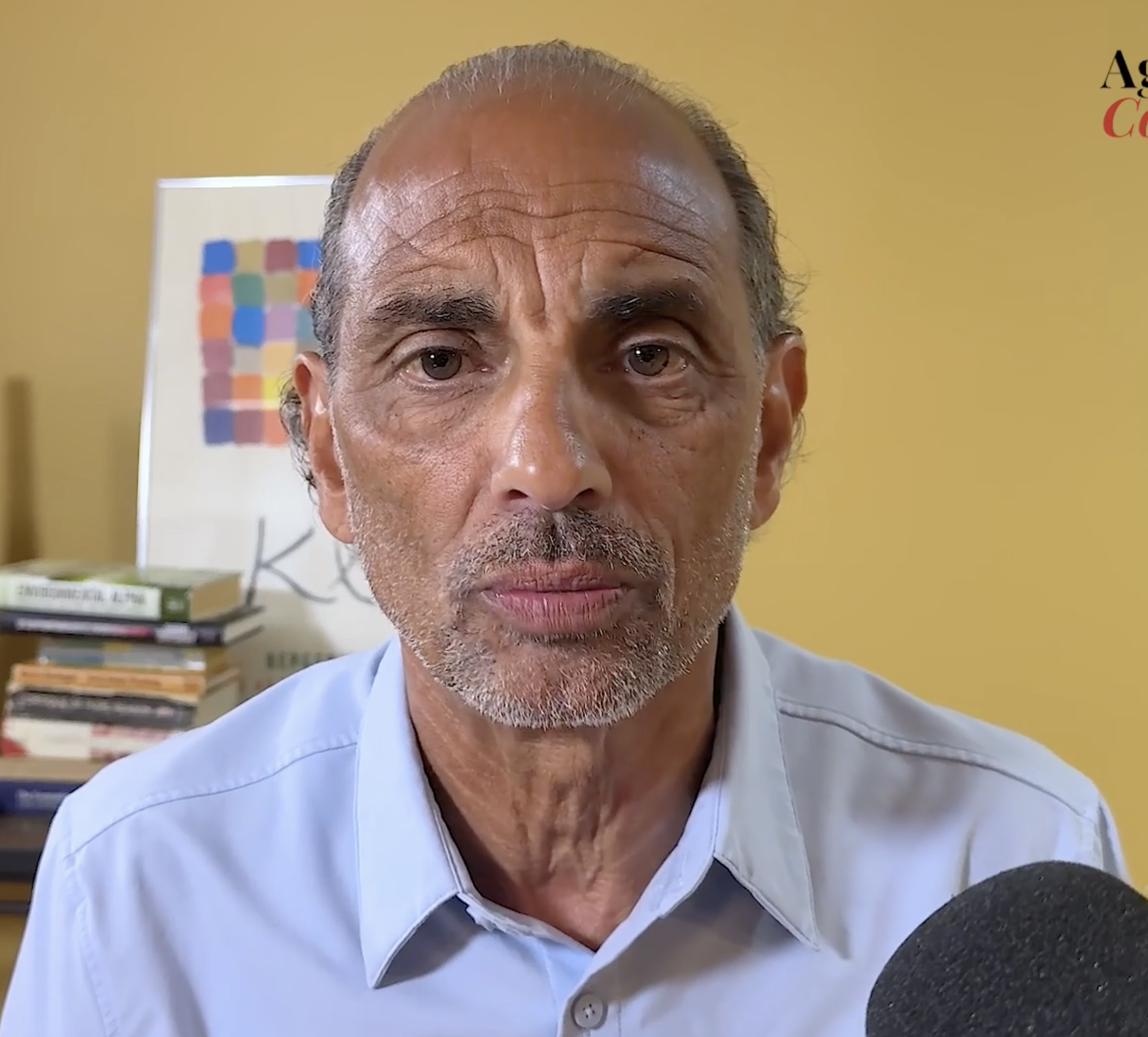
[00:01:21] Speaker B: forward to talking to for a while, and that's Mani Tarbox. So here's Mani's current day job. He's the interim Chief Investment Officer of the New York City Bureau of Asset Management. Hey, this is the entity that's responsible for managing the investments of the city's five public pension systems. We're talking about over 300 billion in assets and that's a big chair. But you know, honestly, what makes Mani such a compelling guest today isn't just his current role in it's the career behind it. Mani has been overseeing and managing pools of beneficial assets for decades. He ran investments at the National Electrical Benefit Fund and this is the fund that serves IBEW members in the broader electrical industry nationwide. Before that, he was CIO at IAM National Pension Fund in Washington D.C. he spent five years with IFM Investors, a global firm owned by Australians Superannuation Funds. He's led the AFL CIO center for Working Capital. And on top of all that, Monty's a public advisor to the Maryland State Retirement and Pension System, which, full disclosure, I'm also involved in that system too. Monty's also been a longtime trustee for the Montgomery County Public School Retirement System and a member of the PBGC Advisory Committee. We'll put his full bio in the show Notes.
[00:02:43] Speaker C: Monty, welcome to the show.
[00:02:45] Speaker A: Angelo, thank you for having me. This is a big Thrill for me.
[00:02:48] Speaker C: Oh, bigger for me, Monty, I'll tell you that. But hey, I want to get you going with a few warm up questions. Some real simple questions just to get you in the mood. You ready?
[00:02:57] Speaker A: Go right ahead.
[00:02:58] Speaker C: All right. You cook at home or you eat out?
[00:03:01] Speaker A: I do most of the cooking in my house.
[00:03:03] Speaker C: There you go. Me too. Summer or winter?
[00:03:06] Speaker A: I'm going to say winter because that's where I am right now. I'm living in the present. You know, they're trying to make the most of it.
[00:03:12] Speaker C: You're living in the present. Snowstorm.
[00:03:14] Speaker A: Yeah, We've got about 20 inches of snow on the ground.
[00:03:18] Speaker C: Oh, I've heard about it firsthand from my son. I get it. Okay, next one. Early riser or night owl?
[00:03:26] Speaker A: Five o' clock in the morning? Six o' clock in the morning.
[00:03:28] Speaker C: And my final question to you. Golf or birding?
[00:03:33] Speaker A: Easy birding.
[00:03:34] Speaker C: I knew that one, man. I was setting you up on that one.
[00:03:37] Speaker A: You knew that when I'm a shitty golfer. So I'm.
Let me rephrase. Brain, said Angelo, I am a sorry excuse for a golfer and I'm better off the course and out of everybody's way.
[00:03:48] Speaker C: Yeah, the only bird is you see are with the binoculars. I know that.
[00:03:52] Speaker B: Good one.
[00:03:52] Speaker A: That's a good line.
[00:03:54] Speaker C: All right, Monty, let's get started. I mean, you've spent three decades overseeing and managing pools of beneficial assets. I thought, you know, given your tenure in the industry, we could have a little historical perspective from you. So I'm going to start by asking you, what was the industry like when you started?
[00:04:11] Speaker A: Well, I had the good fortune of being hired by a guy named Jack Marco in Chicago in 1990. He had just launched his investment consulting business aimed primarily at pension funds, specifically what we call multi employer jointly trustee Taft Hartley pension plans. Taft Hartley comes from their covered. They're regulated by the Taft Hartley act in 1947, which far predates ERISA. So when I got started it was, yeah, obviously there are plenty of pension plans around. But it was relatively early days for consulting. The first generation had already started firms like Makita or SEI or Becker Burke, companies like that.
And Jack had targeted Taft Hartley plans. So really for the first 10 years of my career, those were almost entirely the clients I worked with. I'll tell you a little bit about Taft Hartley plans. They're a very small sliver of the retirement market. Last time I checked, and this is maybe 10 years ago, they represented a whopping 7% of pension assets in the United States.
What makes Them distinctive is that they have equal numbers of management trustees and employee representative trustees, typically the unions under which the funds were created by a collective bargaining agreement. So constitutionally, both sides have to agree and they have to work together or nothing gets done. And they're also, almost by definition, lay trustees. They're not. They're people with tons of business experience and more than their fair share of common sense, but know nothing about capital markets.
[00:05:54] Speaker C: So, Bonnie, when you were getting started, what was it like in terms of, say, portfolio construction?
[00:06:00] Speaker A: Well, let me clarify one thing. When I got started, many of the pension funds I worked with either were in insurance contracts or trying to figure out a way to get out of them. It's not until they got out of a single provider like that, whether it be a bank or an insurance company, that they started making their own decisions, at which point then they needed expert to advise them. So that's point number one. Point number two that was distinctive about those days. A lot of funds that had selected their own investment managers and had separate accounts had what we used to call balanced accounts.
So the mandate was both stocks and bonds, and it was up to the manager to decide tactically how to weight them. And they typically didn't get any guidelines from the trustees. So, surprise, surprise, they would tend to gravitate to a 60:40 approach.
Back then, real estate was a frontier asset. It was not necessarily something that even the construction trades had. That was a new thing. None of them were investing outside the United States. And then finally, as a minor footnote of interest, probably to the old dogs in consulting, direct brokerage and commission, recapture was still a big deal, something we don't basically just don't even do anymore.
[00:07:11] Speaker C: Yeah, yeah. It's kind of interesting you mentioned the recapture. That takes me to think about technology.
You said you were starting in about 1990, correct? Yeah, I was a little bit before you, Monty. I started in 83, 84, and I could tell you the technology there was, if you remember, Quotrons.
[00:07:30] Speaker A: Oh, you stole my punchline. I was gonna say, I've been around long enough to remember guys trading stocks with Quotrons. I bet most of your audience didn't know what we're talking about.
[00:07:40] Speaker C: I think you're right. I mean, you know, there was a
[00:07:42] Speaker A: quickly what a Quotron was, because I didn't know.
[00:07:45] Speaker C: I mean, if we had a Quotron, it would be on the trading floor in Chicago and you could go to the Quotron and you would pull up basic information and, you know, the Bloomberg terminal, I think, was, you know, first launched in 82, 83, and it wasn't really widely adopted, you know, for a number of years, but that fundamentally changed everything.
[00:08:05] Speaker A: Yeah, I was going to talk about that later about things that have gotten better.
[00:08:09] Speaker C: I just got to stop talking, Monty, because I'm stepping on your lead, so.
[00:08:13] Speaker A: No, that's okay, Angelo. I love hearing from you. So back then in the day, we had primitive tools and very mediocre data sources. For example, in consulting, we had to write our own code to use on custody data to do some simple things like calculate rates of return.
There were no peer groups for performance evaluation.
Benchmark returns were sometimes calculated by hand. Consultants had to do the calculate the return calculations because the banks couldn't figure out how to do it on an automated basis. It took the banks a good another probably decade to finally get the hang of it and push the consultants out of the business of just making the mathematical calculations returned. And then finally, because custody in some cases was so rickety, we would, as a, in our performance report, track failed trades, settlements, transfers, and so on. Stuff now that you can take for granted because the custodian banks know what they're doing. So that was, you know, technology then, and it was probably. I bet that was about which came in first, FactSet or Bloomberg?
[00:09:22] Speaker B: I don't know.
[00:09:23] Speaker C: It's a good question. I think FactSet, but I don't want to be.
[00:09:26] Speaker A: That's why I bring it up, because I think FactSet was probably more widely used at that point by equity traders at least than Bloomberg.
[00:09:35] Speaker C: Yeah, Monty, I'm going to ask. You said you were writing code. Was this Fortran 4 back in the days or were you using.
[00:09:42] Speaker A: First of all, it was the royal we, Angela. It wasn't me writing code. It was one of the partners at the firm who had basic knowledge.
For all I know, it could have been Cobalt. Yeah, it was probably Fortran, because this was right at the dawn of when we would have desktops, you know, with the two floppy disk drives, the programs and the apps available to the average person were pretty limited money.
[00:10:10] Speaker C: Let me ask you, you talked about the consultants. What was the CIO's role at this time in these Taft Hartley plans, or really any pension plans?
[00:10:18] Speaker A: We ought to talk about consultants first, Angelo, because in the case of the Taft Hartley plans, they didn't have CIOs, and to this day, it's only a small number of the very biggest of the Taft Hartley plans that have them. It really doesn't make sense if you're under a billion dollars and back Then there were very few plans that were over a billion dollars.
So consultants originally came into the scene based on the needs of pension fund trustees. First of all, the trustees needed the fiduciary protection that comes by retaining an expert to give him advice since they were laymen. Secondly, they needed help getting out of those insurance contracts and balanced accounts. Sometimes that was a complicated issue, depending on the terms of the contracts. Third, they needed consultants to calculate rate of returns. I know it sounds absurd now, but the custodians couldn't do it reliably.
Fourth, the consultants, if they had enough clients, they could build a rudimentary peer group universe against which to compare the performance of each of their individual clients.
And finally, they needed help understanding how to diversify into real estate and non US assets.
[00:11:32] Speaker C: And not even mentioning what we call alts today, liquid alts, or that was
[00:11:38] Speaker A: the next next decade.
[00:11:39] Speaker C: Okay, got it. So the consultant then played the role
[00:11:43] Speaker A: of consultant, played the role of what we would call a CIO today.
We built asset allocation models using, do you remember Ibbotson's bonds, bills and inflation? Yeah, that was based on the CRSP data that got put together at the University of Chicago. So between using the data out of the book that we would transcribe by hand out of the book into an Excel spreadsheet, we would try to build asset allocation models basically just to see what, what would have happen. You just try to calculate a long term return, a standard deviation, and maybe if you were really, you know, really living large, you might try to use a regression program to calculate correlation. And things were so primitive there, there were so few easily available passive indexes that when it, when it came to modeling small cap equities, we would use dimensional fund advisors, 9, 10 fund returns as a proxy for small cap performance. Because back then DFA was marketing itself as a index fund of small caps. They'd move way beyond that today. But that was the, that was the origin of the firm. So, you know, we almost had to like, I wouldn't say construct data from scratch, but you had to scrounge around a lot just to get basic return series.
[00:13:03] Speaker C: I was thinking about data. I'm going to throw one more at you. I remember guys used to look at the old value line books. You remember Value line? Yeah. Used to be a hard time.
[00:13:11] Speaker A: I never used the value line books, but I saw them on the bookshelf.
[00:13:14] Speaker C: Absolutely. I mean, guys would just go into the exchange library, pull them off and do their research with value line books. And Marty, back then, was it T plus 5 for settlement.
[00:13:25] Speaker A: Yeah, it was T plus 5. We thought moving to T plus 3 was a radical innovation.
That was a big deal.
[00:13:33] Speaker C: Could I move now to.
Since you mentioned this, how you go from T plus 5 to T plus 3, let's talk about what's changed and what's gotten better.
[00:13:43] Speaker A: Let me talk about the early days and what got better, I think most quickly was the custodians got the hang of it. They raised their game. So for example, straight through processing, where they tried to minimize human touch points, that was a big help to data integrity and speed of reporting. Secondly, the reporting got better. You know, their customers and their clients banged on them long enough for various cuts on the data that they figured out how to put together packages. Eventually the custodians hire away some smart young consultants and figure out how to calculate reliable rates of return.
So that's gotten better. And as we talked earlier, trading technology, vastly better.
Charles river is probably 10 times, excuse me, thousand times more powerful than the trading technology that you used back in the day. Bloomberg notably clearing and settlements have got a lot better. I'd add to that as time moved on, things had got better. The formosta small pension funds and medium sized pension funds. The investable set expanded. For example, we could invest outside the United States without user custody and transaction costs. Passive indexes came along.
I can remember when it was our choices for passive index would have been, let's see, Wells Fargo, the bank, I'm trying to remember the name of the bank in Chicago. There were only about three abnormal.
[00:15:13] Speaker C: Was it abn, you remember?
[00:15:16] Speaker A: I think ABN Amarill eventually acquired this. This was Continental. No, it wasn't that. It was a small specialist bank. In fact, they hired away the top index guy, David Booth at DFA hired away the top index guy to help him launch dfa. It'll come to me and I'll mention it later. Other things that have changed for the better is now you can invest in all equity sectors.
You have plenty of passive options. We've got alternatives like private equity, alternative credit, hedge funds and so on. And we've got vastly better data sources, Investor force, the Tux universe, Bloomberg and Burgess and that. And there's a wealth of insight that can be obtained if you know how to attack the data properly.
[00:16:02] Speaker C: Are you going to talk about factors and how.
[00:16:05] Speaker A: Well, that's what I was setting up for. I think one thing that's important is that I think we're on the verge of kind of moving beyond in publicly traded equities, moving beyond the typical paradigms of value and growth. Back in the day, we thought that active managers were going to pick the right horse and win the race for you. Instead of betting on all the horses like you would with a passive fund, you tried to pick the one that would win.
And all the evidence I saw was that's probably a stochastic process. You know, I'm even skeptical about the existence of alpha in the publicly traded markets world. And I mean alpha in the sense of one of the variables in a regression equation. One thing that I bristle at is most people today just they take excess return, they call that alpha. But the way I was trained is that technically alpha was the Y intercept when you plotted a regression equation, and it was the part of the return that wasn't explained by market beta. So that's different than just excess return.
I will say this. I think that value and growth may persist because they're okay investment strategies and they have their day. Sometimes they work, sometimes they don't, depending on market circumstances. And if you try to balance them off against one against the other, but I've never found that to be a very effective portfolio construction tactic. I think they may persist not because of their investment efficacy, but rather because they're easy to communicate and it allows a fund manager to tell a compelling story about the rigor of his process.
So I think with any of the styles that exist in the equity markets, they have to satisfy two objectives. In a highly competitive ecosystem, they have to have performance that tends to outpace their competitors over the long term. But they also have to be able to explain in fairly straightforward and almost layman terms what their strategy is so they get the client to hire them in the first place. I would always tell my clients, you know, remember that your investment manager is managing two risks simultaneously. One is your investment risk and the other is their business risk. And don't get, you know, don't lose sight of how some of their behaviors is explained by how they manage their business risk.
[00:18:28] Speaker C: What about vehicle structure? Has there been a change in vehicle structure and how you could invest? Whether it's managed accounts?
[00:18:37] Speaker A: Yeah, there are all kinds of behind the scenes technical things, you know, usets, there are all kinds of offshore vehicles that, that might be available. For example, if you want to try to index in Europe, obviously on the private market side, I wouldn't say that they've changed so much as they've ossified.
We've got the general partner, limited partner structure, we've got two and 20. It's remarkable how robust some of those Structures have been in the private markets. And I think here again, it's explained by the fact that. That the GPS found out that is a great business model. And if they can get clients to hire them under those terms, they make boatloads of money beyond that. Certainly portfolio construction has changed because you've got more assets, you've got more opportunity to try to figure out strategies to tactically rebalance between assets. You've got funds that have to find a way to appropriately match publicly traded assets that price daily with private assets that don't. Virtually don't trade at all, absent, say, secondary trades and so on that price, if you're lucky, they price quarterly. It's difficult to blend those in a way. And the data that comes from that, I think, is profoundly different than the data back in the 80s and 90s when portfolios were composed almost exclusively of. Of assets that were marked daily or priced in real time.
[00:20:07] Speaker C: So you talked about changes in portfolio construction. We talked a little bit about factors. You talked about better tech, better data. Has the governance changed because you were. I'm not just talking.
[00:20:17] Speaker A: Yes, I would say governance has changed dramatically.
You know, today, I think most trustees, either they already understand or they quickly catch on to asset allocation.
Correlation risk can be measured mathematically as standard deviation. And most importantly, risky assets can have a role in a portfolio if they. If the correlations are low and they can reduce the risk of the total portfolio. That's, I think, the most profound insight in portfolio construction. And that's nothing new. That's what Markowitz from the 50s.
So the other thing I would say about governance, this may be sort of, you know, blends into strategy, but I think that trustees today are not afraid of derivatives the way they were in the, you know, in the early 2000. What year was it that Orange County's public employee plan blew up because of their use of derivatives? You remember, Was that in the 90s?
[00:21:15] Speaker C: Yeah, it was in the. I think it was in the mid-90s.
[00:21:18] Speaker A: Yeah. Yeah. So after that, you know, for a good five years after that, trustees that I dealt with thought derivatives were toxic and radioactive. But I think they've got a better handle on that now. The other thing is that trustees are much, much more comfortable with global exposures and the concomitant currency risks, and that wasn't true 25 years ago.
[00:21:41] Speaker C: Manu, do you think some of the changes in this, in governance, is that you have a new breed of trustee
[00:21:48] Speaker A: with the passage of time? I'm no expert on education, but I assume that the Percentage of the population with a post secondary degree has gone up steadily, decade by decade. So in that sense, the young guy who's taken over his father's plumbing contracting firm is more likely to have actually gone to college, unlike his father, who probably went from high school right into the trade, particularly if the business is big enough that the son doesn't have to work with the tools anymore, and it's more about the business side and dispatching his plumbers out to work. So, yeah, I think that the caliber of the trustees, and I don't want to put a knock on trustees back in the day, you know, just different economy, different circumstances, different opportunities. I think that also trustees are getting information from more sources. I think it's a little more likely that even the guy who runs a roofing contractor, he might have a subscription to the Wall Street Journal today that probably wasn't as commonplace 30 years ago. Some of them are even reading the Financial Times and the Economist, so they can have a pretty sophisticated view of contemporary economic thinking.
[00:23:01] Speaker C: Thirty episodes in the Proof of Concept
[00:23:04] Speaker B: has been established guests like Don Pierce, Venus Phillips, Andy Green, John Grable, Paul Greff, Brad Brindle, Mark Steed, Leo Svoda, Joe Eppers, Renee Diresta, and Greg Brown. Hey, they don't come on a podcast that hasn't earned their time.
So we're ready to take the next step. We're now accepting sponsors for the institutional edge.
[00:23:26] Speaker C: And before you ask, here's how it works. Sponsors support the show, but don't get
[00:23:32] Speaker B: editorial control over the content. And no, you will not be hearing me reading ads on energy drinks and tax preparation services.
This is still the same show.
If sponsorship interests you, contact Julie Parton at Pensions and Investments.
[00:23:49] Speaker C: She can tell you about all the benefits.
[00:23:51] Speaker B: Her contact details are in the show notes.
[00:23:55] Speaker C: Monty, I want to do a follow up on that. Governance. There's been a lot of talk recently about the empowerment of staff, where we're finding a framework, developing the TPA framework. People talk about where boards are empowering staff to make many more decisions than they might have previously been empowered to make.
I mean, this seems like a shift to me, but I haven't been in that chair like you.
[00:24:20] Speaker A: I mean, well, you gotta be careful and take what I say with a grain of salt. Given Today, I'm the CIO of a public employee fund with a staff of 135, you know, so I need to keep those. I need to keep all those people busy and nothing does it as well as, you know, giving us some authority either to to do all the due diligence and analysis and make recommendations or ultimately delegate the authority to us. I think there is a big difference today than there was 25 years ago that trustees are more willing to delegate either to staff or, or even probably more profoundly to an ocio.
So those are ways for the trustees to lay off some of the work. The fact remains that a lot of trustees still want to make fundamental decisions like asset allocation, because that's where all the risk gets decided. You know, my trustees, for example, want to be the final authority or arbiter on hiring any external investment manager. And all our money is with external managers. They even want to, you know, pass judgment on. They want to hear about individual private equity funds, not deal by deal, but the funds that are looking for commitments and they want us and their consultants to opine on that and they'll make that decision decision.
But I'll admit that I'm amused by all the talk about tpa and I'll take a little bit of a contrarian view if you'll let me, please.
Well, TPA seems to me at the end of the day it's about the issue that you raise. Who has the discretion to make the investment decision, number one, and number two, how tight and confining are the guidelines.
So my feeling is the more I look at tpa, as productive as it may be for a lot of funds that are willing to give their staff a little more discretion, I think the end of the road of TPA is it looks an awful lot to me like just a good old fashioned hedge fund where you commit your cash to the hedge fund manager. He's got virtually no guidelines. He's told you about what he thinks he's a specialist in and where the happy hunting ground is. So you hope that he sticks to what he knows. But they can basically use their discretion to go back out and buy anything and then just bring you back, hopefully bring you back some positive returns, you return of capital and return on capital. But I'm not sure TPA is any, you know, it's a little bit of the fad at the moment. And I think a lot of funds would benefit from empowering their staff, provided if and only if they're willing to pay them and give them the right tools. You know, if trustees don't see the wisdom of having Bloomberg terminals on their staff's desk, then they, you know, then don't give them the, don't give them the discretion. Farm that out externally to the managers who do and who've got sophisticated trading systems and can model mortgages and asset backs, stress test them. You need to be able to do that to manage money properly in today's world. And I think that I can't speak for a lot of other public funds. I know that that's just an extraordinarily difficult cultural change for them to go through.
[00:27:34] Speaker C: Yeah, I agree with you on the culture. I mean, it sounds like your view with TPA sounds a little bit like the old global macro. Hedge funds go anywhere and just make sure you give me 12%. At the end of the day, maybe
[00:27:47] Speaker A: there's something to TPA that eludes this poor boy from Chicago, but I haven't seen it yet. And I don't know many public employee funds that want to pay Wall street salaries for the kind of talent that they really need to do it right. But at the end of the day, they can get that now and they need to, you know, when they're making that buy or build decision, they need to look at the fees they would pay to an external ocio or, you know, hedge fund or some kind of structure like that versus what it would cost them in blood, sweat and tears, not to mention governance headaches, to do it, do it themselves. So I don't think there's a right or wrong answer to that. It all depends on the decision makers and what they think is best for their participants and beneficiaries.
[00:28:35] Speaker C: So, Monty, I want to switch gears and ask you what's gotten worse? We can still talk about what got better, but I want to be mindful of your time. But just tell me.
[00:28:44] Speaker A: I'll tell you what's gotten worse, in my opinion. And here again, I have to take a bit of a step back. Angelo, you and I know that there are profound benefits of scale in investment management.
The margins expand with the amount of assets that a firm has under management. And really true in pension administration as well. You know, $100 billion firm can run more efficiently at a lower cost than a $1 billion firm. There are some functions that you still got to have. So they're massive economies of scale, whether it's pension fund or investment management firm. The problem as I see it, the thing that's gotten worse is that investment managers, in my opinion, have captured the lion's share of the benefits of both scale and leverage. In other words, they've grown their businesses and become extraordinarily wealthy while investors are still kind of plodding along, hoping for a 7 to 8% year return, happy if they can get that over the long haul. That's probably my biggest concern is that investors and LPs have done a sorry ass job of capturing their fair share of the economies of scale that come with these massive pools of assets that you and I have seen grow.
What would you say from 1980 to 2020, what would have been the multiple of growth of retirement assets in the United States? Any guess? I don't know the answer.
[00:30:16] Speaker C: I don't know either. But it's gotta be enormous because you're also gonna talk DC in there, Moni, or you're just talking db.
[00:30:23] Speaker A: I had thought of that. Might as well, while we're at it, because from an investment management point of view, the economies of scale are still there. So I don't know if it's a tenfold increase or a hundredfold increase.
[00:30:34] Speaker C: Well, I don't know. It's big. But you're gonna cause me to do a little research when it comes to the.
[00:30:40] Speaker A: I was about to give you that challenge. I was going to say you're going to have to get some smart young kid grad student in to start fact checking your, your guests.
[00:30:49] Speaker C: Do you think so money or couldn't I just use Claude or ChatGPT to fact check? Yeah, come on.
[00:30:56] Speaker A: Yeah, probably. Probably. I bet they do it. I don't know if they do it better, but I guarantee they do it faster.
[00:31:02] Speaker C: They do it faster and cheaper. But you know, I mean, what you're talking about, money is like this misalignment of interest, you know, between the asset managers, asset owners, and you kind of
[00:31:12] Speaker A: hinted at this, you know, they've never been highly aligned. They're no, I would say roughly, to a second order approximation, they've been aligned. But investment managers, banks and insurance companies have all been about making profit for their shareholders. And if managing money for pension funds like the one I work for or ones you, you've consulted with, that they need to make just enough return to keep the business so those management fees flow in and they make a profit for their shareholders. That's never going to be ideal alignment. And you could try and rectify that by bringing all those services in house. But I'm not sure that's the best argument for bringing money management in house. Because there's still going to be principal and agent issue.
Technically speaking, if you've got staff making the decisions and setting your, you know, taking the risks, particularly if you're compensating your staff on performance.
That's my biggest concern about performance fees is it has a built in incentive to take more risk tempered by the fact that, you know, in the case of the investment manager who's on an incentive fee, tempered by the fact that if they screw up, take too much risk, and they hit a period where they returns are in the, you know, in the bottom decile or bottom percentile, they'll get fired and they won't. They don't get to play the game another round.
[00:32:39] Speaker C: But why do you think this asymmetry, you know, persists? You talked earlier about fee structures. You know, they've got the 2 and 20.
That's like, you know, why it persists?
[00:32:50] Speaker A: It's because it's a business model that makes some smart people a lot of money.
[00:32:54] Speaker C: Yeah, but you have the power. They're nothing without your assets. You again, the imperial you or we or. I mean, you guys have the power.
[00:33:04] Speaker A: You know what, that's one of the paradoxes of this world, Angelo, is it appears that the trustees have extraordinary power. And if you ask them, they would say, well, yeah, it's kind of, it's a great assignment. But it doesn't, you know, I'm not the one who's ultimately making the, the decisions that matter the most, even though they are setting asset allocation and so on.
First of all, they're constricted by erisa, and I'm not so much concerned about what they can invest and what they can't. But trustees have to have a very well articulated process that's probably written down. It has to pass legal muster, it has to pass in some cases, Department of Labor review and so on. And ERISA puts not only tight requirements, but instills in everybody. In an ERISA environment, you gotta be super careful. You make a mistake. You know, for example, if you're a trustee on a Taft Hartley fund, if you make a mistake and the trust really gets in serious trouble, the DOL can come after your car, your home, your bank account. You're personally responsible for all that. You know, I think I've told you I was educated at the University of Chicago, and the University of Chicago's view would be that, you know, every actor is a rational actor. Well, I'll give you a good empirical example of a profoundly irrational act. And that's the sign up to be a pension fund trustee. Because in the Taft Hartley world, they don't get. They don't even get compensated. And they take this extraordinary person, personal liability on their shoulders. So are they irrational? Are they out of their minds? No, it's because first and foremost, the UFC notion of homo economists economa is a flawed model. And doesn't really capture human behavior well. And secondly, virtually all of the trustees that I worked with on the pension funds, they came up in the industry. The industry had been good for them. It paid them a living wage. They could buy a house, they could send their kids to school, they could go on a vacation in the summertime, maybe even have a boat. But both the contractors and the tradesmen knew that the industry had been good to them and they were committed to paying that back by serving the membership and the larger community by taking on this enormous and almost absurd personal liability. So it really is a much, very much, in my opinion, is a culture of service.
[00:35:38] Speaker C: Monty, let me add, I serve on a police pension board, you know, here in the Chicagoland area as a Angelo.
[00:35:44] Speaker A: I heard you beat that, Ralph.
[00:35:45] Speaker C: Oh, shit.
And I'm doing this out of a sense of community service because I have that same liability. But that's. You got to give something back.
[00:35:56] Speaker A: Base the point. And I don't think any of your audience is going to accuse you of being wildly irrational.
[00:36:01] Speaker C: Well, some will, but I mean, there
[00:36:03] Speaker A: may be these moments of irrational exuberance that afflict us. All Right.
How long has it been since you heard that phrase?
[00:36:10] Speaker C: It's been a while.
[00:36:12] Speaker A: Right, that's another. You know, we were talking Quotron. Yes, let me. I got to start a list of all the long gone and forgotten topic or artifacts. Quotron fact set. And now irrational exuberance.
[00:36:25] Speaker C: I'll give you one. Portfolio insurance.
[00:36:28] Speaker A: Bingo bango bongo. There you go. That was a fad.
[00:36:31] Speaker C: 1987. I remember it well.
[00:36:34] Speaker A: Yeah, right. And you know, I, I'll be honest with you. I don't think that TPA has the inherent flaws that portfolio insurance did. It was really, you know, we know now it was only a matter of time before portfolio insurance blew up because the mismatch of assets and liabilities, I'm not going to go into detail about that, but you know where I'm that argument.
So, you know, the investment industry remains enamored of the latest fad, the latest idea, whether it's OCIO or tpa.
Systematic equity strategies that are going to use multi factor models to figure out relationships that nobody else in the market's going to figure out in roughly the same timeframe and have those advantages get arbitraged away pretty quickly.
[00:37:20] Speaker C: Okay, let's talk fads then, Monty.
[00:37:22] Speaker B: AI Fad.
[00:37:24] Speaker A: Fad.
[00:37:24] Speaker C: There you go. That's what I like to hear.
[00:37:27] Speaker A: It's a reality that is hard, hard upon us. And it's one that most of us are totally unsuited to deal with. We don't have the tools, we don't have. I'm not sure we have the intelligence or not. We certainly don't have the intelligence in some respects of AI, But I think it's going to have benefits, but it's going to do a lot of damage along the way. And by damage I mean just disruption. I don't mean it's going to crash the economy, but it is going to cost hundreds of thousands, probably millions of people their jobs. And some of whom are highly trained and highly educated in law, in accounting, maybe in actuarial sciences and so on, let alone pharmaceutical scientists or you name it. So there's going to be a lot of blood in the street and a lot of people. The thing that worries me, Angelo, is not AI, but what happens to the people who get left behind.
Particularly if we're not talking about 10,000 cotton weavers in 19th century Lancashire, you know, working on a loom who ended up being Luddites. And we're probably not talking about hundreds of thousands of dock workers around the world who, between the 60s, from the time of Marlon Brando's early days to Marlon Brando's late days, they became redundant because technology on the docks improved by a factor of 10. So I'm all for things that make the economy more productive. I have just at least the minimum requirement that we don't leave behind those who are displaced and who, frankly, no amount of retraining, no amount of economic development in Appalachia is going to make up for the jobs that are going to be lost. I think a huge social issue for our kids generation, and maybe our grandkids generation, is what happens if automation and AI make it possible to fabricate or manufacture everything we need with, you know, what, 1/10, 100th of the labor required.
What are we going to do then?
And I think the solution, this is a real digression, but what I'm toying with the idea is we're going to have to disconnect work from income. And by that I mean we certainly grew up thinking, you know, nobody should get a free ride. You gotta, you know, you want to eat, you got to work. That's just Protestant work ethic. Whether you're Protestant or some other creed, it's just baked into our understanding of the way the world works. I think that's got the distinct possibility of come coming unglued or needing to come unglued in our kids and our grandkids generation. Because if it doesn't. We're going to end up in a very Charles Dickens kind of world, only on a global scale. I'd rather have some kind of mechanism where we can use the gains of productivity, share them more fairly so that we don't leave anybody behind. That was one of the things I liked about working for the electrical workers pension fund in Washington D.C. for 10 years. We had kind of an ethos of we don't leave anybody behind on the field. Guy gets hurt or killed on the job. Because back in the day, 100 years ago, electricians work was extremely dangerous. The union and the industry grew up around an ethos of you got to provide benefits, you got to take care of people, you at least got to give the widow enough money to pay the poor son of a gun who got electrocuted. And that's an ethos that I think we have to take into the tech era. And I don't see much sign of that. I'm sorry.
[00:41:12] Speaker C: Well, Marty, you're kind of leading to the final section. I wanted to talk about looking forward. I mean when you talk about AI it naturally I think took you into the future, you know, where we are now. But you're talking about some of the social and economic consequences. Bring it back to.
[00:41:26] Speaker A: Sorry for rambling too. No, no, no, I mean far down a rabbit hole, not related to our topic. I apologize.
[00:41:32] Speaker C: No, no, I was right on the topic as far as I'm concerned. Because you're talking about the potential for change. Focus now. I mean, what would you like to see changed?
[00:41:41] Speaker B: You know, what needs, let me put
[00:41:43] Speaker C: it this way, what needs to be changed?
[00:41:44] Speaker A: I'll tell you the thing that I, we, I wish we would stop doing. And that'll lead directly into what I think, I hope will change for the better. First of all, you've probably heard me say this before, Angelo, but particularly in private markets. But in pension funded institutional investing generally the limited partners are their own worst enemy. It's not that the that the general partners are picking their eyes out or picking their pockets or robbing them. Limited partners tend to be their own worst enemy because number one, they're infatuated with or they just assume that the investment bankers and the big investment managed houses and the Goldmans, the JP Morgans and the blackrock of the world know all there is to know about making money and they tend to be a bit in awe of them. Number two, they don't. LPs don't communicate with one another. It's not uncommon to see in limited partnership Agreements, a line that says a single LP won't disclose any information about the fund to anybody outside of their organization, not even their fellow LPs and as a result LPs are extremely reluctant to collaborate, work together, strategize, club up where it would make sense to optimize. That's one thing that I think that needs to change. If I could change one thing, it would be that LPs would feel that the opportunity they have and use the power that you met before. We never really resolved that question about why don't the trustees rule the world. But we'll come back to that another time. But LPs definitely could do a better job of thinking strategically and I don't think they do. So what I would like to see different.
Exactly what I just said. I'd like to see LPs investors collaborate more, raise the bar of their expectations and capture more of the benefits of scale, which I don't think they do. And I'll make a final point that's maybe a second order issue, but they shouldn't be afraid to lobby for better capital markets regulation. I think pension funds are some of the biggest beneficiaries of a well functioning sec, a well functioning cftc.
And clearly there's some areas that need to get regulated sooner rather than later or they're going to become colossal systemic risks. And you should be, you know, I know you can guess what I'm talking about.
[00:44:12] Speaker C: I'm going to say I can't, I don't know. And if you don't want to.
[00:44:15] Speaker A: Oh, Bitcoin.
[00:44:17] Speaker C: Oh yeah, yeah, yeah, right.
[00:44:18] Speaker A: Okay, Angelo, I'm going to make, I'm going to go out on a limb here. You know, I'm trained not to, you know, to be entirely backward looking and that past performance tells you everything you need to know about selecting the manager for the future. But I'm going to go out on a limb and make a prediction. And that is, you know, over our careers we've seen financial crisis that caused recessions or threatened to cause in some cases to cause a depression by systemic financial mistakes. There was a savings and loan crisis of the 80s, there were various currency crisis through the 90s that included the demise of Long Term Capital Management in which was supposed to be the quanta quants of its time and could mint money. Then of course in 2008 the global economy almost ground to a halt because of mortgage origination and mortgage securitization and misallocation, misanalysis of risk.
So our financial crisis come from within the system. Usually because of an excess of something or chasing profits that don't. It doesn't work in every circumstance. Here's my forecast. I'm not sure it'll be the next crisis, but sometime before you and I go to our great rewards in the sky, there'll be a financial crisis that I'm predicting will at its core be a result of a poorly regulated Bitcoin and digital currency economy.
I don't know exactly what it'll be. If I did, I'd be, you know, we'd be making the big short all over again. And I'd be, you know, I know I'd know what to short. But I think that Bitcoin does have the. It's not only in my eye, you know, a suboptimal investment for long term transgenerational global investors, but it's also, you know, poorly regulated and just waiting for abuse, for fraud, for scandal, you know, for cyber attacks, all that kind of stuff. And so, you know, I see no argument for an institutional investor investing in Bitcoin. But I'll admit that I'm a bit of a. Hell, I guess I already practically doubted myself as a Luddite in earlier in the conversation, but at least I didn't take a cheap shot at AI.
[00:46:36] Speaker B: No, but.
[00:46:37] Speaker C: And I will say, sometimes being a Luddite is a good thing for a fiduciary, you know, I mean.
[00:46:43] Speaker A: Thank you. You know what, Angelo? That probably the nicest thing anybody said to me all week.
[00:46:48] Speaker C: Oh, hell, Monty, that was a pretty low bar. You just gotta call me every morning, I'll give you a pep talk. I'll say something good to you.
[00:46:56] Speaker A: If I do that, I won't need coffee.
I'm just flying high.
[00:47:01] Speaker C: Well, hey, Monty, we could wrap it up here, man. This was great. I appreciate you doing this. I know we tried earlier, but we solved the technology problem.
I mean, I love the conversations, as I always do with you and I mean, you took me in directions. I didn't think we were going to go, but we needed to go there, so.
[00:47:18] Speaker A: Okay. Well, I hope you got your money's worth, Angelo.
[00:47:22] Speaker C: I did. I'm not paying you a dime because you got that gift policy.
[00:47:26] Speaker A: That's exactly what my advice and my predictions are worth. Oh, shit. What? You paid me to do this.
[00:47:33] Speaker C: All right, well, Monty, I'm going to stop it here. But again, thanks for being on the show. I appreciate it.
[00:47:38] Speaker A: And Angelo, I hope it was obvious that it was my pleasure.
[00:47:42] Speaker C: Well, that's kind of you.
Thanks for listening.
[00:47:45] Speaker B: Be sure to visit PNI's website for outstanding content and to hear previous episodes of the show. You can also find us on PNI's YouTube channel. Links are in the Show Notes. If you have any questions or comments on the episode, or have suggestions for future topics and guests we'd love to hear from from you. My contact information is also in the Show Notes, and if you haven't already done so, we'd really appreciate an honest review on itunes. These reviews help us make sure we're delivering the content you need to be successful. To hear more insightful interviews with Allocators, be sure to subscribe to the show on the podcast app of your choice. Finally, a special thanks to to the Northrup Family for providing us with music from the Super Trio. We'll see you next time. Namaste.
[00:48:37] Speaker D: The information presented in this podcast is for educational and informational purposes only. The host, guest and their affiliated organizations are not providing investment, legal, tax or financial advice. All opinions expressed by the host and guest are solely their own and should not be construed as investment recommendations or advice. Investment strategies discussed may not be suitable for all investors as individual circumstances vary.
[00:48:55] Speaker B: SA.